Film & TV
Reporting and analysis on film and television as cultural, artistic, and industrial forms. This section examines storytelling, authorship, and production in context, exploring how films and series reflect social change, technological shifts, and evolving audience expectations. Coverage goes beyond releases and ratings to offer criticism, essays, and analysis focused on meaning, craft, and cultural impact.
Film & TV
Members only
Serialization is older than the novel, older than cinema, and arguably older than print itself. Stories have long unfolded in parts—told around fires, in episodes, across weeks or seasons—shaped as much by anticipation as by narrative resolution.
What has changed is not the appetite for serialized stories, but the systems that deliver them.
Today, serialization spans streaming platforms, podcasts, newsletters, web fiction, and social media. It is driven by algorithms, metrics, and global audiences—yet it still relies on one of storytelling’s oldest tools: the promise that something more is coming.
“Serialization is fundamentally about trust,” said a media historian who studies narrative forms. “You ask audiences to return, and in return you give them continuity.”
From Victorian Chapters to Digital Feeds
Serialized storytelling reached industrial scale in the nineteenth century, when novels were published in installments in newspapers and magazines. Authors wrote with deadlines in mind, responding to audience reaction and commercial pressure in real time.
“Serialization shaped the novel itself,” said a literary scholar specializing in nineteenth-century fiction. “Pacing, cliffhangers, even character arcs were designed around return readership.”
That logic persists. What has changed is speed. Where installments once arrived weekly or monthly, digital serialization can unfold daily—or all at once, in binge-ready form.
The future of serialized stories lies in how creators navigate this tension between rhythm and immediacy.
Streaming and the Reinvention of Episodes
Streaming platforms have transformed how audiences consume serialized narratives.
Episodes are no longer constrained by broadcast schedules. Seasons drop simultaneously. Viewers choose whether to binge or pause. This flexibility has altered narrative structure.
“Cliffhangers used to exist to bring you back next week,” said a television writer. “Now they exist to keep you from turning the screen off.”
Some series lean into continuous flow, minimizing episodic closure. Others reassert structure, designing episodes as distinct narrative units within a larger arc. The result is a hybrid form—neither purely episodic nor purely cinematic.
Serialization adapts by recalibrating suspense.
Podcasts and the Return of the Spoken Serial
Audio has quietly become one of the most fertile spaces for serialized storytelling.
Narrative podcasts—fictional series, investigative journalism, long-form reporting—revive the tradition of spoken serials, delivered episodically and consumed intimately.
“Audio creates a different kind of commitment,” said a podcast producer. “You’re literally inside someone’s head for weeks at a time.”
Podcasts reward consistency and voice. They allow stories to unfold gradually, with pauses, digressions, and reflection that might feel slow elsewhere. In doing so, they demonstrate that serialization does not require spectacle—only sustained attention.
Newsletters, Web Fiction, and Direct Audiences
Serialization has also moved closer to creators.
Platforms that allow writers to publish directly to readers—via newsletters, web fiction sites, or subscription models—have revived serialized writing as a viable practice.
“Serialization lowers the barrier between draft and audience,” said a novelist who publishes fiction in weekly installments. “It makes writing more porous.”
This immediacy reshapes authorship. Writers can adjust tone, pacing, or emphasis in response to reader feedback. The boundary between creation and reception becomes more fluid.
At the same time, this model places new demands on creators: consistency, responsiveness, and ongoing presence.
Algorithms as Editors
In many contemporary platforms, serialization is shaped not by human editors but by algorithms.
Recommendation systems reward engagement, retention, and frequency. Stories that encourage return visits—through suspense, familiarity, or emotional investment—are amplified.
“Algorithms favor serialization because it produces predictable behavior,” said a digital media analyst. “Return visits are easier to measure than one-off experiences.”
This can encourage formulaic storytelling: recurring tropes, extended arcs, delayed resolution. While such patterns can be effective, they risk narrowing narrative diversity if metrics become the primary guide.
The future of serialized stories depends on whether platforms allow space for experimentation alongside optimization.
Attention, Fatigue, and Narrative Responsibility
Serialization thrives on anticipation—but it can also exhaust it.
In an environment saturated with ongoing series, audiences face what some critics describe as “narrative fatigue.” Too many unfinished stories compete for limited attention.
“There’s a difference between suspense and deferral,” said a cultural critic. “Audiences notice when a story is stretching itself thin.”
Responsible serialization balances promise with payoff. It respects attention rather than exploiting it. This requires narrative discipline—knowing when to continue, and when to conclude.
Endings matter more in a serialized world precisely because audiences invest over time.
Community, Theory, and Shared Meaning
One of serialization’s most distinctive effects is communal interpretation.
Online forums, social platforms, and fan communities turn serialized stories into shared events. Speculation, analysis, and debate unfold between installments, shaping how stories are received.
“Serialization creates space for collective meaning-making,” said a media sociologist. “The audience becomes part of the narrative ecosystem.”
This participatory dimension can enrich storytelling, but it can also exert pressure on creators—encouraging fan service, discouraging surprise, or amplifying backlash.
The future of serialization will depend on how creators negotiate this relationship without surrendering narrative autonomy.
Old Form, New Conditions
Serialization is not new. What is new are the conditions under which it operates: constant connectivity, global reach, data-driven feedback, and economic models built on retention.
These conditions reward stories that unfold over time—but they also test the limits of patience, trust, and creative independence.
“Serialization survives because it mirrors how people experience life,” said the media historian. “Incomplete, ongoing, unresolved.”
What Comes Next
The future of serialized stories is unlikely to converge on a single format.
Some stories will be tightly structured, designed for binge consumption. Others will unfold slowly, inviting reflection between parts. Still others will blur boundaries between fiction, journalism, and commentary.
What unites them is not length or platform, but commitment—on both sides.
Serialization asks creators to sustain coherence over time.
It asks audiences to return, again and again, without certainty.
In a fragmented media landscape, that mutual commitment may be its most enduring value.

Oliver Grant
|

Film & TV
Members only
Serialization is older than the novel, older than cinema, and arguably older than print itself. Stories have long unfolded in parts—told around fires, in episodes, across weeks or seasons—shaped as much by anticipation as by narrative resolution.
What has changed is not the appetite for serialized stories, but the systems that deliver them.
Today, serialization spans streaming platforms, podcasts, newsletters, web fiction, and social media. It is driven by algorithms, metrics, and global audiences—yet it still relies on one of storytelling’s oldest tools: the promise that something more is coming.
“Serialization is fundamentally about trust,” said a media historian who studies narrative forms. “You ask audiences to return, and in return you give them continuity.”
From Victorian Chapters to Digital Feeds
Serialized storytelling reached industrial scale in the nineteenth century, when novels were published in installments in newspapers and magazines. Authors wrote with deadlines in mind, responding to audience reaction and commercial pressure in real time.
“Serialization shaped the novel itself,” said a literary scholar specializing in nineteenth-century fiction. “Pacing, cliffhangers, even character arcs were designed around return readership.”
That logic persists. What has changed is speed. Where installments once arrived weekly or monthly, digital serialization can unfold daily—or all at once, in binge-ready form.
The future of serialized stories lies in how creators navigate this tension between rhythm and immediacy.
Streaming and the Reinvention of Episodes
Streaming platforms have transformed how audiences consume serialized narratives.
Episodes are no longer constrained by broadcast schedules. Seasons drop simultaneously. Viewers choose whether to binge or pause. This flexibility has altered narrative structure.
“Cliffhangers used to exist to bring you back next week,” said a television writer. “Now they exist to keep you from turning the screen off.”
Some series lean into continuous flow, minimizing episodic closure. Others reassert structure, designing episodes as distinct narrative units within a larger arc. The result is a hybrid form—neither purely episodic nor purely cinematic.
Serialization adapts by recalibrating suspense.
Podcasts and the Return of the Spoken Serial
Audio has quietly become one of the most fertile spaces for serialized storytelling.
Narrative podcasts—fictional series, investigative journalism, long-form reporting—revive the tradition of spoken serials, delivered episodically and consumed intimately.
“Audio creates a different kind of commitment,” said a podcast producer. “You’re literally inside someone’s head for weeks at a time.”
Podcasts reward consistency and voice. They allow stories to unfold gradually, with pauses, digressions, and reflection that might feel slow elsewhere. In doing so, they demonstrate that serialization does not require spectacle—only sustained attention.
Newsletters, Web Fiction, and Direct Audiences
Serialization has also moved closer to creators.
Platforms that allow writers to publish directly to readers—via newsletters, web fiction sites, or subscription models—have revived serialized writing as a viable practice.
“Serialization lowers the barrier between draft and audience,” said a novelist who publishes fiction in weekly installments. “It makes writing more porous.”
This immediacy reshapes authorship. Writers can adjust tone, pacing, or emphasis in response to reader feedback. The boundary between creation and reception becomes more fluid.
At the same time, this model places new demands on creators: consistency, responsiveness, and ongoing presence.
Algorithms as Editors
In many contemporary platforms, serialization is shaped not by human editors but by algorithms.
Recommendation systems reward engagement, retention, and frequency. Stories that encourage return visits—through suspense, familiarity, or emotional investment—are amplified.
“Algorithms favor serialization because it produces predictable behavior,” said a digital media analyst. “Return visits are easier to measure than one-off experiences.”
This can encourage formulaic storytelling: recurring tropes, extended arcs, delayed resolution. While such patterns can be effective, they risk narrowing narrative diversity if metrics become the primary guide.
The future of serialized stories depends on whether platforms allow space for experimentation alongside optimization.
Attention, Fatigue, and Narrative Responsibility
Serialization thrives on anticipation—but it can also exhaust it.
In an environment saturated with ongoing series, audiences face what some critics describe as “narrative fatigue.” Too many unfinished stories compete for limited attention.
“There’s a difference between suspense and deferral,” said a cultural critic. “Audiences notice when a story is stretching itself thin.”
Responsible serialization balances promise with payoff. It respects attention rather than exploiting it. This requires narrative discipline—knowing when to continue, and when to conclude.
Endings matter more in a serialized world precisely because audiences invest over time.
Community, Theory, and Shared Meaning
One of serialization’s most distinctive effects is communal interpretation.
Online forums, social platforms, and fan communities turn serialized stories into shared events. Speculation, analysis, and debate unfold between installments, shaping how stories are received.
“Serialization creates space for collective meaning-making,” said a media sociologist. “The audience becomes part of the narrative ecosystem.”
This participatory dimension can enrich storytelling, but it can also exert pressure on creators—encouraging fan service, discouraging surprise, or amplifying backlash.
The future of serialization will depend on how creators negotiate this relationship without surrendering narrative autonomy.
Old Form, New Conditions
Serialization is not new. What is new are the conditions under which it operates: constant connectivity, global reach, data-driven feedback, and economic models built on retention.
These conditions reward stories that unfold over time—but they also test the limits of patience, trust, and creative independence.
“Serialization survives because it mirrors how people experience life,” said the media historian. “Incomplete, ongoing, unresolved.”
What Comes Next
The future of serialized stories is unlikely to converge on a single format.
Some stories will be tightly structured, designed for binge consumption. Others will unfold slowly, inviting reflection between parts. Still others will blur boundaries between fiction, journalism, and commentary.
What unites them is not length or platform, but commitment—on both sides.
Serialization asks creators to sustain coherence over time.
It asks audiences to return, again and again, without certainty.
In a fragmented media landscape, that mutual commitment may be its most enduring value.
Oliver Grant
|
Film & TV
Members only
The idea of the auteur—the creator whose personal vision shapes a work from beginning to end—has long occupied a privileged place in cultural discourse. Originating in film criticism, the concept elevated directors from skilled technicians to authors, recognizing style, theme, and worldview as signatures that persist across projects.
In modern media, however, authorship has become more complex.
Large-scale collaboration, platform economics, and algorithmic distribution challenge the notion of singular creative control. Yet the language of auteurism has not disappeared. If anything, it has adapted—reshaped to fit an era of streaming platforms, transmedia storytelling, and brand-driven creativity.
“Auteur vision hasn’t vanished,” said a media studies scholar. “It’s been recontextualized.”
From Singular Author to Systemic Creation
Classic auteur theory emerged in a period when film production, while collaborative, still allowed certain individuals to exert clear stylistic control. Recurrent visual motifs, narrative concerns, and thematic obsessions marked an identifiable voice.
Modern media operates differently.
Television series span multiple seasons and writers’ rooms. Games involve teams of hundreds. Digital platforms distribute work through opaque systems that influence form as much as content.
“Authorship today is often collective by necessity,” said a television showrunner. “The question isn’t who controls everything, but who sets the direction.”
Auteur vision, in this context, becomes less about sole authorship and more about leadership—guiding a creative ecosystem rather than dictating every detail.
The Showrunner as Contemporary Auteur
Nowhere is this shift more visible than in television.
The rise of the showrunner as a central creative figure reflects an adaptation of auteur logic. While episodes are written and directed by many, the showrunner establishes tone, thematic coherence, and narrative arc.
“A strong showrunner creates a grammar,” said a senior television writer. “Others speak within it.”
This model balances collaboration with continuity. It acknowledges that complex narratives require multiple voices, while still recognizing the value of a guiding vision.
Auteurism survives by becoming managerial as well as artistic.
Streaming Platforms and Creative Identity
Streaming platforms have further complicated authorship.
On one hand, they provide creators with resources, global reach, and freedom from traditional scheduling constraints. On the other, they operate within data-driven systems that influence what gets made—and how.
“Platforms talk about creator freedom,” said a media analyst. “But freedom exists within parameters.”
Algorithms reward certain pacing, genres, and emotional beats. Completion rates and engagement metrics shape renewal decisions. Auteur vision must navigate these invisible constraints, adapting style without dissolving identity.
The result is a negotiated authorship—vision filtered through platform logic.
Auteur Branding and Market Value
In contemporary media, auteurism is not only an aesthetic concept—it is a brand.
Creators are marketed as identities. Their names signal quality, genre, or sensibility. This branding can protect creative autonomy by attracting audiences and investment.
“Vision has economic value now,” said a producer working in independent film and television. “It’s something you can sell.”
Yet branding also creates pressure. Audiences expect consistency. Deviation can be perceived as failure rather than experimentation. The auteur becomes both creator and product.
Vision, once a critical category, becomes a commercial asset.
Collaboration Without Erasure
One of the central tensions in modern auteur discourse is how to acknowledge collaboration without erasing individual contribution.
Films, series, and games are made by teams whose creative labor often remains invisible. Excessive focus on a single figure can obscure this reality.
“Auteur language can simplify complex processes,” said a cultural historian. “It risks turning collective work into a singular myth.”
At the same time, abandoning authorship entirely flattens difference. Without recognizing vision, works risk being understood as interchangeable outputs of systems rather than intentional expressions.
Modern auteurism must hold both truths: collaboration is real, and vision matters.
Games, Interactive Media, and Distributed Authorship
Interactive media challenge auteur concepts even further.
Games involve branching narratives, player agency, and emergent outcomes. Authorship is shared not only among developers, but with players themselves.
“In games, vision is about setting conditions,” said a narrative designer. “Not controlling outcomes.”
Here, auteur vision manifests as world-building, rule-setting, and tone rather than linear storytelling. The creator’s influence lies in designing possibility spaces rather than fixed narratives.
Auteurism shifts from authorship of text to authorship of systems.
The Politics of Vision
Auteur discourse also carries political weight.
Whose vision is recognized, funded, and celebrated reflects broader power structures within media industries. Historically, auteur status has been disproportionately granted to creators with institutional access and cultural capital.
“Vision isn’t discovered in a vacuum,” said a media equity researcher. “It’s selected.”
As industries confront questions of representation and inclusion, auteur frameworks are being re-examined. Expanding whose visions are recognized requires rethinking gatekeeping, not just celebrating difference.
Audience Participation and Interpretation
Modern audiences play a more active role in shaping meaning.
Online discourse, fan communities, and social media commentary interpret, critique, and sometimes contest authorial intent. Meaning becomes negotiated rather than delivered.
“The auteur no longer has the final word,” said the media studies scholar. “They have the opening move.”
This does not diminish vision. It situates it within dialogue—one where interpretation is shared, contested, and constantly evolving.
Vision Without Absolutism
The future of auteur vision lies not in reclaiming total control, but in redefining influence.
Vision today operates through alignment rather than command. It guides teams, negotiates with platforms, and invites audiences into interpretive space.
“The strongest visions are flexible,” said the showrunner. “They survive collaboration.”
Auteurism endures because it names something audiences still recognize: coherence, intention, and perspective in a landscape often shaped by scale and speed.
An Evolving Concept
Auteur vision in modern media is neither obsolete nor absolute.
It is a concept in transition—reshaped by collaboration, technology, and market forces. It no longer promises singular authority, but it continues to signal responsibility: someone stands behind the work, accountable for its direction and meaning.
Vision matters not because it excludes others,
but because it organizes contribution.
In a media environment defined by systems, the presence of vision—articulated, negotiated, and sustained—remains one of the clearest markers of authorship.
Oliver Grant
|

Film & TV
Members only
Screens have always traveled. Films crossed borders through festivals and distribution deals; television formats migrated through adaptation and syndication. What distinguishes the present moment is not the existence of global circulation, but its scale, speed, and structural depth.
Screen culture—film, television, streaming series, short-form video—now operates within a genuinely global system. Stories produced in one country are consumed simultaneously across dozens of others. Aesthetic conventions, narrative forms, and production practices move fluidly between markets.
“What we’re seeing isn’t just export,” said a media globalization researcher. “It’s integration.”
The result is a screen culture shaped by shared infrastructures and uneven power—one that redefines how stories are made, understood, and valued.
From National Industries to Global Platforms
For much of the twentieth century, screen culture was organized nationally.
Film industries reflected local languages, regulations, and audiences. Television schedules were tied to domestic broadcasting systems. International circulation existed, but it was limited and often asymmetrical.
Streaming platforms altered this structure.
By operating across borders with centralized distribution, they created global release models that bypass traditional gatekeepers. A series can now premiere simultaneously in multiple regions, framed as both local and universal.
“Platforms collapsed the distance between markets,” said a former international content executive. “They made global the default.”
This shift has reconfigured production incentives, encouraging stories that can travel—linguistically, culturally, and thematically.
Local Stories, Global Audiences
One of the defining features of contemporary screen culture is the rise of local-language content with global reach.
Series rooted in specific social, political, or cultural contexts now attract international audiences without being extensively localized. Subtitles replace dubbing. Context travels with the story.
“Viewers are more comfortable with difference than industries assumed,” said a television producer working on international co-productions.
This has expanded creative possibility. Writers and directors no longer need to neutralize cultural specificity to achieve visibility. In some cases, specificity becomes the appeal.
At the same time, global exposure introduces new pressures—expectations about pacing, genre, and narrative clarity shaped by dominant markets.
A Shared Visual Language
Globalization has encouraged the emergence of a shared visual grammar.
Cinematography, editing rhythms, and narrative structures increasingly reflect transnational norms. Prestige television aesthetics—muted palettes, slow builds, serialized arcs—appear across regions.
“There’s a global style now,” said a cinematographer who works across continents. “You can recognize it instantly.”
This convergence facilitates circulation, but it also risks homogenization. Distinct regional styles may soften as creators adapt to what travels well.
The tension between legibility and distinctiveness sits at the heart of global screen culture.
Economics and Uneven Power
Globalization has not flattened power dynamics—it has rearranged them.
Major platforms control financing, distribution, and data, shaping which projects are greenlit and how success is measured. Local industries gain access to capital and audiences, but often at the cost of autonomy.
“Creative freedom exists,” said a media economist, “but within financial architectures that are not evenly distributed.”
Revenue flows, ownership rights, and long-term control frequently remain concentrated. Smaller markets may gain visibility without gaining influence over the system itself.
Globalization expands opportunity, but not equally.
Cultural Translation and Misreading
Global screen culture depends on translation—not only of language, but of meaning.
Subtitles and dubbing convey dialogue, but cultural nuance can be lost, altered, or reinterpreted. Audiences bring their own frames of reference, reshaping interpretation.
“A story doesn’t arrive intact,” said a cultural studies scholar. “It’s reconstructed by each audience.”
Misunderstanding is not always negative. It can generate new readings and unexpected connections. But it can also flatten complexity, especially when narratives are consumed primarily as genre rather than context-rich expression.
The Politics of Representation
Global visibility raises stakes around representation.
When a series or film becomes a primary reference point for a culture, it carries disproportionate symbolic weight. Creators face expectations to represent nations, communities, or histories accurately—or at least responsibly.
“Global reach turns fiction into proxy,” said a film critic. “One story stands in for many.”
This burden can constrain creativity, particularly for marginalized voices. At the same time, global platforms have enabled stories previously excluded from mainstream circulation to find audiences.
Representation becomes both opportunity and responsibility.
Audience Behavior in a Global Ecosystem
Audiences are not passive recipients of global screen culture.
They compare versions, debate translations, and participate in online communities that cross borders. Viewing becomes social, interpretive, and collective.
“People watch with awareness of the world now,” said a digital culture researcher. “They know they’re part of a global audience.”
This awareness influences taste. Viewers become accustomed to subtitles, unfamiliar settings, and narrative rhythms outside domestic norms. Global literacy becomes a cultural skill.
Resistance and Regional Assertion
Even as globalization expands, resistance persists.
Public broadcasters, independent studios, and regional initiatives invest in preserving local storytelling traditions. Some governments support domestic production to counterbalance platform dominance.
“Global doesn’t have to mean uniform,” said a public media executive.
These efforts emphasize cultural continuity and linguistic diversity, asserting that global circulation should not erase local narrative ecosystems.
The future of screen culture depends on maintaining this balance.
What Globalization Has Changed—and What It Hasn’t
Globalization has transformed access, visibility, and scale. It has altered how stories travel and how audiences encounter difference.
What it has not eliminated is context.
Stories remain embedded in histories, languages, and social conditions. Global platforms can circulate content, but they cannot standardize meaning entirely.
“Culture resists full globalization,” said the media scholar. “It adapts, but it doesn’t dissolve.”
A Shared Screen, Unevenly Held
The globalization of screen culture is neither a triumph nor a threat in itself.
It is a condition—one shaped by technology, economics, and human curiosity. It creates connection and tension, opportunity and constraint.
Screens now form a shared cultural space.
But how that space is governed—who controls it, who benefits, and whose stories endure—remains an open question.
Global screen culture is not finished.
It is still being written, one frame at a time.
Oliver Grant
|

Film & TV
Members only
Stories are often remembered for their characters, themes, or moments of emotional intensity. Less visible—but equally essential—is the structure that holds those elements together. Narrative structure determines how stories unfold, how meaning accumulates, and how audiences engage over time.
Without structure, stories drift. With it, they carry weight.
“Narrative structure is the architecture of meaning,” said a literary theorist who studies form and storytelling. “You may not notice it while reading or watching, but you feel its absence immediately.”
Understanding why narrative structure matters requires looking beyond plot summaries to the systems that organize experience itself.
Structure as Sense-Making
Narrative structure helps audiences make sense of events.
Beginning, middle, and end are not arbitrary divisions. They reflect cognitive patterns through which humans process change, causality, and consequence.
“Structure mirrors how we understand time,” said a cognitive psychologist studying narrative comprehension.
Stories arrange events so that causes precede effects, tensions build, and resolutions offer closure or ambiguity. This organization allows audiences to follow complexity without becoming overwhelmed.
Structure is not decoration. It is orientation.
Pacing and Attention
Structure shapes pacing—the rhythm at which information and emotion are delivered.
Well-paced narratives balance momentum and pause. They know when to accelerate and when to linger. Poorly structured stories either rush meaning or stall it.
“Pacing is a structural decision,” said a screenwriter who works in long-form television. “It determines how attention flows.”
In serialized media, structure sustains engagement across episodes or chapters. In short forms, it concentrates impact. In all cases, structure governs how long audiences stay—and how deeply they invest.
Expectation and Subversion
Narrative structures create expectations.
Genres rely on shared structural patterns: the mystery that promises revelation, the romance that moves toward union or loss, the quest that culminates in return. These expectations are not constraints—they are agreements between storyteller and audience.
“When you break structure deliberately, it only works because the structure is known,” said the literary theorist.
Subversion depends on structure. Without a recognizable framework, deviation loses meaning. Structure provides the baseline against which innovation registers.
Emotional Coherence
Emotion in stories is cumulative.
Narrative structure ensures that emotional shifts feel earned rather than arbitrary. It connects moments of intensity to prior development, allowing feeling to arise from context.
“Emotion needs scaffolding,” said a narrative editor. “Otherwise it collapses into spectacle.”
Structural choices—such as withholding information, revisiting earlier scenes, or reordering events—shape emotional impact. The same events, arranged differently, can produce radically different responses.
Structure and Meaning
Narrative structure does not merely deliver meaning—it creates it.
Where a story begins and ends, what it emphasizes, and what it leaves unresolved all communicate values. Structure frames interpretation.
“A story’s argument is often structural,” said a cultural critic. “Not verbal.”
Nonlinear narratives question causality. Circular structures emphasize recurrence. Fragmented structures reflect disorientation or trauma. Form and content are inseparable.
The Ethics of Structure
Structural choices carry ethical implications.
What stories foreground, whom they center, and how they resolve conflict shape audience perception. Repeated structural patterns can normalize certain perspectives while marginalizing others.
“Structure determines who gets agency,” said a media ethics researcher.
For example, narratives that consistently resolve conflict through individual action may obscure systemic factors. Those that deny resolution may reflect lived uncertainty rather than narrative comfort.
Structure influences not only how stories feel, but what they imply.
Structure Across Media
Narrative structure adapts to medium.
Novels allow for interiority and digression. Film relies on visual sequencing and duration. Games incorporate player agency, altering linear progression.
“Structure responds to affordance,” said a game narrative designer. “It changes with the medium.”
Digital platforms introduce new structural challenges: fragmented attention, non-linear consumption, and episodic release models. Storytellers must design structures that survive interruption without losing coherence.
When Structure Fails
Structural failure is often misread as boredom or confusion.
Audiences may disengage without knowing why. The issue is not lack of interest, but lack of orientation.
“When structure breaks down, attention follows,” said the screenwriter.
Clarity does not require simplicity. Complex structures can succeed if they establish internal logic and reward attention. Failure occurs when structure is inconsistent or underdeveloped.
Learning to See Structure
Most audiences experience structure intuitively.
Criticism and analysis make it visible. They help readers and viewers articulate why certain stories resonate and others falter.
“Once you see structure, you can’t unsee it,” said the narrative editor.
This awareness deepens appreciation and sharpens critique. It also empowers creators to make deliberate choices rather than defaulting to convention.
Why It Endures
Narrative structure endures because it reflects how humans organize experience.
Life itself is unstructured. Stories impose order—not to simplify reality, but to make it legible. Structure allows meaning to emerge from complexity.
Narrative structure matters because it holds stories together,
because it guides attention and emotion,
and because it shapes what stories ultimately say.
Structure is not the story itself.
It is what allows the story to be understood at all.
Oliver Grant
|

Film & TV
Members only
Film criticism was once anchored to scarcity. Films arrived in theaters on fixed schedules, reviews appeared in newspapers and magazines, and critics served as guides—interpreters positioned between limited access and curious audiences.
That ecosystem no longer exists.
In the platform era, films arrive continuously, often without theatrical release, embedded in algorithmic catalogs designed for endless choice. Critics write into an environment defined by abundance, personalization, and compressed attention.
“Criticism used to arrive before the film,” said a veteran critic. “Now it competes with the play button.”
The role of film criticism has not disappeared—but it has been fundamentally reshaped.
From Gatekeeping to Navigation
Historically, critics functioned as gatekeepers.
Space was limited. Reviews influenced what audiences chose to see and what films entered cultural conversation. A small number of voices helped shape consensus.
Platforms reversed this logic.
“With everything available all the time, the critic’s role shifts from recommendation to orientation,” said a media studies scholar.
Critics now help audiences decide how to watch rather than whether to watch—what a film is attempting, where it sits within a director’s work, and how it relates to broader cultural currents.
Criticism becomes contextual rather than directive.
The Algorithm as Curator
In the platform era, algorithms perform much of the curatorial work once done by critics and programmers.
Recommendation systems sort films based on user behavior, not aesthetic judgment. They cluster content by similarity, mood, or engagement potential.
“Algorithms don’t argue for films,” said a former streaming editor. “They surface patterns.”
This changes how films are discovered—and how criticism is read. Reviews no longer introduce audiences to films as often as they respond to what algorithms have already surfaced.
Criticism enters the conversation later, competing with previews, thumbnails, and autoplay.
Speed, Volume, and the Review Cycle
Platform distribution accelerates the review cycle.
Films appear suddenly, often without advance screenings. Embargoes compress response time. Critics are pressured to publish quickly to remain visible.
“There’s less time to sit with a film,” said a freelance critic. “Reflection becomes a luxury.”
This speed favors immediate reaction over considered analysis. Short takes outperform long essays. Hotness replaces endurance as a metric of relevance.
Yet films continue to demand time—time that criticism struggles to defend.
The Fragmentation of Critical Authority
In the platform era, critical authority is fragmented.
Professional critics coexist with influencers, creators, fan reviewers, and algorithmically generated scores. Authority is distributed across platforms, formats, and audiences.
“No one voice sets the tone anymore,” said the media scholar. “Authority is negotiated.”
This fragmentation democratizes criticism, allowing more perspectives to emerge. It also dilutes shared standards. Evaluation becomes personalized, tied to taste communities rather than collective debate.
Criticism becomes plural—but less centralized.
Long-Form Criticism and Resistance
Despite these pressures, long-form film criticism persists.
Essays, retrospectives, and thematic analyses resist platform logic by slowing interpretation. They position films within history, theory, and authorship rather than content libraries.
“Long-form criticism refuses the idea that films are disposable,” said an editor at an independent publication.
These forms often reach smaller audiences, but they sustain depth. They treat films as works to be interpreted, not merely consumed.
Resistance takes the form of attention.
Film Criticism as Cultural Analysis
In the platform era, films are inseparable from the systems that distribute them.
Criticism increasingly examines not only narrative and aesthetics, but production context, platform strategy, and algorithmic framing.
“You can’t separate the film from where you found it,” said the critic.
Questions of authorship, audience targeting, and market logic enter critical analysis. Films are read as cultural objects shaped by institutional priorities.
Criticism expands beyond the screen.
The Loss of Shared Viewing Moments
Platforms disrupt collective viewing.
Staggered releases, personalized feeds, and on-demand access erode the shared temporal experience once central to film culture. Audiences watch at different times, under different conditions.
“There’s less cultural simultaneity,” said the streaming editor.
Criticism struggles to anchor conversation without common reference points. Debates fragment. Films peak briefly and vanish into catalogs.
Critics increasingly act as archivists—recovering films from the churn.
New Forms, New Voices
At the same time, the platform era enables new critical forms.
Video essays, podcasts, newsletters, and social threads offer alternative modes of engagement. Critics adapt tone and format to meet audiences where they are.
“Criticism is experimenting again,” said the freelance critic. “It’s less formal, but not necessarily less serious.”
These forms invite dialogue rather than pronouncement. They blur boundaries between criticism, education, and conversation.
Film criticism becomes participatory.
Independence and Economic Pressure
Economic precarity shapes criticism in the platform era.
Staff positions shrink. Freelance rates stagnate. Critics juggle multiple platforms and income streams.
“It’s harder to sustain a critical life,” said the veteran critic. “Not because people don’t care—but because systems don’t support it.”
This pressure affects who gets to write criticism and for how long. Voices persist through passion rather than stability.
Criticism survives unevenly.
What Film Criticism Still Does
Despite transformation, core functions remain.
Criticism interprets, contextualizes, and challenges. It resists passive consumption by insisting on meaning. It creates language around experience.
“Criticism reminds us that watching is an active act,” said the editor.
In a platform-driven environment, that reminder matters more than ever.
Criticism After Centrality
Film criticism no longer occupies a central position in cultural life.
It operates at the margins of platforms designed for flow, not reflection. But marginal does not mean irrelevant.
Criticism now functions as countercurrent—slowing down, reframing, and insisting that films are more than content units.
Film criticism in the platform era is quieter, more fragmented, and more contested.
But it remains essential—not as a guide to what to watch,
but as a practice of paying attention.
In an age designed to keep films moving,
criticism asks us to stop—and look.
Oliver Grant
|
Film & TV
Members only
Television has always been shaped by constraint. Early broadcasts were limited by technology, schedules, and audience habits. Episodes followed rigid lengths. Stories reset weekly. Visual language was functional rather than expressive.
That grammar has been rewritten.
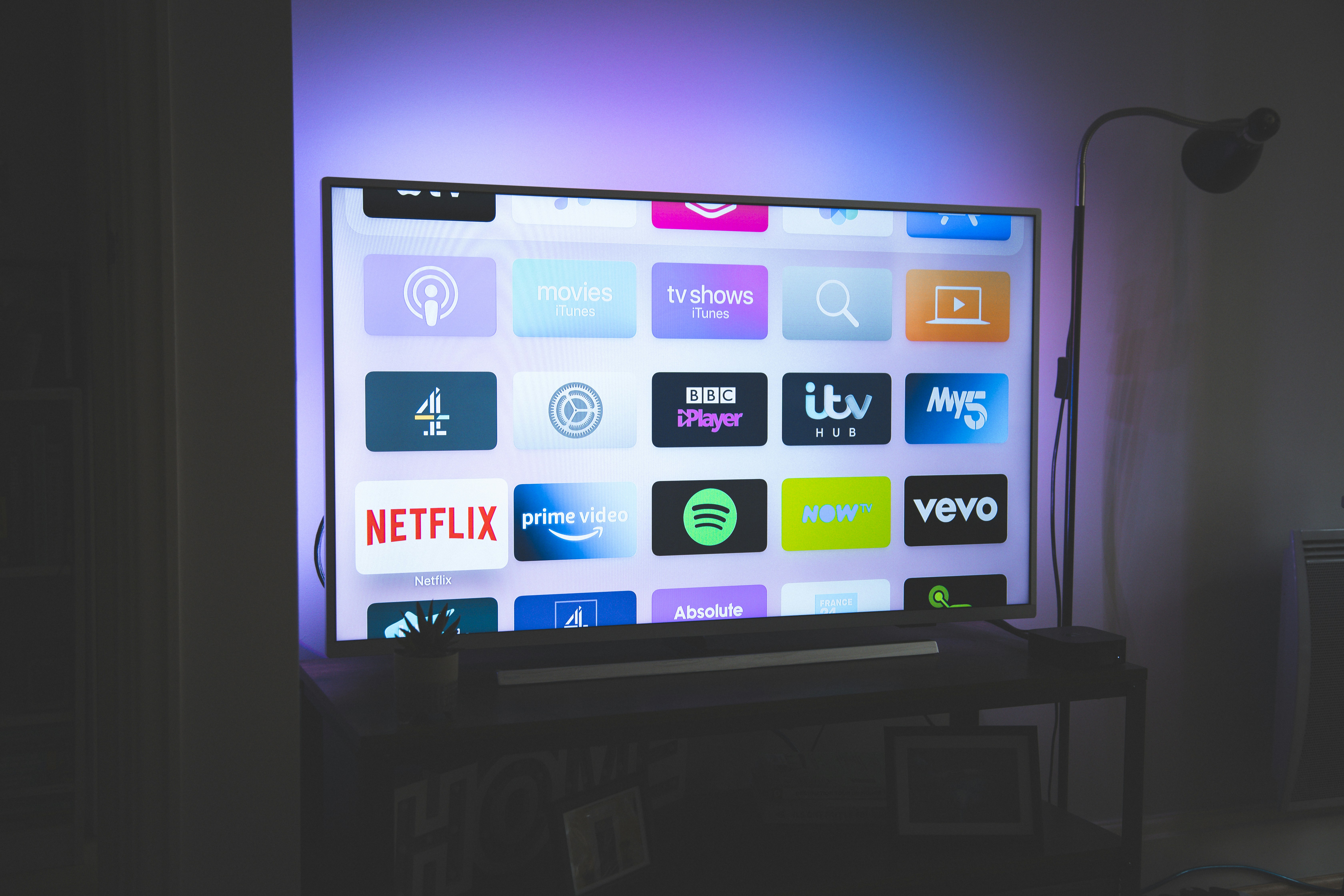
In the past two decades, television has developed a new language—one shaped by streaming platforms, serial storytelling, cinematic technique, and changing audience expectations. Television no longer borrows from film or theater. It speaks fluently in its own form.
“Television learned how to think in long sentences,” said a television scholar who studies narrative form. “And once it did, the syntax changed everything.”
From Episodic Closure to Narrative Continuity
Traditional television prioritized episodic closure.
Stories resolved within fixed time slots. Characters reset. Viewers could miss episodes without losing coherence. This structure favored accessibility over accumulation.
Contemporary television reverses that logic.
Long-form serial narratives unfold across seasons, rewarding sustained attention. Meaning accumulates gradually. Small moments echo forward.
“Television stopped pretending each episode was self-contained,” said a showrunner known for serialized drama. “It trusted the audience to remember.”
This shift alters narrative pacing. Television now works in arcs rather than beats, layering development over time.
Visual Language Beyond Coverage
Television’s visual grammar has evolved dramatically.
Earlier TV prioritized coverage—clear shots designed for small screens and uninterrupted viewing. Today’s television embraces cinematic composition, controlled lighting, and expressive camera movement.
“Television learned how to frame,” said a cinematographer who works across film and streaming series.
Close-ups linger. Silence becomes expressive. Visual motifs recur across episodes. The image carries narrative weight rather than merely illustrating dialogue.
Television no longer explains everything. It implies.
Dialogue as Texture, Not Exposition
The new language of television treats dialogue differently.
Exposition is less explicit. Characters speak elliptically, withholding information. Meaning emerges through subtext and repetition rather than explanation.
“Television learned to trust what’s unsaid,” said a television writer.
This approach mirrors literary techniques, allowing dialogue to function as texture rather than instruction. Viewers infer relationships, histories, and power dynamics over time.
Understanding becomes participatory.
Time as a Narrative Tool
Contemporary television experiments with time.
Nonlinear storytelling, flashbacks, flash-forwards, and parallel timelines complicate chronology. Episodes may shift perspective or revisit events from new angles.
“Time stopped being a straight line,” said the scholar. “It became material.”
This flexibility allows television to explore memory, trauma, and subjectivity. Events are not merely shown, but reconsidered.
Television speaks in layers of time rather than sequence.
Character as Long-Term Construction
Character development is central to television’s new language.
Unlike film, television allows characters to change incrementally. Contradictions accumulate. Moral clarity dissolves.
“Television lets people contradict themselves over years,” said the showrunner. “That’s closer to real life.”
Characters are shaped by duration. Viewers witness consequences unfold slowly, deepening emotional investment.
Identity becomes process, not trait.
Genre as Fluid Framework
Television’s language now treats genre as flexible rather than fixed.
Dramas incorporate comedy. Thrillers pause for introspection. Genres blend without announcement.
“Genre stopped being a rulebook,” said the writer. “It became a starting point.”
This hybridity reflects broader cultural uncertainty. Television mirrors a world where categories blur and expectations shift.
Genre becomes tone rather than structure.
Sound, Silence, and Atmosphere
Sound design plays a crucial role in television’s new grammar.
Music is used sparingly. Silence carries meaning. Ambient sound builds atmosphere rather than simply filling space.
“Silence became expressive,” said a sound designer for prestige series.
These choices slow viewing, encouraging attentiveness. Emotional cues are subtle rather than directive.
Television invites listening as much as watching.
The Influence of Platforms
Platforms shape television’s language as much as creators do.
Binge viewing encourages narrative density. Episodes no longer need reminders or recaps. Open endings feel acceptable.
“Platforms changed how writers think about momentum,” said the showrunner.
At the same time, algorithms influence pacing and structure. Early episodes must hook quickly. Attention is measured continuously.
Television balances artistic ambition with platform logic.
Audience Literacy and Expectation
Audiences have adapted to this new language.
Viewers expect complexity. They tolerate ambiguity. They analyze structure, symbolism, and subtext.
“Television educated its audience,” said the scholar. “And then raised the bar.”
This literacy enables experimentation. Creators can assume attention and patience—within limits.
The language of television evolves through dialogue with its audience.
Criticism and Interpretation
The new language of television has reshaped criticism.
Episodes are read like chapters. Seasons are treated as complete works. Analysis extends beyond plot to form.
“You don’t just review episodes anymore,” said a television critic. “You interpret systems.”
Television becomes a site of serious cultural analysis, not secondary entertainment.
What This Language Reflects
The new language of television reflects broader cultural shifts.
Fragmented attention. Extended uncertainty. Moral ambiguity. Desire for immersion rather than resolution.
Television adapts because it must. It absorbs technological change and social complexity into form.
“Television speaks the way we think now,” said the scholar. “In threads, not conclusions.”
A Language Still Forming
The language of television is not complete.
It continues to evolve alongside platforms, audiences, and creators. Constraints change. New conventions emerge. Old ones fade.
What remains is television’s defining strength: duration.
The new language of television is built not on spectacle,
but on time.
Time to watch.
Time to notice.
Time to change.
In learning how to speak across years rather than moments,
television has found a voice uniquely its own.
Oliver Grant
|

Film & TV
Members only
Storytelling has always adapted to the systems that carry it. Oral traditions shaped myth, print shaped the novel, cinema shaped visual narrative, and broadcast television shaped episodic form. Streaming did not invent a new desire for stories—it altered the conditions under which stories are made, structured, and experienced.
The result is not simply more content, but a transformation of narrative logic itself.
“Streaming didn’t change what stories are,” said a television scholar who studies media form. “It changed how stories are allowed to unfold.”
From Scheduled Viewing to Narrative Control
Traditional broadcast storytelling was governed by schedules.
Episodes had fixed lengths. Seasons followed predictable arcs. Stories were shaped around interruption—commercial breaks, weekly gaps, reruns.
Streaming removed those constraints.
“When you remove the clock, narrative breathes differently,” said a showrunner working primarily for platforms.
Writers no longer design stories around act breaks or reminders. Episodes end when narrative demands it, not when the schedule requires it. Time becomes elastic.
Storytelling shifts from punctual to continuous.
The Rise of the Serialized Long Form
Streaming accelerated the dominance of serialized storytelling.
While serial narratives existed long before streaming, platforms normalized deep continuity—stories that assume sustained attention across hours or even years.
“Streaming trusted audiences to remember,” said the scholar.
Characters evolve slowly. Subplots accumulate. Meaning emerges across seasons rather than episodes. This allows for complexity but demands commitment.
Storytelling becomes cumulative rather than episodic.
Binge-Watching and Narrative Density
Binge-watching reshaped narrative pacing.
Knowing that episodes will be consumed consecutively changes how information is revealed. Exposition can be delayed. Cliffhangers soften. Momentum replaces reset.
“You write assuming the next episode is seconds away,” said the showrunner.
This density compresses storytelling. Events unfold faster. Emotional arcs intensify. Reflection occurs across episodes rather than within them.
The story becomes a flow, not a sequence of stops.
Character as Long-Term Architecture
Streaming storytelling privileges character over plot.
Extended duration allows characters to contradict themselves, regress, and evolve gradually. Moral clarity dissolves. Ambiguity persists.
“You can let characters fail quietly,” said a television writer. “You don’t have to resolve them immediately.”
Character becomes architectural—built layer by layer over time. Viewers invest not in outcomes, but in process.
Identity becomes narrative itself.
The Decline—and Reinvention—of Genre Rules
Streaming loosened genre boundaries.
Platforms encourage hybrid forms—comedy-dramas, procedural hybrids, genre-bending narratives that resist easy classification.
“Genre stopped being a box,” said a development executive. “It became a palette.”
This flexibility reflects platform economics. Niche audiences can be served without mass appeal. Storytelling adapts to specificity rather than universality.
Genre becomes tone rather than formula.
The Algorithm as Narrative Influence
Algorithms shape storytelling indirectly.
Platforms track viewer behavior—completion rates, drop-off points, rewatching patterns. These metrics inform commissioning and development decisions.
“Data doesn’t write scripts,” said a media analyst. “But it frames expectations.”
Stories may front-load engagement, shorten runtimes, or emphasize immediate hooks. Subtlety competes with retention.
Narrative decisions respond to invisible feedback loops.
Visual Language and Cinematic Expansion
Streaming changed not only story structure, but visual storytelling.
Freed from broadcast standards, creators adopt cinematic techniques—long takes, restrained dialogue, expressive silence.
“Television learned to trust the image,” said a cinematographer working across film and streaming series.
Visual motifs recur across episodes. Atmosphere carries meaning. Storytelling becomes as visual as it is verbal.
Television stops explaining and starts implying.
Global Audiences and Cultural Translation
Streaming expanded storytelling beyond national boundaries.
Stories now travel globally by default. Local narratives reach international audiences without adaptation.
“You’re writing for multiple cultural literacies at once,” said a producer of international drama.
This globalization encourages specificity rather than generality. Cultural detail becomes an asset, not a barrier.
Storytelling becomes plural—rooted locally, consumed globally.
The Disappearance of Closure
Streaming reshapes narrative endings.
Open endings, unresolved arcs, and ambiguous conclusions become common. Stories stop rather than conclude.
“Closure feels artificial now,” said the writer. “Life doesn’t resolve cleanly.”
This reflects both creative preference and platform uncertainty. Renewals are unpredictable. Stories remain provisional.
Narrative becomes ongoing rather than complete.
Attention, Fatigue, and Narrative Risk
Streaming’s abundance introduces new pressures.
With endless content available, stories compete immediately. Early episodes must engage quickly. Slow builds carry risk.
“You’re always aware you can be abandoned,” said the showrunner.
This awareness can flatten experimentation. Risk is tolerated unevenly. Safe familiarity often outperforms innovation.
Storytelling balances ambition with survival.
What Streaming Did Not Change
Despite transformation, core storytelling principles remain.
Character motivation matters. Emotional truth endures. Conflict drives engagement.
“Technology changes delivery,” said the scholar. “Human attention doesn’t change that much.”
Streaming amplifies possibilities, but it does not replace narrative fundamentals.
Storytelling After the Platform Shift
Streaming did not kill old forms—it reorganized them.
Broadcast rhythms persist alongside new structures. Films, episodic TV, and long-form serials coexist. Storytelling adapts rather than converges.
Streaming storytelling is defined less by format than by flexibility.
Stories stretch, compress, pause, and resume—mirroring how people now live with media.
The change is not simply how stories are told,
but how they are lived with.
Streaming changed storytelling by removing endings,
by trusting attention,
and by allowing stories to unfold without clocks.
In doing so, it made storytelling less about arrival—
and more about duration.
Stories no longer ask only where they’re going.
They ask how long you’re willing to stay.
And increasingly,
the answer is:
as long as it takes.
Oliver Grant
|

Film & TV
Members only
Serialization is older than the novel, older than cinema, and arguably older than print itself. Stories have long unfolded in parts—told around fires, in episodes, across weeks or seasons—shaped as much by anticipation as by narrative resolution.
What has changed is not the appetite for serialized stories, but the systems that deliver them.
Today, serialization spans streaming platforms, podcasts, newsletters, web fiction, and social media. It is driven by algorithms, metrics, and global audiences—yet it still relies on one of storytelling’s oldest tools: the promise that something more is coming.
“Serialization is fundamentally about trust,” said a media historian who studies narrative forms. “You ask audiences to return, and in return you give them continuity.”
From Victorian Chapters to Digital Feeds
Serialized storytelling reached industrial scale in the nineteenth century, when novels were published in installments in newspapers and magazines. Authors wrote with deadlines in mind, responding to audience reaction and commercial pressure in real time.
“Serialization shaped the novel itself,” said a literary scholar specializing in nineteenth-century fiction. “Pacing, cliffhangers, even character arcs were designed around return readership.”
That logic persists. What has changed is speed. Where installments once arrived weekly or monthly, digital serialization can unfold daily—or all at once, in binge-ready form.
The future of serialized stories lies in how creators navigate this tension between rhythm and immediacy.
Streaming and the Reinvention of Episodes
Streaming platforms have transformed how audiences consume serialized narratives.
Episodes are no longer constrained by broadcast schedules. Seasons drop simultaneously. Viewers choose whether to binge or pause. This flexibility has altered narrative structure.
“Cliffhangers used to exist to bring you back next week,” said a television writer. “Now they exist to keep you from turning the screen off.”
Some series lean into continuous flow, minimizing episodic closure. Others reassert structure, designing episodes as distinct narrative units within a larger arc. The result is a hybrid form—neither purely episodic nor purely cinematic.
Serialization adapts by recalibrating suspense.
Podcasts and the Return of the Spoken Serial
Audio has quietly become one of the most fertile spaces for serialized storytelling.
Narrative podcasts—fictional series, investigative journalism, long-form reporting—revive the tradition of spoken serials, delivered episodically and consumed intimately.
“Audio creates a different kind of commitment,” said a podcast producer. “You’re literally inside someone’s head for weeks at a time.”
Podcasts reward consistency and voice. They allow stories to unfold gradually, with pauses, digressions, and reflection that might feel slow elsewhere. In doing so, they demonstrate that serialization does not require spectacle—only sustained attention.
Newsletters, Web Fiction, and Direct Audiences
Serialization has also moved closer to creators.
Platforms that allow writers to publish directly to readers—via newsletters, web fiction sites, or subscription models—have revived serialized writing as a viable practice.
“Serialization lowers the barrier between draft and audience,” said a novelist who publishes fiction in weekly installments. “It makes writing more porous.”
This immediacy reshapes authorship. Writers can adjust tone, pacing, or emphasis in response to reader feedback. The boundary between creation and reception becomes more fluid.
At the same time, this model places new demands on creators: consistency, responsiveness, and ongoing presence.
Algorithms as Editors
In many contemporary platforms, serialization is shaped not by human editors but by algorithms.
Recommendation systems reward engagement, retention, and frequency. Stories that encourage return visits—through suspense, familiarity, or emotional investment—are amplified.
“Algorithms favor serialization because it produces predictable behavior,” said a digital media analyst. “Return visits are easier to measure than one-off experiences.”
This can encourage formulaic storytelling: recurring tropes, extended arcs, delayed resolution. While such patterns can be effective, they risk narrowing narrative diversity if metrics become the primary guide.
The future of serialized stories depends on whether platforms allow space for experimentation alongside optimization.
Attention, Fatigue, and Narrative Responsibility
Serialization thrives on anticipation—but it can also exhaust it.
In an environment saturated with ongoing series, audiences face what some critics describe as “narrative fatigue.” Too many unfinished stories compete for limited attention.
“There’s a difference between suspense and deferral,” said a cultural critic. “Audiences notice when a story is stretching itself thin.”
Responsible serialization balances promise with payoff. It respects attention rather than exploiting it. This requires narrative discipline—knowing when to continue, and when to conclude.
Endings matter more in a serialized world precisely because audiences invest over time.
Community, Theory, and Shared Meaning
One of serialization’s most distinctive effects is communal interpretation.
Online forums, social platforms, and fan communities turn serialized stories into shared events. Speculation, analysis, and debate unfold between installments, shaping how stories are received.
“Serialization creates space for collective meaning-making,” said a media sociologist. “The audience becomes part of the narrative ecosystem.”
This participatory dimension can enrich storytelling, but it can also exert pressure on creators—encouraging fan service, discouraging surprise, or amplifying backlash.
The future of serialization will depend on how creators negotiate this relationship without surrendering narrative autonomy.
Old Form, New Conditions
Serialization is not new. What is new are the conditions under which it operates: constant connectivity, global reach, data-driven feedback, and economic models built on retention.
These conditions reward stories that unfold over time—but they also test the limits of patience, trust, and creative independence.
“Serialization survives because it mirrors how people experience life,” said the media historian. “Incomplete, ongoing, unresolved.”
What Comes Next
The future of serialized stories is unlikely to converge on a single format.
Some stories will be tightly structured, designed for binge consumption. Others will unfold slowly, inviting reflection between parts. Still others will blur boundaries between fiction, journalism, and commentary.
What unites them is not length or platform, but commitment—on both sides.
Serialization asks creators to sustain coherence over time.
It asks audiences to return, again and again, without certainty.
In a fragmented media landscape, that mutual commitment may be its most enduring value.
Oliver Grant
|
Film & TV
Members only
The idea of the auteur—the creator whose personal vision shapes a work from beginning to end—has long occupied a privileged place in cultural discourse. Originating in film criticism, the concept elevated directors from skilled technicians to authors, recognizing style, theme, and worldview as signatures that persist across projects.
In modern media, however, authorship has become more complex.
Large-scale collaboration, platform economics, and algorithmic distribution challenge the notion of singular creative control. Yet the language of auteurism has not disappeared. If anything, it has adapted—reshaped to fit an era of streaming platforms, transmedia storytelling, and brand-driven creativity.
“Auteur vision hasn’t vanished,” said a media studies scholar. “It’s been recontextualized.”
From Singular Author to Systemic Creation
Classic auteur theory emerged in a period when film production, while collaborative, still allowed certain individuals to exert clear stylistic control. Recurrent visual motifs, narrative concerns, and thematic obsessions marked an identifiable voice.
Modern media operates differently.
Television series span multiple seasons and writers’ rooms. Games involve teams of hundreds. Digital platforms distribute work through opaque systems that influence form as much as content.
“Authorship today is often collective by necessity,” said a television showrunner. “The question isn’t who controls everything, but who sets the direction.”
Auteur vision, in this context, becomes less about sole authorship and more about leadership—guiding a creative ecosystem rather than dictating every detail.
The Showrunner as Contemporary Auteur
Nowhere is this shift more visible than in television.
The rise of the showrunner as a central creative figure reflects an adaptation of auteur logic. While episodes are written and directed by many, the showrunner establishes tone, thematic coherence, and narrative arc.
“A strong showrunner creates a grammar,” said a senior television writer. “Others speak within it.”
This model balances collaboration with continuity. It acknowledges that complex narratives require multiple voices, while still recognizing the value of a guiding vision.
Auteurism survives by becoming managerial as well as artistic.
Streaming Platforms and Creative Identity
Streaming platforms have further complicated authorship.
On one hand, they provide creators with resources, global reach, and freedom from traditional scheduling constraints. On the other, they operate within data-driven systems that influence what gets made—and how.
“Platforms talk about creator freedom,” said a media analyst. “But freedom exists within parameters.”
Algorithms reward certain pacing, genres, and emotional beats. Completion rates and engagement metrics shape renewal decisions. Auteur vision must navigate these invisible constraints, adapting style without dissolving identity.
The result is a negotiated authorship—vision filtered through platform logic.
Auteur Branding and Market Value
In contemporary media, auteurism is not only an aesthetic concept—it is a brand.
Creators are marketed as identities. Their names signal quality, genre, or sensibility. This branding can protect creative autonomy by attracting audiences and investment.
“Vision has economic value now,” said a producer working in independent film and television. “It’s something you can sell.”
Yet branding also creates pressure. Audiences expect consistency. Deviation can be perceived as failure rather than experimentation. The auteur becomes both creator and product.
Vision, once a critical category, becomes a commercial asset.
Collaboration Without Erasure
One of the central tensions in modern auteur discourse is how to acknowledge collaboration without erasing individual contribution.
Films, series, and games are made by teams whose creative labor often remains invisible. Excessive focus on a single figure can obscure this reality.
“Auteur language can simplify complex processes,” said a cultural historian. “It risks turning collective work into a singular myth.”
At the same time, abandoning authorship entirely flattens difference. Without recognizing vision, works risk being understood as interchangeable outputs of systems rather than intentional expressions.
Modern auteurism must hold both truths: collaboration is real, and vision matters.
Games, Interactive Media, and Distributed Authorship
Interactive media challenge auteur concepts even further.
Games involve branching narratives, player agency, and emergent outcomes. Authorship is shared not only among developers, but with players themselves.
“In games, vision is about setting conditions,” said a narrative designer. “Not controlling outcomes.”
Here, auteur vision manifests as world-building, rule-setting, and tone rather than linear storytelling. The creator’s influence lies in designing possibility spaces rather than fixed narratives.
Auteurism shifts from authorship of text to authorship of systems.
The Politics of Vision
Auteur discourse also carries political weight.
Whose vision is recognized, funded, and celebrated reflects broader power structures within media industries. Historically, auteur status has been disproportionately granted to creators with institutional access and cultural capital.
“Vision isn’t discovered in a vacuum,” said a media equity researcher. “It’s selected.”
As industries confront questions of representation and inclusion, auteur frameworks are being re-examined. Expanding whose visions are recognized requires rethinking gatekeeping, not just celebrating difference.
Audience Participation and Interpretation
Modern audiences play a more active role in shaping meaning.
Online discourse, fan communities, and social media commentary interpret, critique, and sometimes contest authorial intent. Meaning becomes negotiated rather than delivered.
“The auteur no longer has the final word,” said the media studies scholar. “They have the opening move.”
This does not diminish vision. It situates it within dialogue—one where interpretation is shared, contested, and constantly evolving.
Vision Without Absolutism
The future of auteur vision lies not in reclaiming total control, but in redefining influence.
Vision today operates through alignment rather than command. It guides teams, negotiates with platforms, and invites audiences into interpretive space.
“The strongest visions are flexible,” said the showrunner. “They survive collaboration.”
Auteurism endures because it names something audiences still recognize: coherence, intention, and perspective in a landscape often shaped by scale and speed.
An Evolving Concept
Auteur vision in modern media is neither obsolete nor absolute.
It is a concept in transition—reshaped by collaboration, technology, and market forces. It no longer promises singular authority, but it continues to signal responsibility: someone stands behind the work, accountable for its direction and meaning.
Vision matters not because it excludes others,
but because it organizes contribution.
In a media environment defined by systems, the presence of vision—articulated, negotiated, and sustained—remains one of the clearest markers of authorship.
Oliver Grant
|
Film & TV
Members only
Screens have always traveled. Films crossed borders through festivals and distribution deals; television formats migrated through adaptation and syndication. What distinguishes the present moment is not the existence of global circulation, but its scale, speed, and structural depth.
Screen culture—film, television, streaming series, short-form video—now operates within a genuinely global system. Stories produced in one country are consumed simultaneously across dozens of others. Aesthetic conventions, narrative forms, and production practices move fluidly between markets.
“What we’re seeing isn’t just export,” said a media globalization researcher. “It’s integration.”
The result is a screen culture shaped by shared infrastructures and uneven power—one that redefines how stories are made, understood, and valued.
From National Industries to Global Platforms
For much of the twentieth century, screen culture was organized nationally.
Film industries reflected local languages, regulations, and audiences. Television schedules were tied to domestic broadcasting systems. International circulation existed, but it was limited and often asymmetrical.
Streaming platforms altered this structure.
By operating across borders with centralized distribution, they created global release models that bypass traditional gatekeepers. A series can now premiere simultaneously in multiple regions, framed as both local and universal.
“Platforms collapsed the distance between markets,” said a former international content executive. “They made global the default.”
This shift has reconfigured production incentives, encouraging stories that can travel—linguistically, culturally, and thematically.
Local Stories, Global Audiences
One of the defining features of contemporary screen culture is the rise of local-language content with global reach.
Series rooted in specific social, political, or cultural contexts now attract international audiences without being extensively localized. Subtitles replace dubbing. Context travels with the story.
“Viewers are more comfortable with difference than industries assumed,” said a television producer working on international co-productions.
This has expanded creative possibility. Writers and directors no longer need to neutralize cultural specificity to achieve visibility. In some cases, specificity becomes the appeal.
At the same time, global exposure introduces new pressures—expectations about pacing, genre, and narrative clarity shaped by dominant markets.
A Shared Visual Language
Globalization has encouraged the emergence of a shared visual grammar.
Cinematography, editing rhythms, and narrative structures increasingly reflect transnational norms. Prestige television aesthetics—muted palettes, slow builds, serialized arcs—appear across regions.
“There’s a global style now,” said a cinematographer who works across continents. “You can recognize it instantly.”
This convergence facilitates circulation, but it also risks homogenization. Distinct regional styles may soften as creators adapt to what travels well.
The tension between legibility and distinctiveness sits at the heart of global screen culture.
Economics and Uneven Power
Globalization has not flattened power dynamics—it has rearranged them.
Major platforms control financing, distribution, and data, shaping which projects are greenlit and how success is measured. Local industries gain access to capital and audiences, but often at the cost of autonomy.
“Creative freedom exists,” said a media economist, “but within financial architectures that are not evenly distributed.”
Revenue flows, ownership rights, and long-term control frequently remain concentrated. Smaller markets may gain visibility without gaining influence over the system itself.
Globalization expands opportunity, but not equally.
Cultural Translation and Misreading
Global screen culture depends on translation—not only of language, but of meaning.
Subtitles and dubbing convey dialogue, but cultural nuance can be lost, altered, or reinterpreted. Audiences bring their own frames of reference, reshaping interpretation.
“A story doesn’t arrive intact,” said a cultural studies scholar. “It’s reconstructed by each audience.”
Misunderstanding is not always negative. It can generate new readings and unexpected connections. But it can also flatten complexity, especially when narratives are consumed primarily as genre rather than context-rich expression.
The Politics of Representation
Global visibility raises stakes around representation.
When a series or film becomes a primary reference point for a culture, it carries disproportionate symbolic weight. Creators face expectations to represent nations, communities, or histories accurately—or at least responsibly.
“Global reach turns fiction into proxy,” said a film critic. “One story stands in for many.”
This burden can constrain creativity, particularly for marginalized voices. At the same time, global platforms have enabled stories previously excluded from mainstream circulation to find audiences.
Representation becomes both opportunity and responsibility.
Audience Behavior in a Global Ecosystem
Audiences are not passive recipients of global screen culture.
They compare versions, debate translations, and participate in online communities that cross borders. Viewing becomes social, interpretive, and collective.
“People watch with awareness of the world now,” said a digital culture researcher. “They know they’re part of a global audience.”
This awareness influences taste. Viewers become accustomed to subtitles, unfamiliar settings, and narrative rhythms outside domestic norms. Global literacy becomes a cultural skill.
Resistance and Regional Assertion
Even as globalization expands, resistance persists.
Public broadcasters, independent studios, and regional initiatives invest in preserving local storytelling traditions. Some governments support domestic production to counterbalance platform dominance.
“Global doesn’t have to mean uniform,” said a public media executive.
These efforts emphasize cultural continuity and linguistic diversity, asserting that global circulation should not erase local narrative ecosystems.
The future of screen culture depends on maintaining this balance.
What Globalization Has Changed—and What It Hasn’t
Globalization has transformed access, visibility, and scale. It has altered how stories travel and how audiences encounter difference.
What it has not eliminated is context.
Stories remain embedded in histories, languages, and social conditions. Global platforms can circulate content, but they cannot standardize meaning entirely.
“Culture resists full globalization,” said the media scholar. “It adapts, but it doesn’t dissolve.”
A Shared Screen, Unevenly Held
The globalization of screen culture is neither a triumph nor a threat in itself.
It is a condition—one shaped by technology, economics, and human curiosity. It creates connection and tension, opportunity and constraint.
Screens now form a shared cultural space.
But how that space is governed—who controls it, who benefits, and whose stories endure—remains an open question.
Global screen culture is not finished.
It is still being written, one frame at a time.
Oliver Grant
|
Film & TV
Members only
Stories are often remembered for their characters, themes, or moments of emotional intensity. Less visible—but equally essential—is the structure that holds those elements together. Narrative structure determines how stories unfold, how meaning accumulates, and how audiences engage over time.
Without structure, stories drift. With it, they carry weight.
“Narrative structure is the architecture of meaning,” said a literary theorist who studies form and storytelling. “You may not notice it while reading or watching, but you feel its absence immediately.”
Understanding why narrative structure matters requires looking beyond plot summaries to the systems that organize experience itself.
Structure as Sense-Making
Narrative structure helps audiences make sense of events.
Beginning, middle, and end are not arbitrary divisions. They reflect cognitive patterns through which humans process change, causality, and consequence.
“Structure mirrors how we understand time,” said a cognitive psychologist studying narrative comprehension.
Stories arrange events so that causes precede effects, tensions build, and resolutions offer closure or ambiguity. This organization allows audiences to follow complexity without becoming overwhelmed.
Structure is not decoration. It is orientation.
Pacing and Attention
Structure shapes pacing—the rhythm at which information and emotion are delivered.
Well-paced narratives balance momentum and pause. They know when to accelerate and when to linger. Poorly structured stories either rush meaning or stall it.
“Pacing is a structural decision,” said a screenwriter who works in long-form television. “It determines how attention flows.”
In serialized media, structure sustains engagement across episodes or chapters. In short forms, it concentrates impact. In all cases, structure governs how long audiences stay—and how deeply they invest.
Expectation and Subversion
Narrative structures create expectations.
Genres rely on shared structural patterns: the mystery that promises revelation, the romance that moves toward union or loss, the quest that culminates in return. These expectations are not constraints—they are agreements between storyteller and audience.
“When you break structure deliberately, it only works because the structure is known,” said the literary theorist.
Subversion depends on structure. Without a recognizable framework, deviation loses meaning. Structure provides the baseline against which innovation registers.
Emotional Coherence
Emotion in stories is cumulative.
Narrative structure ensures that emotional shifts feel earned rather than arbitrary. It connects moments of intensity to prior development, allowing feeling to arise from context.
“Emotion needs scaffolding,” said a narrative editor. “Otherwise it collapses into spectacle.”
Structural choices—such as withholding information, revisiting earlier scenes, or reordering events—shape emotional impact. The same events, arranged differently, can produce radically different responses.
Structure and Meaning
Narrative structure does not merely deliver meaning—it creates it.
Where a story begins and ends, what it emphasizes, and what it leaves unresolved all communicate values. Structure frames interpretation.
“A story’s argument is often structural,” said a cultural critic. “Not verbal.”
Nonlinear narratives question causality. Circular structures emphasize recurrence. Fragmented structures reflect disorientation or trauma. Form and content are inseparable.
The Ethics of Structure
Structural choices carry ethical implications.
What stories foreground, whom they center, and how they resolve conflict shape audience perception. Repeated structural patterns can normalize certain perspectives while marginalizing others.
“Structure determines who gets agency,” said a media ethics researcher.
For example, narratives that consistently resolve conflict through individual action may obscure systemic factors. Those that deny resolution may reflect lived uncertainty rather than narrative comfort.
Structure influences not only how stories feel, but what they imply.
Structure Across Media
Narrative structure adapts to medium.
Novels allow for interiority and digression. Film relies on visual sequencing and duration. Games incorporate player agency, altering linear progression.
“Structure responds to affordance,” said a game narrative designer. “It changes with the medium.”
Digital platforms introduce new structural challenges: fragmented attention, non-linear consumption, and episodic release models. Storytellers must design structures that survive interruption without losing coherence.
When Structure Fails
Structural failure is often misread as boredom or confusion.
Audiences may disengage without knowing why. The issue is not lack of interest, but lack of orientation.
“When structure breaks down, attention follows,” said the screenwriter.
Clarity does not require simplicity. Complex structures can succeed if they establish internal logic and reward attention. Failure occurs when structure is inconsistent or underdeveloped.
Learning to See Structure
Most audiences experience structure intuitively.
Criticism and analysis make it visible. They help readers and viewers articulate why certain stories resonate and others falter.
“Once you see structure, you can’t unsee it,” said the narrative editor.
This awareness deepens appreciation and sharpens critique. It also empowers creators to make deliberate choices rather than defaulting to convention.
Why It Endures
Narrative structure endures because it reflects how humans organize experience.
Life itself is unstructured. Stories impose order—not to simplify reality, but to make it legible. Structure allows meaning to emerge from complexity.
Narrative structure matters because it holds stories together,
because it guides attention and emotion,
and because it shapes what stories ultimately say.
Structure is not the story itself.
It is what allows the story to be understood at all.
Oliver Grant
|
Featured
Media Criticism
Members only
Media narratives rarely emerge by accident. They are shaped through decisions—some explicit, others structural—about what is covered, how it is framed, and which voices are amplified or ignored. These decisions do not belong to a single actor. They emerge from a complex ecosystem of institutions, incentives, and power.
“Media narratives are the result of many hands,” said a scholar of political communication. “Some are visible. Most are not.”
Understanding who shapes the media narrative requires moving beyond headlines to examine the forces that influence attention, interpretation, and legitimacy.
Editors and Newsroom Judgment
At the most visible level, editors play a central role.
They decide which stories are pursued, how prominently they are featured, and what angles are emphasized. Editorial judgment determines what enters public conversation—and what remains peripheral.
“News is a series of choices,” said a former national editor. “Every front page reflects priorities.”
Even in data-driven environments, editorial instincts shape framing. Headlines, images, and sourcing guide interpretation before readers engage with content.
Editors shape narratives not by inventing facts, but by arranging them.
Journalists and Framing on the Ground
Reporters shape narratives through framing.
Which sources are consulted, which quotes are selected, and which details are foregrounded all influence how stories are understood. Constraints of time, access, and safety affect these choices.
“Framing often reflects what’s available,” said a correspondent who has reported from conflict zones. “Not what’s ideal.”
Beat structures also matter. Journalists assigned to institutions—courts, legislatures, corporations—often rely on official sources, which shapes narrative perspective.
Reporting practices embed power relationships into coverage.
Institutions and Official Sources
Institutions exert significant influence over media narratives.
Governments, corporations, and advocacy organizations invest heavily in communication strategies. Press releases, briefings, and spokespersons provide ready-made narratives designed for coverage.
“Access is a form of leverage,” said a public relations analyst.
When media outlets depend on institutional access, narratives may reflect institutional priorities—even without explicit pressure. The availability of information shapes what gets reported.
Power speaks fluently in institutional language.
Ownership and Organizational Structure
Media ownership affects narrative scope.
Ownership structures influence resource allocation, risk tolerance, and editorial independence. Concentrated ownership can narrow perspective, while underfunding limits investigative capacity.
“Structure sets boundaries,” said a media economist. “Not content, but possibility.”
Financial pressures encourage certain narratives over others—those that are cheaper to produce, faster to publish, or less legally risky.
Economic context shapes narrative ambition.
Platforms and Algorithmic Visibility
Digital platforms play a decisive role in shaping media narratives.
Algorithms determine which stories are surfaced, shared, and sustained. Visibility increasingly depends on engagement metrics rather than editorial judgment.
“Algorithms don’t choose stories,” said a technology policy researcher. “They choose outcomes.”
Stories that provoke reaction travel farther. Nuanced or complex reporting may struggle for reach. Narrative prominence becomes tied to platform dynamics.
Platforms shape not content creation, but content survival.
Audiences as Narrative Reinforcers
Audiences are not passive recipients of media narratives.
Sharing, commenting, and engagement reinforce certain frames and marginalize others. Collective attention feeds back into editorial decisions.
“Audience behavior becomes data,” said the economist. “And data shapes strategy.”
This feedback loop rewards familiarity and emotional clarity. Narratives that resonate with existing beliefs spread more easily, reinforcing perception rather than challenging it.
Narratives stabilize through repetition.
Cultural Norms and Assumptions
Media narratives are also shaped by culture.
Unspoken assumptions about credibility, relevance, and normality influence coverage. Certain topics feel newsworthy; others feel marginal.
“Culture sets the default lens,” said a sociologist studying media representation.
These norms affect whose voices are heard, which experiences are centered, and how events are interpreted. Cultural bias operates quietly, through habit rather than intent.
Narratives reflect what societies already expect.
Expertise and Authority
Experts shape narratives through interpretation.
Economists, scientists, legal analysts, and commentators translate complexity into public language. Their frameworks influence how issues are understood.
“Expertise simplifies,” said the communication scholar. “That simplification carries values.”
Which experts are invited, and which perspectives are treated as legitimate, affects narrative boundaries. Authority narrows debate even as it clarifies it.
Narratives depend on who is allowed to explain.
The Speed of the News Cycle
Speed reshapes narrative formation.
In fast-moving news environments, early frames tend to persist. Initial interpretations harden before full information emerges.
“The first version sticks,” said the editor.
Corrections and updates rarely travel as far as original narratives. Speed privileges immediacy over reflection.
Narratives form quickly—and resist revision.
Power and the Limits of Challenge
While media can challenge power, it also operates within it.
Legal risk, access dependence, and economic pressure constrain how far narratives can go. Investigative reporting requires time and protection—both increasingly scarce.
“Challenging power is expensive,” said the media economist.
As a result, some narratives remain underexplored not because they are false, but because they are costly to pursue.
Silence can reflect constraint as much as choice.
Narrative Is Not Control
No single actor controls the media narrative.
Narratives emerge from interaction—between journalists, institutions, platforms, audiences, and culture. Influence is distributed, uneven, and dynamic.
“Media narratives are negotiated,” said the scholar. “Not dictated.”
Understanding this complexity avoids simplistic blame. It reveals where leverage exists—and where accountability should be applied.
Why It Matters
Media narratives shape public understanding.
They influence how problems are defined, which solutions seem plausible, and whose experiences count. Narrative power precedes policy.
To ask who shapes the media narrative is to ask how societies understand themselves.
Narratives do not merely reflect reality.
They organize it.
They are shaped by people, systems, and incentives—
often invisibly, often indirectly.
Making those forces visible is not about mistrust.
It is about clarity.
Because the question is not whether narratives are shaped—
but whether the public understands how, and by whom.
Art & Design
Members only
Design is often discussed in terms of objects: chairs, interfaces, buildings, logos. But its most enduring impact is rarely visible. Design operates as infrastructure—shaping how people move, decide, communicate, and belong.
Like roads or power grids, design structures daily life without demanding constant attention. It organizes behavior, frames expectation, and distributes access.
“Design is culture’s operating system,” said a researcher who studies design and social systems. “You only notice it when it breaks.”
Understanding design as cultural infrastructure means shifting focus from aesthetics to structure—from how things look to how they function socially.
Infrastructure Beyond the Physical
Infrastructure is typically understood as physical: transportation, utilities, communication networks.
Design extends this concept into the cultural realm. It governs how institutions present themselves, how information flows, and how individuals interact with systems.
“Design connects people to systems,” said a service designer working in public institutions. “It translates abstract rules into lived experience.”
Forms, signage, interfaces, layouts—these elements mediate access. They determine who can participate easily, who struggles, and who is excluded entirely.
Design is infrastructure because it organizes possibility.
Design and Everyday Governance
Much of governance is experienced through design.
Policies become real through documents, websites, procedures, and environments. The clarity or confusion of these designs affects trust, compliance, and perception of legitimacy.
“People don’t encounter policy,” said the researcher. “They encounter forms.”
When systems are opaque or hostile, they discourage engagement. When they are clear and humane, they enable participation.
Design shapes how authority feels—not just how it functions.
Cultural Values Embedded in Design
Design reflects values.
Choices about hierarchy, accessibility, efficiency, and visibility encode assumptions about what—and who—matters. These assumptions become normalized through repetition.
“A design decision is always a value decision,” said a cultural theorist focused on material culture.
Minimalism may signal efficiency or exclusion. Complexity may suggest depth or bureaucracy. Neutrality itself is a stance.
As infrastructure, design quietly reproduces cultural norms.
Access, Inclusion, and Exclusion
Because design structures access, it plays a central role in inclusion.
Ramps, captions, clear language, intuitive navigation—these features determine whether systems accommodate diverse abilities and experiences.
“Inclusion happens early or not at all,” said an accessibility consultant. “You can’t retrofit empathy.”
Exclusion is often unintentional, embedded in defaults. Design decisions made for convenience or efficiency can marginalize entire populations.
Infrastructure that excludes becomes invisible only to those it serves.
Design and Trust
Design influences trust at a systemic level.
People infer credibility from visual coherence, consistency, and transparency. Interfaces that feel predictable foster confidence. Those that feel arbitrary erode it.
“Trust is designed,” said the service designer.
This applies across contexts—from healthcare portals to media platforms. Design mediates the relationship between institutions and individuals, shaping willingness to engage.
Trust is not a feature. It is an outcome of structure.
Digital Design as Cultural Backbone
In digital environments, design functions as primary infrastructure.
Interfaces determine how information is discovered, shared, and remembered. Algorithmic systems shape visibility, attention, and reward.
“Digital design doesn’t just present culture,” said a media analyst. “It organizes it.”
Feed structures, notification systems, and interaction loops shape behavior at scale. They influence discourse, creativity, and mental health.
Digital design is cultural infrastructure with global reach.
Maintenance, Not Innovation
Infrastructure is defined less by innovation than by maintenance.
Design as infrastructure requires long-term thinking: updating systems, addressing unintended consequences, and responding to changing needs.
“Maintenance is the invisible labor of design,” said the researcher.
This work is often undervalued. Designers are celebrated for novelty, not durability. Yet infrastructure fails when maintenance is neglected.
Cultural stability depends on sustained care.
Designers as Stewards
Seeing design as infrastructure reframes the role of the designer.
Rather than creators of isolated artifacts, designers become stewards of systems. Their responsibility extends beyond delivery to impact.
“You’re shaping environments people live inside,” said the cultural theorist. “That carries ethical weight.”
This perspective emphasizes humility. Infrastructure must serve many users over time, not express individual vision alone.
Design becomes collective, not expressive.
When Infrastructure Fails
Failures of design infrastructure reveal its importance.
Confusing ballots, inaccessible public spaces, biased algorithms—these failures disrupt trust and participation.
“Breakdowns make structure visible,” said the accessibility consultant.
Cultural crises often expose design weaknesses that were previously ignored. Repair requires more than surface fixes—it demands structural reconsideration.
Failure becomes diagnostic.
Rethinking Design Education
Understanding design as cultural infrastructure has implications for education.
Designers need training in systems thinking, ethics, and social context—not just form and technique.
“We train designers to make things,” said the researcher. “We need to train them to understand consequences.”
This shift broadens design literacy beyond the profession. Citizens benefit from understanding how design shapes experience and power.
Design awareness becomes civic knowledge.
Infrastructure as Cultural Commitment
Design as infrastructure reflects collective priorities.
Societies invest in systems that align with their values. Neglect signals indifference. Care signals commitment.
“Design shows what a culture is willing to support,” said the theorist.
Whether in public services, media platforms, or shared spaces, design reveals how culture organizes itself.
Designing for the Long Term
Design as cultural infrastructure demands long horizons.
It resists trends in favor of resilience. It values clarity over spectacle. It prioritizes use over display.
Design shapes not just how culture appears,
but how it functions.
As infrastructure, design is not optional or decorative.
It is foundational.
Recognizing this shifts design from the margins to the center of cultural life—where decisions about access, trust, and participation are made.
Design is not the surface of culture.
It is the structure beneath it.
Books
Members only
Predictions about the decline of long-form reading surface with every technological shift. Radio was supposed to end books. Television was supposed to shorten attention spans. The internet was supposed to finish the job.
Yet long-form reading persists.
Despite fragmented attention, constant notifications, and endless streams of short content, readers continue to seek sustained engagement with essays, books, and in-depth reporting.
“Long-form reading doesn’t survive in spite of digital culture,” said a cognitive psychologist who studies reading behavior. “It survives because of it.”
Understanding why long-form reading endures requires looking beyond nostalgia to the cognitive, cultural, and emotional functions it continues to serve.
Reading as Cognitive Depth
Long-form reading engages the mind differently than short-form consumption.
Extended texts require sustained attention, working memory, and interpretive effort. Readers track arguments, narratives, and themes across time. Meaning accumulates gradually rather than arriving instantly.
“Long-form reading builds cognitive stamina,” said the psychologist. “It trains the mind to hold complexity.”
This depth supports critical thinking. Readers are less likely to react immediately and more likely to contextualize information. In an environment optimized for speed, long-form reading restores deliberation.
Depth becomes a feature, not a liability.
The Limits of Fragmentation
Digital culture excels at delivering fragments.
Headlines, summaries, threads, and clips offer quick orientation. They are efficient and accessible—but incomplete.
“Fragments inform,” said a media studies scholar. “They rarely explain.”
Long-form reading compensates for this limitation. It provides continuity, allowing ideas to develop fully and contradictions to coexist. Rather than resolving tension quickly, long-form texts sustain it.
Readers turn to length not for excess, but for coherence.
Narrative and Meaning-Making
Humans understand the world through narrative.
Long-form reading allows narratives to unfold with nuance. Characters evolve. Arguments deepen. Context emerges gradually.
“Meaning needs time,” said a novelist who teaches literature. “You can’t compress understanding indefinitely.”
This applies to fiction and nonfiction alike. Long-form journalism contextualizes events. Essays trace ideas across history. Novels explore interiority.
Narrative length mirrors lived experience—complex, layered, unresolved.
Emotional Investment and Empathy
Sustained reading fosters emotional engagement.
Spending time with a text allows readers to inhabit perspectives different from their own. Empathy develops through duration rather than intensity.
“Empathy grows with exposure,” said a literary scholar. “You need time inside another voice.”
Short-form content may provoke reaction, but long-form reading cultivates identification. It invites readers to linger rather than respond.
Emotion becomes reflective rather than reactive.
Reading as Resistance
In a culture of constant interruption, long-form reading can feel countercultural.
Choosing to read at length requires withdrawal from immediacy. It resists the demand to stay updated, responsive, and visible.
“Long-form reading is an act of refusal,” said the media scholar. “It says: this matters enough to take time.”
This refusal is not anti-technology. It is selective engagement. Readers carve out space for depth within a crowded media environment.
Attention becomes intentional.
Trust, Authority, and Credibility
Long-form reading also persists because it signals credibility.
Length alone does not guarantee quality—but sustained argument and evidence-building convey seriousness. Readers associate long-form work with care, accountability, and expertise.
“When someone commits to length, they signal responsibility,” said an editor at an independent publication.
In an era of misinformation, readers seek sources that demonstrate process and transparency. Long-form texts reveal how conclusions are reached, not just what they are.
Trust grows through exposition.
The Pleasure of Immersion
Beyond utility, long-form reading offers pleasure.
Immersion—the feeling of being absorbed in a text—remains one of reading’s most compelling rewards. It creates a sense of continuity often absent from digital life.
“Immersion is restorative,” said the psychologist. “It reduces cognitive noise.”
Readers describe long-form reading as calming, even when content is challenging. The sustained focus provides relief from constant decision-making and switching.
Length becomes a form of rest.
Adaptation, Not Decline
Long-form reading has not remained static.
Formats have adapted: digital essays, audiobooks, newsletters, and e-readers accommodate different habits and contexts. Reading occurs across devices and schedules.
“Long-form didn’t disappear,” said the editor. “It changed where it lives.”
Readers may not always read uninterrupted for hours. They return to texts across sessions, preserving continuity in new ways.
Endurance does not require purity.
Who Long-Form Serves
Long-form reading serves needs that short-form cannot replace.
It supports learning, reflection, and sustained inquiry. It allows readers to encounter complexity without simplification.
“Some questions can’t be answered quickly,” said the novelist. “They require staying.”
As long as societies face complicated problems, there will be demand for forms that can hold them.
Reading and Identity
For many readers, long-form reading is tied to identity.
It represents how they see themselves—as curious, reflective, capable of patience. Reading at length becomes part of a personal ethic.
“Reading long-form affirms who you think you are,” said the literary scholar.
This identity reinforces practice. Readers seek length not out of obligation, but alignment.
The Future of Long-Form
Long-form reading will not dominate attention.
It does not need to. Its value lies in complementing faster forms, not replacing them. It exists alongside streams and summaries, offering an alternative mode of engagement.
Long-form reading endures because it does something irreplaceable.
It slows time.
It deepens understanding.
It makes space for complexity.
In a world that moves quickly,
long-form reading remains where thinking happens.
Not because it resists change—
but because it gives change somewhere to land.
Music
Members only
Music is often described as universal, but its deeper power lies in specificity. Songs are anchored to moments, places, and shared experiences. They carry emotional residue across time, binding individual memory to collective history.
Long after events fade from public record, music remains—echoing past conditions, preserving moods, and transmitting cultural meaning.
“Music remembers what societies forget,” said a cultural historian who studies sound and memory. “It stores feeling in a way documents can’t.”
To understand music as cultural memory is to recognize it not just as art or entertainment, but as a living archive.
Memory Beyond the Written Record
Historical memory is often built from texts, dates, and official narratives. Music operates differently.
Songs encode experience indirectly—through rhythm, melody, and repetition. They do not describe events; they evoke them.
“Music doesn’t explain history,” said an ethnomusicologist. “It reactivates it.”
A melody can summon an era. A lyric can recall social tension. A sound can restore atmosphere more vividly than any written account.
Music preserves how history felt, not just what happened.
Collective Experience and Shared Sound
Music becomes cultural memory through repetition and sharing.
When songs circulate widely—through radio, performance, or ritual—they embed themselves in collective consciousness. People remember not only the music, but where they heard it and with whom.
“Shared listening creates shared memory,” said the historian.
National anthems, protest songs, and popular hits become reference points. They mark generations, movements, and turning points.
Music becomes a time-stamp for lived experience.
Music and Identity Formation
Music plays a central role in shaping cultural identity.
Genres, scenes, and traditions connect individuals to communities, histories, and values. Musical preference often signals belonging.
“Music tells people who they are—and where they come from,” said a sociologist studying youth culture.
Folk traditions preserve local history. Diasporic music carries memory across borders. Subcultures use sound to differentiate themselves from dominant narratives.
Identity is remembered through sound.
Protest, Resistance, and Memory
Music has long functioned as a vehicle for resistance.
Songs articulate dissent, preserve suppressed histories, and sustain morale. When official narratives silence experience, music becomes an alternative archive.
“Music remembers struggle when institutions don’t,” said the ethnomusicologist.
Protest songs are not only tools of mobilization—they are records. They capture language, emotion, and urgency in ways that endure beyond the moment of action.
Resistance is remembered through rhythm.
Transmission Across Generations
Cultural memory depends on transmission.
Music travels easily across generations because it is repeatable, adaptable, and embodied. Songs are taught, covered, sampled, and reinterpreted.
“Music survives because it can be remade,” said the historian.
Each reinterpretation preserves memory while updating context. Meaning shifts, but lineage remains. A song carries its past even as it acquires new relevance.
Memory persists through variation.
Technology and Musical Memory
Technology reshapes how musical memory is stored and accessed.
Recordings preserve sound beyond live performance. Streaming platforms archive vast catalogs. Algorithms surface old music in new contexts.
“Technology changed how memory circulates,” said a digital music archivist.
Yet abundance also flattens chronology. Songs from different eras coexist without temporal cues. Memory becomes fragmented, detached from original context.
Preservation does not guarantee understanding.
Personal Memory and Emotional Recall
Music is deeply linked to personal memory.
Neurological research shows that music activates regions associated with emotion and recall. Songs trigger vivid recollections—often involuntary and intense.
“Music bypasses narrative memory,” said a cognitive psychologist. “It goes straight to feeling.”
Personal memories overlap with cultural ones. Individual experiences become layered onto shared soundtracks, creating complex memory networks.
The personal and collective intertwine.
Loss, Nostalgia, and Myth
Cultural memory is selective.
Music often becomes a site of nostalgia, idealizing past moments or eras. Songs can reinforce myth as much as history.
“Nostalgia smooths complexity,” said the historian.
This does not negate music’s value as memory—but it complicates it. Memory is not objective. It reflects desire as much as fact.
Music remembers selectively.
Music as Living Archive
Unlike static archives, music remains active.
It is performed, listened to, reinterpreted, and contested. Memory stays alive because music continues to circulate.
“A living archive changes with its listeners,” said the ethnomusicologist.
This dynamism allows music to hold contradiction. Different communities may remember the same song differently. Memory becomes plural rather than fixed.
Sound holds multiple pasts at once.
Forgetting and Silence
What music does not remember is equally important.
Some traditions are lost through displacement, censorship, or neglect. Absence reflects power—whose music is preserved and whose disappears.
“Cultural memory has blind spots,” said the sociologist.
Efforts to recover lost or marginalized musical histories seek to repair these gaps. Preservation becomes an ethical act.
Remembering requires choice.
Why Music Endures as Memory
Music endures as cultural memory because it combines emotion, repetition, and embodiment.
It does not rely on explanation. It survives through use. It invites participation rather than observation.
Music remembers not by recording facts,
but by carrying feeling across time.
It holds joy and grief, struggle and celebration—
often simultaneously.
In a world where information moves quickly and memory fragments,
music remains where the past is felt rather than recalled.
Not preserved behind glass,
but alive—
heard again, and remembered anew.
Media Criticism
Members only
Media narratives rarely emerge by accident. They are shaped through decisions—some explicit, others structural—about what is covered, how it is framed, and which voices are amplified or ignored. These decisions do not belong to a single actor. They emerge from a complex ecosystem of institutions, incentives, and power.
“Media narratives are the result of many hands,” said a scholar of political communication. “Some are visible. Most are not.”
Understanding who shapes the media narrative requires moving beyond headlines to examine the forces that influence attention, interpretation, and legitimacy.
Editors and Newsroom Judgment
At the most visible level, editors play a central role.
They decide which stories are pursued, how prominently they are featured, and what angles are emphasized. Editorial judgment determines what enters public conversation—and what remains peripheral.
“News is a series of choices,” said a former national editor. “Every front page reflects priorities.”
Even in data-driven environments, editorial instincts shape framing. Headlines, images, and sourcing guide interpretation before readers engage with content.
Editors shape narratives not by inventing facts, but by arranging them.
Journalists and Framing on the Ground
Reporters shape narratives through framing.
Which sources are consulted, which quotes are selected, and which details are foregrounded all influence how stories are understood. Constraints of time, access, and safety affect these choices.
“Framing often reflects what’s available,” said a correspondent who has reported from conflict zones. “Not what’s ideal.”
Beat structures also matter. Journalists assigned to institutions—courts, legislatures, corporations—often rely on official sources, which shapes narrative perspective.
Reporting practices embed power relationships into coverage.
Institutions and Official Sources
Institutions exert significant influence over media narratives.
Governments, corporations, and advocacy organizations invest heavily in communication strategies. Press releases, briefings, and spokespersons provide ready-made narratives designed for coverage.
“Access is a form of leverage,” said a public relations analyst.
When media outlets depend on institutional access, narratives may reflect institutional priorities—even without explicit pressure. The availability of information shapes what gets reported.
Power speaks fluently in institutional language.
Ownership and Organizational Structure
Media ownership affects narrative scope.
Ownership structures influence resource allocation, risk tolerance, and editorial independence. Concentrated ownership can narrow perspective, while underfunding limits investigative capacity.
“Structure sets boundaries,” said a media economist. “Not content, but possibility.”
Financial pressures encourage certain narratives over others—those that are cheaper to produce, faster to publish, or less legally risky.
Economic context shapes narrative ambition.
Platforms and Algorithmic Visibility
Digital platforms play a decisive role in shaping media narratives.
Algorithms determine which stories are surfaced, shared, and sustained. Visibility increasingly depends on engagement metrics rather than editorial judgment.
“Algorithms don’t choose stories,” said a technology policy researcher. “They choose outcomes.”
Stories that provoke reaction travel farther. Nuanced or complex reporting may struggle for reach. Narrative prominence becomes tied to platform dynamics.
Platforms shape not content creation, but content survival.
Audiences as Narrative Reinforcers
Audiences are not passive recipients of media narratives.
Sharing, commenting, and engagement reinforce certain frames and marginalize others. Collective attention feeds back into editorial decisions.
“Audience behavior becomes data,” said the economist. “And data shapes strategy.”
This feedback loop rewards familiarity and emotional clarity. Narratives that resonate with existing beliefs spread more easily, reinforcing perception rather than challenging it.
Narratives stabilize through repetition.
Cultural Norms and Assumptions
Media narratives are also shaped by culture.
Unspoken assumptions about credibility, relevance, and normality influence coverage. Certain topics feel newsworthy; others feel marginal.
“Culture sets the default lens,” said a sociologist studying media representation.
These norms affect whose voices are heard, which experiences are centered, and how events are interpreted. Cultural bias operates quietly, through habit rather than intent.
Narratives reflect what societies already expect.
Expertise and Authority
Experts shape narratives through interpretation.
Economists, scientists, legal analysts, and commentators translate complexity into public language. Their frameworks influence how issues are understood.
“Expertise simplifies,” said the communication scholar. “That simplification carries values.”
Which experts are invited, and which perspectives are treated as legitimate, affects narrative boundaries. Authority narrows debate even as it clarifies it.
Narratives depend on who is allowed to explain.
The Speed of the News Cycle
Speed reshapes narrative formation.
In fast-moving news environments, early frames tend to persist. Initial interpretations harden before full information emerges.
“The first version sticks,” said the editor.
Corrections and updates rarely travel as far as original narratives. Speed privileges immediacy over reflection.
Narratives form quickly—and resist revision.
Power and the Limits of Challenge
While media can challenge power, it also operates within it.
Legal risk, access dependence, and economic pressure constrain how far narratives can go. Investigative reporting requires time and protection—both increasingly scarce.
“Challenging power is expensive,” said the media economist.
As a result, some narratives remain underexplored not because they are false, but because they are costly to pursue.
Silence can reflect constraint as much as choice.
Narrative Is Not Control
No single actor controls the media narrative.
Narratives emerge from interaction—between journalists, institutions, platforms, audiences, and culture. Influence is distributed, uneven, and dynamic.
“Media narratives are negotiated,” said the scholar. “Not dictated.”
Understanding this complexity avoids simplistic blame. It reveals where leverage exists—and where accountability should be applied.
Why It Matters
Media narratives shape public understanding.
They influence how problems are defined, which solutions seem plausible, and whose experiences count. Narrative power precedes policy.
To ask who shapes the media narrative is to ask how societies understand themselves.
Narratives do not merely reflect reality.
They organize it.
They are shaped by people, systems, and incentives—
often invisibly, often indirectly.
Making those forces visible is not about mistrust.
It is about clarity.
Because the question is not whether narratives are shaped—
but whether the public understands how, and by whom.
Art & Design
Members only
Design is often discussed in terms of objects: chairs, interfaces, buildings, logos. But its most enduring impact is rarely visible. Design operates as infrastructure—shaping how people move, decide, communicate, and belong.
Like roads or power grids, design structures daily life without demanding constant attention. It organizes behavior, frames expectation, and distributes access.
“Design is culture’s operating system,” said a researcher who studies design and social systems. “You only notice it when it breaks.”
Understanding design as cultural infrastructure means shifting focus from aesthetics to structure—from how things look to how they function socially.
Infrastructure Beyond the Physical
Infrastructure is typically understood as physical: transportation, utilities, communication networks.
Design extends this concept into the cultural realm. It governs how institutions present themselves, how information flows, and how individuals interact with systems.
“Design connects people to systems,” said a service designer working in public institutions. “It translates abstract rules into lived experience.”
Forms, signage, interfaces, layouts—these elements mediate access. They determine who can participate easily, who struggles, and who is excluded entirely.
Design is infrastructure because it organizes possibility.
Design and Everyday Governance
Much of governance is experienced through design.
Policies become real through documents, websites, procedures, and environments. The clarity or confusion of these designs affects trust, compliance, and perception of legitimacy.
“People don’t encounter policy,” said the researcher. “They encounter forms.”
When systems are opaque or hostile, they discourage engagement. When they are clear and humane, they enable participation.
Design shapes how authority feels—not just how it functions.
Cultural Values Embedded in Design
Design reflects values.
Choices about hierarchy, accessibility, efficiency, and visibility encode assumptions about what—and who—matters. These assumptions become normalized through repetition.
“A design decision is always a value decision,” said a cultural theorist focused on material culture.
Minimalism may signal efficiency or exclusion. Complexity may suggest depth or bureaucracy. Neutrality itself is a stance.
As infrastructure, design quietly reproduces cultural norms.
Access, Inclusion, and Exclusion
Because design structures access, it plays a central role in inclusion.
Ramps, captions, clear language, intuitive navigation—these features determine whether systems accommodate diverse abilities and experiences.
“Inclusion happens early or not at all,” said an accessibility consultant. “You can’t retrofit empathy.”
Exclusion is often unintentional, embedded in defaults. Design decisions made for convenience or efficiency can marginalize entire populations.
Infrastructure that excludes becomes invisible only to those it serves.
Design and Trust
Design influences trust at a systemic level.
People infer credibility from visual coherence, consistency, and transparency. Interfaces that feel predictable foster confidence. Those that feel arbitrary erode it.
“Trust is designed,” said the service designer.
This applies across contexts—from healthcare portals to media platforms. Design mediates the relationship between institutions and individuals, shaping willingness to engage.
Trust is not a feature. It is an outcome of structure.
Digital Design as Cultural Backbone
In digital environments, design functions as primary infrastructure.
Interfaces determine how information is discovered, shared, and remembered. Algorithmic systems shape visibility, attention, and reward.
“Digital design doesn’t just present culture,” said a media analyst. “It organizes it.”
Feed structures, notification systems, and interaction loops shape behavior at scale. They influence discourse, creativity, and mental health.
Digital design is cultural infrastructure with global reach.
Maintenance, Not Innovation
Infrastructure is defined less by innovation than by maintenance.
Design as infrastructure requires long-term thinking: updating systems, addressing unintended consequences, and responding to changing needs.
“Maintenance is the invisible labor of design,” said the researcher.
This work is often undervalued. Designers are celebrated for novelty, not durability. Yet infrastructure fails when maintenance is neglected.
Cultural stability depends on sustained care.
Designers as Stewards
Seeing design as infrastructure reframes the role of the designer.
Rather than creators of isolated artifacts, designers become stewards of systems. Their responsibility extends beyond delivery to impact.
“You’re shaping environments people live inside,” said the cultural theorist. “That carries ethical weight.”
This perspective emphasizes humility. Infrastructure must serve many users over time, not express individual vision alone.
Design becomes collective, not expressive.
When Infrastructure Fails
Failures of design infrastructure reveal its importance.
Confusing ballots, inaccessible public spaces, biased algorithms—these failures disrupt trust and participation.
“Breakdowns make structure visible,” said the accessibility consultant.
Cultural crises often expose design weaknesses that were previously ignored. Repair requires more than surface fixes—it demands structural reconsideration.
Failure becomes diagnostic.
Rethinking Design Education
Understanding design as cultural infrastructure has implications for education.
Designers need training in systems thinking, ethics, and social context—not just form and technique.
“We train designers to make things,” said the researcher. “We need to train them to understand consequences.”
This shift broadens design literacy beyond the profession. Citizens benefit from understanding how design shapes experience and power.
Design awareness becomes civic knowledge.
Infrastructure as Cultural Commitment
Design as infrastructure reflects collective priorities.
Societies invest in systems that align with their values. Neglect signals indifference. Care signals commitment.
“Design shows what a culture is willing to support,” said the theorist.
Whether in public services, media platforms, or shared spaces, design reveals how culture organizes itself.
Designing for the Long Term
Design as cultural infrastructure demands long horizons.
It resists trends in favor of resilience. It values clarity over spectacle. It prioritizes use over display.
Design shapes not just how culture appears,
but how it functions.
As infrastructure, design is not optional or decorative.
It is foundational.
Recognizing this shifts design from the margins to the center of cultural life—where decisions about access, trust, and participation are made.
Design is not the surface of culture.
It is the structure beneath it.
Books
Members only
Predictions about the decline of long-form reading surface with every technological shift. Radio was supposed to end books. Television was supposed to shorten attention spans. The internet was supposed to finish the job.
Yet long-form reading persists.
Despite fragmented attention, constant notifications, and endless streams of short content, readers continue to seek sustained engagement with essays, books, and in-depth reporting.
“Long-form reading doesn’t survive in spite of digital culture,” said a cognitive psychologist who studies reading behavior. “It survives because of it.”
Understanding why long-form reading endures requires looking beyond nostalgia to the cognitive, cultural, and emotional functions it continues to serve.
Reading as Cognitive Depth
Long-form reading engages the mind differently than short-form consumption.
Extended texts require sustained attention, working memory, and interpretive effort. Readers track arguments, narratives, and themes across time. Meaning accumulates gradually rather than arriving instantly.
“Long-form reading builds cognitive stamina,” said the psychologist. “It trains the mind to hold complexity.”
This depth supports critical thinking. Readers are less likely to react immediately and more likely to contextualize information. In an environment optimized for speed, long-form reading restores deliberation.
Depth becomes a feature, not a liability.
The Limits of Fragmentation
Digital culture excels at delivering fragments.
Headlines, summaries, threads, and clips offer quick orientation. They are efficient and accessible—but incomplete.
“Fragments inform,” said a media studies scholar. “They rarely explain.”
Long-form reading compensates for this limitation. It provides continuity, allowing ideas to develop fully and contradictions to coexist. Rather than resolving tension quickly, long-form texts sustain it.
Readers turn to length not for excess, but for coherence.
Narrative and Meaning-Making
Humans understand the world through narrative.
Long-form reading allows narratives to unfold with nuance. Characters evolve. Arguments deepen. Context emerges gradually.
“Meaning needs time,” said a novelist who teaches literature. “You can’t compress understanding indefinitely.”
This applies to fiction and nonfiction alike. Long-form journalism contextualizes events. Essays trace ideas across history. Novels explore interiority.
Narrative length mirrors lived experience—complex, layered, unresolved.
Emotional Investment and Empathy
Sustained reading fosters emotional engagement.
Spending time with a text allows readers to inhabit perspectives different from their own. Empathy develops through duration rather than intensity.
“Empathy grows with exposure,” said a literary scholar. “You need time inside another voice.”
Short-form content may provoke reaction, but long-form reading cultivates identification. It invites readers to linger rather than respond.
Emotion becomes reflective rather than reactive.
Reading as Resistance
In a culture of constant interruption, long-form reading can feel countercultural.
Choosing to read at length requires withdrawal from immediacy. It resists the demand to stay updated, responsive, and visible.
“Long-form reading is an act of refusal,” said the media scholar. “It says: this matters enough to take time.”
This refusal is not anti-technology. It is selective engagement. Readers carve out space for depth within a crowded media environment.
Attention becomes intentional.
Trust, Authority, and Credibility
Long-form reading also persists because it signals credibility.
Length alone does not guarantee quality—but sustained argument and evidence-building convey seriousness. Readers associate long-form work with care, accountability, and expertise.
“When someone commits to length, they signal responsibility,” said an editor at an independent publication.
In an era of misinformation, readers seek sources that demonstrate process and transparency. Long-form texts reveal how conclusions are reached, not just what they are.
Trust grows through exposition.
The Pleasure of Immersion
Beyond utility, long-form reading offers pleasure.
Immersion—the feeling of being absorbed in a text—remains one of reading’s most compelling rewards. It creates a sense of continuity often absent from digital life.
“Immersion is restorative,” said the psychologist. “It reduces cognitive noise.”
Readers describe long-form reading as calming, even when content is challenging. The sustained focus provides relief from constant decision-making and switching.
Length becomes a form of rest.
Adaptation, Not Decline
Long-form reading has not remained static.
Formats have adapted: digital essays, audiobooks, newsletters, and e-readers accommodate different habits and contexts. Reading occurs across devices and schedules.
“Long-form didn’t disappear,” said the editor. “It changed where it lives.”
Readers may not always read uninterrupted for hours. They return to texts across sessions, preserving continuity in new ways.
Endurance does not require purity.
Who Long-Form Serves
Long-form reading serves needs that short-form cannot replace.
It supports learning, reflection, and sustained inquiry. It allows readers to encounter complexity without simplification.
“Some questions can’t be answered quickly,” said the novelist. “They require staying.”
As long as societies face complicated problems, there will be demand for forms that can hold them.
Reading and Identity
For many readers, long-form reading is tied to identity.
It represents how they see themselves—as curious, reflective, capable of patience. Reading at length becomes part of a personal ethic.
“Reading long-form affirms who you think you are,” said the literary scholar.
This identity reinforces practice. Readers seek length not out of obligation, but alignment.
The Future of Long-Form
Long-form reading will not dominate attention.
It does not need to. Its value lies in complementing faster forms, not replacing them. It exists alongside streams and summaries, offering an alternative mode of engagement.
Long-form reading endures because it does something irreplaceable.
It slows time.
It deepens understanding.
It makes space for complexity.
In a world that moves quickly,
long-form reading remains where thinking happens.
Not because it resists change—
but because it gives change somewhere to land.


" height="25.00139023844741px" id="jBymG44fK" transform="translate(7.499 7.499)" width="25.001390238447406px"/></svg>)