
Sofia Alvarez reports on international affairs, diplomacy, and conflict, with a focus on global power dynamics, regional instability, and foreign policy decision-making. Her work examines how international relationships are shaped by political interests, security concerns, and historical context, offering analysis that situates current events within broader geopolitical trends.
Subcategory
Members only
Corporate resilience has become a favored term in boardrooms and annual reports. It appears in earnings calls, strategy decks, and investor briefings—often framed as the ability to “bounce back” from disruption. Pandemics, supply chain shocks, technological change, and geopolitical instability have made resilience a central corporate aspiration.
But resilience is frequently misunderstood.
“Resilience isn’t about surviving one crisis,” said a former chief risk officer at a multinational firm. “It’s about how an organization behaves before, during, and after uncertainty becomes permanent.”
True corporate resilience is not a slogan. It is a structural quality—embedded in governance, incentives, culture, and decision-making capacity.
Beyond Crisis Response
Many companies define resilience narrowly as crisis management.
Contingency plans. Emergency protocols. Business continuity exercises.
“These are necessary, but insufficient,” said the risk officer.
Resilience is not reactive.
It is anticipatory.
Organizations that only prepare for known threats remain vulnerable to unknown ones.
Resilience as Organizational Design
Resilience begins with how a company is structured.
Highly centralized organizations may move quickly—but often lack adaptability.
“Rigid hierarchies struggle under stress,” said an organizational sociologist.
Distributed decision-making enables local response.
Flexibility matters more than speed.
Financial Resilience Is Only the Baseline
Strong balance sheets are often equated with resilience.
Liquidity buffers and diversified revenue streams matter.
But financial strength alone does not guarantee durability.
“You can be solvent and still fragile,” said the risk officer.
Operational and cultural resilience determine whether financial resources are used effectively.
The Role of Governance
Resilient companies take governance seriously.
Boards that encourage challenge outperform those that prioritize harmony.
“Resilience requires dissent,” said a corporate governance expert.
When warning signals are suppressed, vulnerability grows.
Oversight must be active, not ceremonial.
Incentives Shape Fragility
Incentive structures can undermine resilience.
Short-term performance targets discourage long-term thinking.
“When bonuses reward quarterly gains, resilience suffers,” said the governance expert.
Risk is externalized.
Resilience requires aligning incentives with durability.
Supply Chains as Stress Tests
Global supply chains revealed fragility during recent disruptions.
Just-in-time efficiency maximized profit—but minimized slack.
“Efficiency and resilience are often in tension,” said a supply chain analyst.
Redundancy once dismissed as waste is now recognized as insurance.
Resilience requires buffers.
Organizational Learning and Memory
Resilient organizations learn from failure.
They document mistakes rather than bury them.
“Memory is a resilience asset,” said the sociologist.
Companies that forget repeat errors.
Learning requires psychological safety.
Culture and the Permission to Speak
Culture determines whether risks are surfaced.
Employees closest to operations often see problems first.
“If people fear consequences, warnings go silent,” said the risk officer.
Resilience depends on upward communication.
Silence is fragility.
Adaptability Over Optimization
Highly optimized systems perform well under stable conditions.
They perform poorly under stress.
“Optimization removes slack,” said the sociologist.
Resilient systems tolerate inefficiency.
They prioritize adaptability over precision.
Technology as Enabler—and Risk
Digital systems support resilience through data and coordination.
But over-reliance creates new vulnerabilities.
“Technology can amplify failure,” said a cybersecurity expert.
Resilience requires redundancy and manual fallback.
Automation must remain interruptible.
Talent Retention and Human Resilience
Resilience depends on people.
Burnout erodes institutional capacity.
“You can’t have resilient companies with exhausted employees,” said a workplace researcher.
Sustainable workloads preserve adaptability.
Human resilience precedes corporate resilience.
Crisis Leadership Versus Everyday Leadership
Leadership during crisis is visible.
But resilience is built in ordinary times.
“Calm leadership in stable periods determines crisis outcomes,” said the governance expert.
Preparedness is cultural, not episodic.
Leadership behavior sets tone.
Resilience and Strategic Patience
Resilient firms resist overreaction.
Not every disruption requires transformation.
“Patience is underappreciated,” said the risk officer.
Measured response preserves optionality.
Hasty pivots create new risk.
Transparency and Trust
Trust accelerates response.
Stakeholders cooperate when information is credible.
“Opacity increases panic,” said the sociologist.
Transparency sustains legitimacy.
Trust is cumulative.
Resilience Across Stakeholders
Corporate resilience extends beyond shareholders.
Employees, suppliers, customers, and communities shape outcomes.
“Resilience is relational,” said the governance expert.
Weak relationships magnify disruption.
Strong networks absorb shock.
Regulation and External Resilience
Resilient firms engage regulators proactively.
Compliance is not the ceiling.
“Regulation can strengthen resilience if treated as partnership,” said the risk officer.
Adversarial approaches increase fragility.
Alignment matters.
Measuring What Actually Matters
Many resilience metrics are superficial.
Checklists replace capability assessment.
“Resilience can’t be audited like compliance,” said the sociologist.
It reveals itself under stress.
Preparation is qualitative.
Resilience as Ethical Obligation
Corporate resilience has ethical dimensions.
Failure imposes costs on workers and society.
“Fragility externalizes harm,” said the governance expert.
Resilience is a responsibility—not just a strategy.
Why Resilience Is a Continuous Practice
Resilience is not an endpoint.
It evolves with context.
“Resilience decays without attention,” said the risk officer.
Maintenance matters.
Complacency erodes capacity.
Conclusion: Resilience Is How Companies Choose to Endure
Corporate resilience is often invoked when disruption arrives.
But it is built long before—and tested long after—any single crisis.
It lives in governance choices, incentive structures, cultural norms, and everyday decisions that determine how organizations respond to uncertainty.
True resilience is not about returning to normal.
It is about remaining functional, accountable, and adaptive when normal no longer exists.
In a world where disruption is not exceptional but constant,
resilience is not a competitive advantage.
It is the minimum requirement for legitimacy.
Because when corporations fail, the consequences rarely remain contained.
And resilience, at its core, is about deciding who bears the cost of uncertainty—and whether an organization is willing to prepare responsibly for the future it inevitably shares with others.

Subcategory
Members only
Corporate resilience has become a favored term in boardrooms and annual reports. It appears in earnings calls, strategy decks, and investor briefings—often framed as the ability to “bounce back” from disruption. Pandemics, supply chain shocks, technological change, and geopolitical instability have made resilience a central corporate aspiration.
But resilience is frequently misunderstood.
“Resilience isn’t about surviving one crisis,” said a former chief risk officer at a multinational firm. “It’s about how an organization behaves before, during, and after uncertainty becomes permanent.”
True corporate resilience is not a slogan. It is a structural quality—embedded in governance, incentives, culture, and decision-making capacity.
Beyond Crisis Response
Many companies define resilience narrowly as crisis management.
Contingency plans. Emergency protocols. Business continuity exercises.
“These are necessary, but insufficient,” said the risk officer.
Resilience is not reactive.
It is anticipatory.
Organizations that only prepare for known threats remain vulnerable to unknown ones.
Resilience as Organizational Design
Resilience begins with how a company is structured.
Highly centralized organizations may move quickly—but often lack adaptability.
“Rigid hierarchies struggle under stress,” said an organizational sociologist.
Distributed decision-making enables local response.
Flexibility matters more than speed.
Financial Resilience Is Only the Baseline
Strong balance sheets are often equated with resilience.
Liquidity buffers and diversified revenue streams matter.
But financial strength alone does not guarantee durability.
“You can be solvent and still fragile,” said the risk officer.
Operational and cultural resilience determine whether financial resources are used effectively.
The Role of Governance
Resilient companies take governance seriously.
Boards that encourage challenge outperform those that prioritize harmony.
“Resilience requires dissent,” said a corporate governance expert.
When warning signals are suppressed, vulnerability grows.
Oversight must be active, not ceremonial.
Incentives Shape Fragility
Incentive structures can undermine resilience.
Short-term performance targets discourage long-term thinking.
“When bonuses reward quarterly gains, resilience suffers,” said the governance expert.
Risk is externalized.
Resilience requires aligning incentives with durability.
Supply Chains as Stress Tests
Global supply chains revealed fragility during recent disruptions.
Just-in-time efficiency maximized profit—but minimized slack.
“Efficiency and resilience are often in tension,” said a supply chain analyst.
Redundancy once dismissed as waste is now recognized as insurance.
Resilience requires buffers.
Organizational Learning and Memory
Resilient organizations learn from failure.
They document mistakes rather than bury them.
“Memory is a resilience asset,” said the sociologist.
Companies that forget repeat errors.
Learning requires psychological safety.
Culture and the Permission to Speak
Culture determines whether risks are surfaced.
Employees closest to operations often see problems first.
“If people fear consequences, warnings go silent,” said the risk officer.
Resilience depends on upward communication.
Silence is fragility.
Adaptability Over Optimization
Highly optimized systems perform well under stable conditions.
They perform poorly under stress.
“Optimization removes slack,” said the sociologist.
Resilient systems tolerate inefficiency.
They prioritize adaptability over precision.
Technology as Enabler—and Risk
Digital systems support resilience through data and coordination.
But over-reliance creates new vulnerabilities.
“Technology can amplify failure,” said a cybersecurity expert.
Resilience requires redundancy and manual fallback.
Automation must remain interruptible.
Talent Retention and Human Resilience
Resilience depends on people.
Burnout erodes institutional capacity.
“You can’t have resilient companies with exhausted employees,” said a workplace researcher.
Sustainable workloads preserve adaptability.
Human resilience precedes corporate resilience.
Crisis Leadership Versus Everyday Leadership
Leadership during crisis is visible.
But resilience is built in ordinary times.
“Calm leadership in stable periods determines crisis outcomes,” said the governance expert.
Preparedness is cultural, not episodic.
Leadership behavior sets tone.
Resilience and Strategic Patience
Resilient firms resist overreaction.
Not every disruption requires transformation.
“Patience is underappreciated,” said the risk officer.
Measured response preserves optionality.
Hasty pivots create new risk.
Transparency and Trust
Trust accelerates response.
Stakeholders cooperate when information is credible.
“Opacity increases panic,” said the sociologist.
Transparency sustains legitimacy.
Trust is cumulative.
Resilience Across Stakeholders
Corporate resilience extends beyond shareholders.
Employees, suppliers, customers, and communities shape outcomes.
“Resilience is relational,” said the governance expert.
Weak relationships magnify disruption.
Strong networks absorb shock.
Regulation and External Resilience
Resilient firms engage regulators proactively.
Compliance is not the ceiling.
“Regulation can strengthen resilience if treated as partnership,” said the risk officer.
Adversarial approaches increase fragility.
Alignment matters.
Measuring What Actually Matters
Many resilience metrics are superficial.
Checklists replace capability assessment.
“Resilience can’t be audited like compliance,” said the sociologist.
It reveals itself under stress.
Preparation is qualitative.
Resilience as Ethical Obligation
Corporate resilience has ethical dimensions.
Failure imposes costs on workers and society.
“Fragility externalizes harm,” said the governance expert.
Resilience is a responsibility—not just a strategy.
Why Resilience Is a Continuous Practice
Resilience is not an endpoint.
It evolves with context.
“Resilience decays without attention,” said the risk officer.
Maintenance matters.
Complacency erodes capacity.
Conclusion: Resilience Is How Companies Choose to Endure
Corporate resilience is often invoked when disruption arrives.
But it is built long before—and tested long after—any single crisis.
It lives in governance choices, incentive structures, cultural norms, and everyday decisions that determine how organizations respond to uncertainty.
True resilience is not about returning to normal.
It is about remaining functional, accountable, and adaptive when normal no longer exists.
In a world where disruption is not exceptional but constant,
resilience is not a competitive advantage.
It is the minimum requirement for legitimacy.
Because when corporations fail, the consequences rarely remain contained.
And resilience, at its core, is about deciding who bears the cost of uncertainty—and whether an organization is willing to prepare responsibly for the future it inevitably shares with others.
Subcategory
Members only
Corporate resilience has become a favored term in boardrooms and annual reports. It appears in earnings calls, strategy decks, and investor briefings—often framed as the ability to “bounce back” from disruption. Pandemics, supply chain shocks, technological change, and geopolitical instability have made resilience a central corporate aspiration.
But resilience is frequently misunderstood.
“Resilience isn’t about surviving one crisis,” said a former chief risk officer at a multinational firm. “It’s about how an organization behaves before, during, and after uncertainty becomes permanent.”
True corporate resilience is not a slogan. It is a structural quality—embedded in governance, incentives, culture, and decision-making capacity.
Beyond Crisis Response
Many companies define resilience narrowly as crisis management.
Contingency plans. Emergency protocols. Business continuity exercises.
“These are necessary, but insufficient,” said the risk officer.
Resilience is not reactive.
It is anticipatory.
Organizations that only prepare for known threats remain vulnerable to unknown ones.
Resilience as Organizational Design
Resilience begins with how a company is structured.
Highly centralized organizations may move quickly—but often lack adaptability.
“Rigid hierarchies struggle under stress,” said an organizational sociologist.
Distributed decision-making enables local response.
Flexibility matters more than speed.
Financial Resilience Is Only the Baseline
Strong balance sheets are often equated with resilience.
Liquidity buffers and diversified revenue streams matter.
But financial strength alone does not guarantee durability.
“You can be solvent and still fragile,” said the risk officer.
Operational and cultural resilience determine whether financial resources are used effectively.
The Role of Governance
Resilient companies take governance seriously.
Boards that encourage challenge outperform those that prioritize harmony.
“Resilience requires dissent,” said a corporate governance expert.
When warning signals are suppressed, vulnerability grows.
Oversight must be active, not ceremonial.
Incentives Shape Fragility
Incentive structures can undermine resilience.
Short-term performance targets discourage long-term thinking.
“When bonuses reward quarterly gains, resilience suffers,” said the governance expert.
Risk is externalized.
Resilience requires aligning incentives with durability.
Supply Chains as Stress Tests
Global supply chains revealed fragility during recent disruptions.
Just-in-time efficiency maximized profit—but minimized slack.
“Efficiency and resilience are often in tension,” said a supply chain analyst.
Redundancy once dismissed as waste is now recognized as insurance.
Resilience requires buffers.
Organizational Learning and Memory
Resilient organizations learn from failure.
They document mistakes rather than bury them.
“Memory is a resilience asset,” said the sociologist.
Companies that forget repeat errors.
Learning requires psychological safety.
Culture and the Permission to Speak
Culture determines whether risks are surfaced.
Employees closest to operations often see problems first.
“If people fear consequences, warnings go silent,” said the risk officer.
Resilience depends on upward communication.
Silence is fragility.
Adaptability Over Optimization
Highly optimized systems perform well under stable conditions.
They perform poorly under stress.
“Optimization removes slack,” said the sociologist.
Resilient systems tolerate inefficiency.
They prioritize adaptability over precision.
Technology as Enabler—and Risk
Digital systems support resilience through data and coordination.
But over-reliance creates new vulnerabilities.
“Technology can amplify failure,” said a cybersecurity expert.
Resilience requires redundancy and manual fallback.
Automation must remain interruptible.
Talent Retention and Human Resilience
Resilience depends on people.
Burnout erodes institutional capacity.
“You can’t have resilient companies with exhausted employees,” said a workplace researcher.
Sustainable workloads preserve adaptability.
Human resilience precedes corporate resilience.
Crisis Leadership Versus Everyday Leadership
Leadership during crisis is visible.
But resilience is built in ordinary times.
“Calm leadership in stable periods determines crisis outcomes,” said the governance expert.
Preparedness is cultural, not episodic.
Leadership behavior sets tone.
Resilience and Strategic Patience
Resilient firms resist overreaction.
Not every disruption requires transformation.
“Patience is underappreciated,” said the risk officer.
Measured response preserves optionality.
Hasty pivots create new risk.
Transparency and Trust
Trust accelerates response.
Stakeholders cooperate when information is credible.
“Opacity increases panic,” said the sociologist.
Transparency sustains legitimacy.
Trust is cumulative.
Resilience Across Stakeholders
Corporate resilience extends beyond shareholders.
Employees, suppliers, customers, and communities shape outcomes.
“Resilience is relational,” said the governance expert.
Weak relationships magnify disruption.
Strong networks absorb shock.
Regulation and External Resilience
Resilient firms engage regulators proactively.
Compliance is not the ceiling.
“Regulation can strengthen resilience if treated as partnership,” said the risk officer.
Adversarial approaches increase fragility.
Alignment matters.
Measuring What Actually Matters
Many resilience metrics are superficial.
Checklists replace capability assessment.
“Resilience can’t be audited like compliance,” said the sociologist.
It reveals itself under stress.
Preparation is qualitative.
Resilience as Ethical Obligation
Corporate resilience has ethical dimensions.
Failure imposes costs on workers and society.
“Fragility externalizes harm,” said the governance expert.
Resilience is a responsibility—not just a strategy.
Why Resilience Is a Continuous Practice
Resilience is not an endpoint.
It evolves with context.
“Resilience decays without attention,” said the risk officer.
Maintenance matters.
Complacency erodes capacity.
Conclusion: Resilience Is How Companies Choose to Endure
Corporate resilience is often invoked when disruption arrives.
But it is built long before—and tested long after—any single crisis.
It lives in governance choices, incentive structures, cultural norms, and everyday decisions that determine how organizations respond to uncertainty.
True resilience is not about returning to normal.
It is about remaining functional, accountable, and adaptive when normal no longer exists.
In a world where disruption is not exceptional but constant,
resilience is not a competitive advantage.
It is the minimum requirement for legitimacy.
Because when corporations fail, the consequences rarely remain contained.
And resilience, at its core, is about deciding who bears the cost of uncertainty—and whether an organization is willing to prepare responsibly for the future it inevitably shares with others.
Subcategory
Members only
International cooperation is under strain. Multilateral institutions face skepticism, geopolitical rivalry has intensified, and global crises—from climate change to pandemics—expose both the necessity and fragility of collective action. At the same time, no major challenge confronting the world today can be resolved by states acting alone.
“International cooperation is no longer a given,” said a senior diplomat with experience at multiple multilateral organizations. “It has become a choice—one that must be actively defended and redesigned.”
The future of international cooperation will not resemble the post–Cold War optimism that once defined it. Instead, it will be shaped by fragmentation, asymmetry, and pragmatic necessity. Understanding where cooperation is heading requires examining how power, institutions, and trust are being renegotiated in a changing global order.
From Idealism to Instrumentalism
For much of the late 20th century, international cooperation was framed as an ideal.
Shared norms, liberal institutions, and rule-based systems promised stability and collective progress.
“That era assumed convergence,” said an international relations scholar. “It assumed countries would grow more alike over time.”
Today, cooperation is increasingly instrumental.
States participate not because they share values, but because cooperation advances specific interests.
Pragmatism replaces idealism.
Multipolarity and the End of Consensus
The global system is no longer dominated by a single power or bloc.
Rising regional powers assert influence.
Alignment is fluid.
“In a multipolar world, consensus is harder to achieve,” said the scholar.
Different political systems, development levels, and strategic priorities complicate coordination.
Cooperation becomes situational rather than universal.
Institutions Under Pressure
Multilateral institutions remain central—but contested.
Critics argue they are slow, unrepresentative, or ineffective.
Supporters warn that weakening them leaves a vacuum.
“Institutions reflect the world they were built for,” said a former international civil servant. “That world has changed.”
Reform is unavoidable.
But reform itself requires cooperation.
Crisis as Catalyst—and Stress Test
Global crises test cooperation.
Pandemics, climate disasters, and financial shocks expose interdependence.
“In crisis, cooperation is no longer optional,” said a global health policy expert.
Yet crises also reveal distrust.
Countries hoard resources.
Borders close.
Solidarity strains.
Climate Change and the Limits of Sovereignty
Climate change presents the clearest case for cooperation.
No nation can mitigate or adapt alone.
“Climate governance challenges the very idea of sovereignty,” said an environmental diplomat.
National policies have global consequences.
Coordination is unavoidable—but politically costly.
Fragmented Cooperation and Issue-Based Alliances
Future cooperation is likely to be fragmented.
Rather than universal agreements, states form coalitions around specific issues.
“Expect more ‘minilateralism,’” said the scholar.
Small groups move faster.
Inclusion narrows.
Efficiency competes with legitimacy.
Technology and New Domains of Cooperation
Emerging technologies reshape cooperation.
Cybersecurity, AI governance, and space exploration create new arenas for coordination—and conflict.
“These domains lack established rules,” said a technology governance expert.
Norms are being negotiated in real time.
Power shapes standards.
Inequality and the Trust Deficit
Global inequality undermines cooperation.
Developing countries question whether cooperation serves their interests.
“Trust is the missing ingredient,” said a development economist.
Promises of shared benefit ring hollow when outcomes diverge.
Equity conditions legitimacy.
The Role of Non-State Actors
International cooperation is no longer state-only.
Cities, corporations, NGOs, and scientific networks play growing roles.
“Governance is increasingly networked,” said the former civil servant.
Non-state actors can bypass deadlock.
But accountability becomes complex.
Regionalism as Alternative Path
Regional cooperation is gaining importance.
Shared geography and interests simplify coordination.
“Regional blocs can act where global institutions stall,” said the scholar.
But regionalism risks fragmentation.
Global challenges require global reach.
The Return of Geopolitics
Great-power competition complicates cooperation.
Strategic rivalry spills into trade, technology, and security.
“Cooperation now occurs alongside competition,” said the diplomat.
Trust is partial.
Agreements are fragile.
Norms Without Universality
Shared norms once underpinned cooperation.
Today, values diverge.
“Normative consensus is thinner,” said the international relations scholar.
Cooperation increasingly relies on rules without shared ideals.
Function replaces identity.
Enforcement and Compliance Challenges
Agreements are only as strong as compliance.
Enforcement mechanisms remain weak.
“International law depends on voluntary adherence,” said the civil servant.
Without trust, compliance falters.
Legitimacy erodes.
Learning From Past Failures
Past cooperation efforts offer lessons.
Overambition can paralyze.
Exclusion breeds resentment.
“One-size-fits-all frameworks don’t work,” said the development economist.
Flexibility matters.
Context matters.
The Role of Leadership
Leadership shapes cooperation.
Political will matters as much as structure.
“Cooperation is ultimately a political act,” said the diplomat.
Leadership can rebuild trust—or undermine it.
Choice matters.
Reimagining Cooperation for a Divided World
Future cooperation will be:
More selective
More conditional
More pragmatic
“Cooperation must adapt to disagreement,” said the scholar.
Consensus may be rare.
Coordination remains possible.
Why Cooperation Still Matters
Despite obstacles, cooperation remains indispensable.
Global problems do not respect borders.
“No country can insulate itself from global risk,” said the health policy expert.
Isolation is illusion.
Interdependence persists.
Conclusion: Cooperation as Continuous Negotiation
The future of international cooperation will not be defined by grand unity or universal consensus.
It will be shaped by ongoing negotiation among unequal, diverse, and sometimes competing actors.
Cooperation will be harder—and more necessary—than ever.
It will require humility, reform, and patience.
Not cooperation as ideal—but cooperation as practice.
Because in a fragmented world, the absence of cooperation does not restore sovereignty.
It multiplies vulnerability.
And the future will be decided not by whether cooperation is perfect—but by whether it is sustained when trust is thin, interests diverge, and the costs of failure are shared by all.

Subcategory
Members only
International cooperation is under strain. Multilateral institutions face skepticism, geopolitical rivalry has intensified, and global crises—from climate change to pandemics—expose both the necessity and fragility of collective action. At the same time, no major challenge confronting the world today can be resolved by states acting alone.
“International cooperation is no longer a given,” said a senior diplomat with experience at multiple multilateral organizations. “It has become a choice—one that must be actively defended and redesigned.”
The future of international cooperation will not resemble the post–Cold War optimism that once defined it. Instead, it will be shaped by fragmentation, asymmetry, and pragmatic necessity. Understanding where cooperation is heading requires examining how power, institutions, and trust are being renegotiated in a changing global order.
From Idealism to Instrumentalism
For much of the late 20th century, international cooperation was framed as an ideal.
Shared norms, liberal institutions, and rule-based systems promised stability and collective progress.
“That era assumed convergence,” said an international relations scholar. “It assumed countries would grow more alike over time.”
Today, cooperation is increasingly instrumental.
States participate not because they share values, but because cooperation advances specific interests.
Pragmatism replaces idealism.
Multipolarity and the End of Consensus
The global system is no longer dominated by a single power or bloc.
Rising regional powers assert influence.
Alignment is fluid.
“In a multipolar world, consensus is harder to achieve,” said the scholar.
Different political systems, development levels, and strategic priorities complicate coordination.
Cooperation becomes situational rather than universal.
Institutions Under Pressure
Multilateral institutions remain central—but contested.
Critics argue they are slow, unrepresentative, or ineffective.
Supporters warn that weakening them leaves a vacuum.
“Institutions reflect the world they were built for,” said a former international civil servant. “That world has changed.”
Reform is unavoidable.
But reform itself requires cooperation.
Crisis as Catalyst—and Stress Test
Global crises test cooperation.
Pandemics, climate disasters, and financial shocks expose interdependence.
“In crisis, cooperation is no longer optional,” said a global health policy expert.
Yet crises also reveal distrust.
Countries hoard resources.
Borders close.
Solidarity strains.
Climate Change and the Limits of Sovereignty
Climate change presents the clearest case for cooperation.
No nation can mitigate or adapt alone.
“Climate governance challenges the very idea of sovereignty,” said an environmental diplomat.
National policies have global consequences.
Coordination is unavoidable—but politically costly.
Fragmented Cooperation and Issue-Based Alliances
Future cooperation is likely to be fragmented.
Rather than universal agreements, states form coalitions around specific issues.
“Expect more ‘minilateralism,’” said the scholar.
Small groups move faster.
Inclusion narrows.
Efficiency competes with legitimacy.
Technology and New Domains of Cooperation
Emerging technologies reshape cooperation.
Cybersecurity, AI governance, and space exploration create new arenas for coordination—and conflict.
“These domains lack established rules,” said a technology governance expert.
Norms are being negotiated in real time.
Power shapes standards.
Inequality and the Trust Deficit
Global inequality undermines cooperation.
Developing countries question whether cooperation serves their interests.
“Trust is the missing ingredient,” said a development economist.
Promises of shared benefit ring hollow when outcomes diverge.
Equity conditions legitimacy.
The Role of Non-State Actors
International cooperation is no longer state-only.
Cities, corporations, NGOs, and scientific networks play growing roles.
“Governance is increasingly networked,” said the former civil servant.
Non-state actors can bypass deadlock.
But accountability becomes complex.
Regionalism as Alternative Path
Regional cooperation is gaining importance.
Shared geography and interests simplify coordination.
“Regional blocs can act where global institutions stall,” said the scholar.
But regionalism risks fragmentation.
Global challenges require global reach.
The Return of Geopolitics
Great-power competition complicates cooperation.
Strategic rivalry spills into trade, technology, and security.
“Cooperation now occurs alongside competition,” said the diplomat.
Trust is partial.
Agreements are fragile.
Norms Without Universality
Shared norms once underpinned cooperation.
Today, values diverge.
“Normative consensus is thinner,” said the international relations scholar.
Cooperation increasingly relies on rules without shared ideals.
Function replaces identity.
Enforcement and Compliance Challenges
Agreements are only as strong as compliance.
Enforcement mechanisms remain weak.
“International law depends on voluntary adherence,” said the civil servant.
Without trust, compliance falters.
Legitimacy erodes.
Learning From Past Failures
Past cooperation efforts offer lessons.
Overambition can paralyze.
Exclusion breeds resentment.
“One-size-fits-all frameworks don’t work,” said the development economist.
Flexibility matters.
Context matters.
The Role of Leadership
Leadership shapes cooperation.
Political will matters as much as structure.
“Cooperation is ultimately a political act,” said the diplomat.
Leadership can rebuild trust—or undermine it.
Choice matters.
Reimagining Cooperation for a Divided World
Future cooperation will be:
More selective
More conditional
More pragmatic
“Cooperation must adapt to disagreement,” said the scholar.
Consensus may be rare.
Coordination remains possible.
Why Cooperation Still Matters
Despite obstacles, cooperation remains indispensable.
Global problems do not respect borders.
“No country can insulate itself from global risk,” said the health policy expert.
Isolation is illusion.
Interdependence persists.
Conclusion: Cooperation as Continuous Negotiation
The future of international cooperation will not be defined by grand unity or universal consensus.
It will be shaped by ongoing negotiation among unequal, diverse, and sometimes competing actors.
Cooperation will be harder—and more necessary—than ever.
It will require humility, reform, and patience.
Not cooperation as ideal—but cooperation as practice.
Because in a fragmented world, the absence of cooperation does not restore sovereignty.
It multiplies vulnerability.
And the future will be decided not by whether cooperation is perfect—but by whether it is sustained when trust is thin, interests diverge, and the costs of failure are shared by all.
Subcategory
Members only
International cooperation is under strain. Multilateral institutions face skepticism, geopolitical rivalry has intensified, and global crises—from climate change to pandemics—expose both the necessity and fragility of collective action. At the same time, no major challenge confronting the world today can be resolved by states acting alone.
“International cooperation is no longer a given,” said a senior diplomat with experience at multiple multilateral organizations. “It has become a choice—one that must be actively defended and redesigned.”
The future of international cooperation will not resemble the post–Cold War optimism that once defined it. Instead, it will be shaped by fragmentation, asymmetry, and pragmatic necessity. Understanding where cooperation is heading requires examining how power, institutions, and trust are being renegotiated in a changing global order.
From Idealism to Instrumentalism
For much of the late 20th century, international cooperation was framed as an ideal.
Shared norms, liberal institutions, and rule-based systems promised stability and collective progress.
“That era assumed convergence,” said an international relations scholar. “It assumed countries would grow more alike over time.”
Today, cooperation is increasingly instrumental.
States participate not because they share values, but because cooperation advances specific interests.
Pragmatism replaces idealism.
Multipolarity and the End of Consensus
The global system is no longer dominated by a single power or bloc.
Rising regional powers assert influence.
Alignment is fluid.
“In a multipolar world, consensus is harder to achieve,” said the scholar.
Different political systems, development levels, and strategic priorities complicate coordination.
Cooperation becomes situational rather than universal.
Institutions Under Pressure
Multilateral institutions remain central—but contested.
Critics argue they are slow, unrepresentative, or ineffective.
Supporters warn that weakening them leaves a vacuum.
“Institutions reflect the world they were built for,” said a former international civil servant. “That world has changed.”
Reform is unavoidable.
But reform itself requires cooperation.
Crisis as Catalyst—and Stress Test
Global crises test cooperation.
Pandemics, climate disasters, and financial shocks expose interdependence.
“In crisis, cooperation is no longer optional,” said a global health policy expert.
Yet crises also reveal distrust.
Countries hoard resources.
Borders close.
Solidarity strains.
Climate Change and the Limits of Sovereignty
Climate change presents the clearest case for cooperation.
No nation can mitigate or adapt alone.
“Climate governance challenges the very idea of sovereignty,” said an environmental diplomat.
National policies have global consequences.
Coordination is unavoidable—but politically costly.
Fragmented Cooperation and Issue-Based Alliances
Future cooperation is likely to be fragmented.
Rather than universal agreements, states form coalitions around specific issues.
“Expect more ‘minilateralism,’” said the scholar.
Small groups move faster.
Inclusion narrows.
Efficiency competes with legitimacy.
Technology and New Domains of Cooperation
Emerging technologies reshape cooperation.
Cybersecurity, AI governance, and space exploration create new arenas for coordination—and conflict.
“These domains lack established rules,” said a technology governance expert.
Norms are being negotiated in real time.
Power shapes standards.
Inequality and the Trust Deficit
Global inequality undermines cooperation.
Developing countries question whether cooperation serves their interests.
“Trust is the missing ingredient,” said a development economist.
Promises of shared benefit ring hollow when outcomes diverge.
Equity conditions legitimacy.
The Role of Non-State Actors
International cooperation is no longer state-only.
Cities, corporations, NGOs, and scientific networks play growing roles.
“Governance is increasingly networked,” said the former civil servant.
Non-state actors can bypass deadlock.
But accountability becomes complex.
Regionalism as Alternative Path
Regional cooperation is gaining importance.
Shared geography and interests simplify coordination.
“Regional blocs can act where global institutions stall,” said the scholar.
But regionalism risks fragmentation.
Global challenges require global reach.
The Return of Geopolitics
Great-power competition complicates cooperation.
Strategic rivalry spills into trade, technology, and security.
“Cooperation now occurs alongside competition,” said the diplomat.
Trust is partial.
Agreements are fragile.
Norms Without Universality
Shared norms once underpinned cooperation.
Today, values diverge.
“Normative consensus is thinner,” said the international relations scholar.
Cooperation increasingly relies on rules without shared ideals.
Function replaces identity.
Enforcement and Compliance Challenges
Agreements are only as strong as compliance.
Enforcement mechanisms remain weak.
“International law depends on voluntary adherence,” said the civil servant.
Without trust, compliance falters.
Legitimacy erodes.
Learning From Past Failures
Past cooperation efforts offer lessons.
Overambition can paralyze.
Exclusion breeds resentment.
“One-size-fits-all frameworks don’t work,” said the development economist.
Flexibility matters.
Context matters.
The Role of Leadership
Leadership shapes cooperation.
Political will matters as much as structure.
“Cooperation is ultimately a political act,” said the diplomat.
Leadership can rebuild trust—or undermine it.
Choice matters.
Reimagining Cooperation for a Divided World
Future cooperation will be:
More selective
More conditional
More pragmatic
“Cooperation must adapt to disagreement,” said the scholar.
Consensus may be rare.
Coordination remains possible.
Why Cooperation Still Matters
Despite obstacles, cooperation remains indispensable.
Global problems do not respect borders.
“No country can insulate itself from global risk,” said the health policy expert.
Isolation is illusion.
Interdependence persists.
Conclusion: Cooperation as Continuous Negotiation
The future of international cooperation will not be defined by grand unity or universal consensus.
It will be shaped by ongoing negotiation among unequal, diverse, and sometimes competing actors.
Cooperation will be harder—and more necessary—than ever.
It will require humility, reform, and patience.
Not cooperation as ideal—but cooperation as practice.
Because in a fragmented world, the absence of cooperation does not restore sovereignty.
It multiplies vulnerability.
And the future will be decided not by whether cooperation is perfect—but by whether it is sustained when trust is thin, interests diverge, and the costs of failure are shared by all.
Subcategory
Members only
For much of the late 20th century, industrial policy was treated as a relic. Governments were warned against “picking winners,” markets were expected to allocate capital efficiently, and the state’s role was largely confined to regulation and macroeconomic stabilization. Industrial policy—once central to postwar reconstruction and development—fell out of favor.
That consensus has broken down.
“Industrial policy never really disappeared,” said an economist who advises governments on economic strategy. “It went underground. What’s new is that states are openly reclaiming it.”
Across advanced and emerging economies alike, governments are once again shaping industrial outcomes—investing directly, subsidizing strategic sectors, coordinating supply chains, and tying economic policy to national security and climate goals. The return of industrial policy reflects not ideology, but necessity.
What Industrial Policy Actually Is
Industrial policy is often misunderstood as direct state control of industry.
In reality, it encompasses a broad set of tools:
Public investment in strategic sectors
Subsidies and tax incentives
Procurement policy
Research and development funding
Infrastructure coordination
“Industrial policy is about shaping markets, not replacing them,” said the economist.
It is governance through direction rather than ownership.
Why the Old Consensus Failed
The retreat from industrial policy was rooted in faith in markets.
Globalization promised efficiency.
Financialization promised flexibility.
But these assumptions proved fragile.
“Markets optimized for cost, not resilience,” said a political economist.
Supply chains hollowed out.
Manufacturing capacity concentrated.
Strategic dependencies deepened.
The Shock That Changed the Debate
Recent shocks accelerated the shift.
Financial crises exposed fragility.
Pandemics disrupted supply chains.
Geopolitical conflict weaponized trade.
“Suddenly, efficiency looked like vulnerability,” said the economist.
Governments realized that leaving critical sectors entirely to markets carried systemic risk.
National Security and Strategic Autonomy
Industrial policy has returned first through the language of security.
Semiconductors, energy, pharmaceuticals, and rare earths are now framed as strategic assets.
“You can’t outsource resilience,” said a former defense official involved in economic planning.
Strategic autonomy has become a policy goal.
Economic policy now overlaps with defense planning.
Climate Policy as Industrial Strategy
Climate transition has re-legitimized industrial policy.
Decarbonization requires coordinated investment.
Markets alone do not build charging networks, green grids, or clean manufacturing capacity.
“Climate goals demand industrial coordination,” said an energy policy analyst.
The green transition is not only environmental.
It is industrial.
The Return of the Developmental State
Elements of the developmental state—once associated with East Asia—are re-emerging.
States are setting targets, aligning finance, and partnering with industry.
“Development never happened without coordination,” said the political economist.
The difference today is scale and speed.
The challenges are global.
Public Investment and Risk Absorption
Industrial policy often requires public risk-taking.
States invest where private capital hesitates.
“The public sector absorbs uncertainty,” said the economist.
Returns may be indirect—jobs, resilience, innovation capacity.
Profit is not the only metric.
Picking Winners—or Creating Conditions?
Critics warn against governments picking winners.
Supporters argue the choice is unavoidable.
“Markets pick winners too,” said the political economist. “They just don’t call it policy.”
Industrial policy often shapes conditions rather than firms.
Standards, infrastructure, and research ecosystems matter more than individual champions.
The Role of Subsidies and Incentives
Subsidies have become central tools.
Tax credits, grants, and loan guarantees steer investment.
“Subsidies reflect priorities,” said the economist.
They also invite competition between states.
A new era of subsidy races is emerging.
Coordination Problems and State Capacity
Effective industrial policy requires coordination.
Across ministries.
Across regions.
Across public and private actors.
“State capacity determines success,” said a governance researcher.
Without it, policy fragments.
Money is spent without strategy.
Risks of Capture and Cronyism
Industrial policy carries risks.
Powerful firms lobby for support.
Political favoritism distorts outcomes.
“Industrial policy can fail badly,” said the economist.
Transparency and accountability matter.
Governance determines legitimacy.
Global Trade Rules Under Strain
The return of industrial policy challenges existing trade frameworks.
Subsidies blur fair competition.
Trade disputes increase.
“The rules were written for a different era,” said the political economist.
Multilateral norms lag practice.
Adjustment is unavoidable.
Industrial Policy and Inequality
Industrial policy reshapes labor markets.
It can create jobs—or reinforce exclusion.
“Who benefits depends on design,” said a labor economist.
Workforce training and regional inclusion matter.
Policy choices distribute opportunity.
Learning From Past Failures
History offers caution.
State-led industries have failed before.
But failure is not inevitable.
“Learning matters more than ideology,” said the economist.
Adaptive policy outperforms rigid planning.
Feedback loops are essential.
Measuring Success Beyond Growth
Traditional metrics miss key outcomes.
Resilience.
Capability.
Strategic independence.
“Industrial policy success is often invisible,” said the governance researcher.
Absence of crisis is not easily measured.
The New Politics of Industrial Policy
Industrial policy reshapes political coalitions.
Labor, industry, and the state align differently.
“Economic strategy becomes political identity,” said the political economist.
Consensus is fragile.
Trade-offs are explicit.
Why Industrial Policy Is Back—for Good
The conditions that revived industrial policy are structural.
Global instability.
Climate urgency.
Technological competition.
“These pressures won’t disappear,” said the economist.
The state is not retreating again.
The question is how it governs.
Designing Industrial Policy for Accountability
Legitimacy depends on governance.
Clear goals.
Sunset clauses.
Public evaluation.
Democratic oversight.
“Industrial policy must be contestable,” said the governance researcher.
Power requires limits.
Conclusion: From Market Faith to Strategic Choice
The return of industrial policy marks a shift in how societies think about markets and the state.
Not as opposites—but as partners.
Markets allocate.
States coordinate.
Neither alone can manage systemic risk, climate transition, or strategic dependence.
Industrial policy is not a return to central planning.
It is an acknowledgment that markets do not exist in a vacuum—and never have.
The real question is not whether governments will shape industrial outcomes.
They already are.
The question is whether they will do so transparently, competently, and democratically—
or leave industrial power to operate without strategy, accountability, or public purpose.
Because in a world defined by shocks and transitions,
economic neutrality is no longer an option.
Strategic choice is.

Subcategory
Members only
For much of the late 20th century, industrial policy was treated as a relic. Governments were warned against “picking winners,” markets were expected to allocate capital efficiently, and the state’s role was largely confined to regulation and macroeconomic stabilization. Industrial policy—once central to postwar reconstruction and development—fell out of favor.
That consensus has broken down.
“Industrial policy never really disappeared,” said an economist who advises governments on economic strategy. “It went underground. What’s new is that states are openly reclaiming it.”
Across advanced and emerging economies alike, governments are once again shaping industrial outcomes—investing directly, subsidizing strategic sectors, coordinating supply chains, and tying economic policy to national security and climate goals. The return of industrial policy reflects not ideology, but necessity.
What Industrial Policy Actually Is
Industrial policy is often misunderstood as direct state control of industry.
In reality, it encompasses a broad set of tools:
Public investment in strategic sectors
Subsidies and tax incentives
Procurement policy
Research and development funding
Infrastructure coordination
“Industrial policy is about shaping markets, not replacing them,” said the economist.
It is governance through direction rather than ownership.
Why the Old Consensus Failed
The retreat from industrial policy was rooted in faith in markets.
Globalization promised efficiency.
Financialization promised flexibility.
But these assumptions proved fragile.
“Markets optimized for cost, not resilience,” said a political economist.
Supply chains hollowed out.
Manufacturing capacity concentrated.
Strategic dependencies deepened.
The Shock That Changed the Debate
Recent shocks accelerated the shift.
Financial crises exposed fragility.
Pandemics disrupted supply chains.
Geopolitical conflict weaponized trade.
“Suddenly, efficiency looked like vulnerability,” said the economist.
Governments realized that leaving critical sectors entirely to markets carried systemic risk.
National Security and Strategic Autonomy
Industrial policy has returned first through the language of security.
Semiconductors, energy, pharmaceuticals, and rare earths are now framed as strategic assets.
“You can’t outsource resilience,” said a former defense official involved in economic planning.
Strategic autonomy has become a policy goal.
Economic policy now overlaps with defense planning.
Climate Policy as Industrial Strategy
Climate transition has re-legitimized industrial policy.
Decarbonization requires coordinated investment.
Markets alone do not build charging networks, green grids, or clean manufacturing capacity.
“Climate goals demand industrial coordination,” said an energy policy analyst.
The green transition is not only environmental.
It is industrial.
The Return of the Developmental State
Elements of the developmental state—once associated with East Asia—are re-emerging.
States are setting targets, aligning finance, and partnering with industry.
“Development never happened without coordination,” said the political economist.
The difference today is scale and speed.
The challenges are global.
Public Investment and Risk Absorption
Industrial policy often requires public risk-taking.
States invest where private capital hesitates.
“The public sector absorbs uncertainty,” said the economist.
Returns may be indirect—jobs, resilience, innovation capacity.
Profit is not the only metric.
Picking Winners—or Creating Conditions?
Critics warn against governments picking winners.
Supporters argue the choice is unavoidable.
“Markets pick winners too,” said the political economist. “They just don’t call it policy.”
Industrial policy often shapes conditions rather than firms.
Standards, infrastructure, and research ecosystems matter more than individual champions.
The Role of Subsidies and Incentives
Subsidies have become central tools.
Tax credits, grants, and loan guarantees steer investment.
“Subsidies reflect priorities,” said the economist.
They also invite competition between states.
A new era of subsidy races is emerging.
Coordination Problems and State Capacity
Effective industrial policy requires coordination.
Across ministries.
Across regions.
Across public and private actors.
“State capacity determines success,” said a governance researcher.
Without it, policy fragments.
Money is spent without strategy.
Risks of Capture and Cronyism
Industrial policy carries risks.
Powerful firms lobby for support.
Political favoritism distorts outcomes.
“Industrial policy can fail badly,” said the economist.
Transparency and accountability matter.
Governance determines legitimacy.
Global Trade Rules Under Strain
The return of industrial policy challenges existing trade frameworks.
Subsidies blur fair competition.
Trade disputes increase.
“The rules were written for a different era,” said the political economist.
Multilateral norms lag practice.
Adjustment is unavoidable.
Industrial Policy and Inequality
Industrial policy reshapes labor markets.
It can create jobs—or reinforce exclusion.
“Who benefits depends on design,” said a labor economist.
Workforce training and regional inclusion matter.
Policy choices distribute opportunity.
Learning From Past Failures
History offers caution.
State-led industries have failed before.
But failure is not inevitable.
“Learning matters more than ideology,” said the economist.
Adaptive policy outperforms rigid planning.
Feedback loops are essential.
Measuring Success Beyond Growth
Traditional metrics miss key outcomes.
Resilience.
Capability.
Strategic independence.
“Industrial policy success is often invisible,” said the governance researcher.
Absence of crisis is not easily measured.
The New Politics of Industrial Policy
Industrial policy reshapes political coalitions.
Labor, industry, and the state align differently.
“Economic strategy becomes political identity,” said the political economist.
Consensus is fragile.
Trade-offs are explicit.
Why Industrial Policy Is Back—for Good
The conditions that revived industrial policy are structural.
Global instability.
Climate urgency.
Technological competition.
“These pressures won’t disappear,” said the economist.
The state is not retreating again.
The question is how it governs.
Designing Industrial Policy for Accountability
Legitimacy depends on governance.
Clear goals.
Sunset clauses.
Public evaluation.
Democratic oversight.
“Industrial policy must be contestable,” said the governance researcher.
Power requires limits.
Conclusion: From Market Faith to Strategic Choice
The return of industrial policy marks a shift in how societies think about markets and the state.
Not as opposites—but as partners.
Markets allocate.
States coordinate.
Neither alone can manage systemic risk, climate transition, or strategic dependence.
Industrial policy is not a return to central planning.
It is an acknowledgment that markets do not exist in a vacuum—and never have.
The real question is not whether governments will shape industrial outcomes.
They already are.
The question is whether they will do so transparently, competently, and democratically—
or leave industrial power to operate without strategy, accountability, or public purpose.
Because in a world defined by shocks and transitions,
economic neutrality is no longer an option.
Strategic choice is.
Subcategory
Members only
For much of the late 20th century, industrial policy was treated as a relic. Governments were warned against “picking winners,” markets were expected to allocate capital efficiently, and the state’s role was largely confined to regulation and macroeconomic stabilization. Industrial policy—once central to postwar reconstruction and development—fell out of favor.
That consensus has broken down.
“Industrial policy never really disappeared,” said an economist who advises governments on economic strategy. “It went underground. What’s new is that states are openly reclaiming it.”
Across advanced and emerging economies alike, governments are once again shaping industrial outcomes—investing directly, subsidizing strategic sectors, coordinating supply chains, and tying economic policy to national security and climate goals. The return of industrial policy reflects not ideology, but necessity.
What Industrial Policy Actually Is
Industrial policy is often misunderstood as direct state control of industry.
In reality, it encompasses a broad set of tools:
Public investment in strategic sectors
Subsidies and tax incentives
Procurement policy
Research and development funding
Infrastructure coordination
“Industrial policy is about shaping markets, not replacing them,” said the economist.
It is governance through direction rather than ownership.
Why the Old Consensus Failed
The retreat from industrial policy was rooted in faith in markets.
Globalization promised efficiency.
Financialization promised flexibility.
But these assumptions proved fragile.
“Markets optimized for cost, not resilience,” said a political economist.
Supply chains hollowed out.
Manufacturing capacity concentrated.
Strategic dependencies deepened.
The Shock That Changed the Debate
Recent shocks accelerated the shift.
Financial crises exposed fragility.
Pandemics disrupted supply chains.
Geopolitical conflict weaponized trade.
“Suddenly, efficiency looked like vulnerability,” said the economist.
Governments realized that leaving critical sectors entirely to markets carried systemic risk.
National Security and Strategic Autonomy
Industrial policy has returned first through the language of security.
Semiconductors, energy, pharmaceuticals, and rare earths are now framed as strategic assets.
“You can’t outsource resilience,” said a former defense official involved in economic planning.
Strategic autonomy has become a policy goal.
Economic policy now overlaps with defense planning.
Climate Policy as Industrial Strategy
Climate transition has re-legitimized industrial policy.
Decarbonization requires coordinated investment.
Markets alone do not build charging networks, green grids, or clean manufacturing capacity.
“Climate goals demand industrial coordination,” said an energy policy analyst.
The green transition is not only environmental.
It is industrial.
The Return of the Developmental State
Elements of the developmental state—once associated with East Asia—are re-emerging.
States are setting targets, aligning finance, and partnering with industry.
“Development never happened without coordination,” said the political economist.
The difference today is scale and speed.
The challenges are global.
Public Investment and Risk Absorption
Industrial policy often requires public risk-taking.
States invest where private capital hesitates.
“The public sector absorbs uncertainty,” said the economist.
Returns may be indirect—jobs, resilience, innovation capacity.
Profit is not the only metric.
Picking Winners—or Creating Conditions?
Critics warn against governments picking winners.
Supporters argue the choice is unavoidable.
“Markets pick winners too,” said the political economist. “They just don’t call it policy.”
Industrial policy often shapes conditions rather than firms.
Standards, infrastructure, and research ecosystems matter more than individual champions.
The Role of Subsidies and Incentives
Subsidies have become central tools.
Tax credits, grants, and loan guarantees steer investment.
“Subsidies reflect priorities,” said the economist.
They also invite competition between states.
A new era of subsidy races is emerging.
Coordination Problems and State Capacity
Effective industrial policy requires coordination.
Across ministries.
Across regions.
Across public and private actors.
“State capacity determines success,” said a governance researcher.
Without it, policy fragments.
Money is spent without strategy.
Risks of Capture and Cronyism
Industrial policy carries risks.
Powerful firms lobby for support.
Political favoritism distorts outcomes.
“Industrial policy can fail badly,” said the economist.
Transparency and accountability matter.
Governance determines legitimacy.
Global Trade Rules Under Strain
The return of industrial policy challenges existing trade frameworks.
Subsidies blur fair competition.
Trade disputes increase.
“The rules were written for a different era,” said the political economist.
Multilateral norms lag practice.
Adjustment is unavoidable.
Industrial Policy and Inequality
Industrial policy reshapes labor markets.
It can create jobs—or reinforce exclusion.
“Who benefits depends on design,” said a labor economist.
Workforce training and regional inclusion matter.
Policy choices distribute opportunity.
Learning From Past Failures
History offers caution.
State-led industries have failed before.
But failure is not inevitable.
“Learning matters more than ideology,” said the economist.
Adaptive policy outperforms rigid planning.
Feedback loops are essential.
Measuring Success Beyond Growth
Traditional metrics miss key outcomes.
Resilience.
Capability.
Strategic independence.
“Industrial policy success is often invisible,” said the governance researcher.
Absence of crisis is not easily measured.
The New Politics of Industrial Policy
Industrial policy reshapes political coalitions.
Labor, industry, and the state align differently.
“Economic strategy becomes political identity,” said the political economist.
Consensus is fragile.
Trade-offs are explicit.
Why Industrial Policy Is Back—for Good
The conditions that revived industrial policy are structural.
Global instability.
Climate urgency.
Technological competition.
“These pressures won’t disappear,” said the economist.
The state is not retreating again.
The question is how it governs.
Designing Industrial Policy for Accountability
Legitimacy depends on governance.
Clear goals.
Sunset clauses.
Public evaluation.
Democratic oversight.
“Industrial policy must be contestable,” said the governance researcher.
Power requires limits.
Conclusion: From Market Faith to Strategic Choice
The return of industrial policy marks a shift in how societies think about markets and the state.
Not as opposites—but as partners.
Markets allocate.
States coordinate.
Neither alone can manage systemic risk, climate transition, or strategic dependence.
Industrial policy is not a return to central planning.
It is an acknowledgment that markets do not exist in a vacuum—and never have.
The real question is not whether governments will shape industrial outcomes.
They already are.
The question is whether they will do so transparently, competently, and democratically—
or leave industrial power to operate without strategy, accountability, or public purpose.
Because in a world defined by shocks and transitions,
economic neutrality is no longer an option.
Strategic choice is.
Subcategory
Members only
For much of the post–Cold War era, global order was imagined as increasingly integrated. Trade liberalization, multilateral institutions, and shared norms promised convergence—economically, politically, and culturally. Borders mattered less. Rules applied broadly. Globalization appeared irreversible.
That vision is fracturing.
“What we’re seeing is not the collapse of global order,” said a senior international relations scholar. “It’s its reorganization—away from universalism and toward regions.”
Across trade, security, technology, and diplomacy, power is consolidating regionally. Supply chains are shortening. Security alliances are tightening geographically. Institutions that once aspired to global reach now operate unevenly. The world is not becoming isolated—but it is becoming segmented.
From Universalism to Fragmentation
The postwar global order was built on universal aspirations.
Institutions like the United Nations, World Trade Organization, and international financial bodies aimed to apply common rules across diverse systems.
“That model assumed a willingness to converge,” said the scholar.
Today, divergence is explicit.
Political systems differ sharply. Strategic priorities clash. Trust is uneven.
Universal rules struggle to hold.
The Limits of Global Institutions
Global institutions remain active—but their authority is strained.
Consensus is harder to reach.
Enforcement is uneven.
“Global institutions were designed for cooperation among fewer, more aligned actors,” said a former multilateral negotiator.
As membership expanded and interests diverged, decision-making slowed.
Regions step in where global bodies stall.
Regional Security as Primary Anchor
Security concerns drive regionalization.
Threats are geographically concentrated.
“Alliances are tightening around shared risk,” said a defense analyst.
NATO, regional defense pacts, and bilateral security arrangements increasingly define order.
Global security frameworks exist—but regional guarantees feel more credible.
Trade and the Reconfiguration of Supply Chains
Economic integration is becoming regional.
Companies prioritize resilience over cost.
Supply chains cluster geographically.
“Efficiency gave way to security,” said a trade economist.
Trade agreements increasingly emphasize regional blocs rather than global liberalization.
Interdependence narrows.
Technology and Standards Competition
Technology accelerates regionalization.
Digital infrastructure, data governance, and technical standards diverge.
“We’re seeing parallel systems emerge,” said a technology governance expert.
Regions set their own rules for platforms, privacy, and innovation.
Compatibility declines.
Interoperability becomes political.
Economic Statecraft and Regional Blocs
Economic power is increasingly exercised regionally.
Sanctions, trade incentives, and development finance are deployed through regional networks.
“Economic tools now reinforce regional influence,” said the economist.
Access is conditional.
Alignment matters.
The Role of Great Power Competition
Great power rivalry accelerates regional order.
Major powers consolidate influence in proximate regions.
“Competition reshapes geography,” said the scholar.
Global leadership gives way to regional dominance.
Influence is exercised closer to home.
Multipolarity Without Multilateralism
The world is multipolar—but not fully multilateral.
Power is distributed—but coordination is limited.
“Multipolarity doesn’t automatically produce cooperation,” said the former negotiator.
Regions become the organizing units of order.
Global coordination becomes episodic.
Regional Institutions Fill the Gap
Regional organizations gain prominence.
Trade blocs.
Security alliances.
Development banks.
“These institutions are closer to their members’ realities,” said the scholar.
They move faster.
But their reach is limited.
Norms Without Universality
Shared norms once underpinned global order.
Today, values diverge.
“Normative consensus has thinned,” said the international relations scholar.
Regions develop distinct governance models.
Pluralism replaces universality.
Inequality Between Regions
Regionalization creates uneven outcomes.
Some regions integrate successfully.
Others fragment further.
“Regional order benefits those with capacity,” said a development economist.
Global inequality risks deepening.
Peripheral regions struggle for influence.
Crisis Response at the Regional Level
Crises expose the limits of global coordination.
Pandemics, conflicts, and climate shocks often trigger regional responses.
“In emergencies, proximity matters,” said a humanitarian policy expert.
Aid, logistics, and security mobilize regionally first.
Global coordination follows—if at all.
The Decline of Global Public Goods
Global public goods depend on cooperation.
Climate stability.
Financial stability.
Health security.
“These goods are hardest to provide in a regionalized world,” said the scholar.
Fragmentation complicates collective action.
Coordination costs rise.
Regional Identity and Political Legitimacy
Regional frameworks can feel more legitimate.
Shared history and interests matter.
“People trust institutions that feel closer,” said the former negotiator.
Legitimacy scales geographically.
Distance weakens commitment.
The Risk of Competing Orders
Regional orders may conflict.
Rules differ.
Standards clash.
“Fragmentation increases friction,” said the technology expert.
Global coordination becomes negotiation between blocs.
Stability becomes conditional.
Can Regional and Global Orders Coexist?
Some argue regionalization can support global order.
Regions act as building blocks.
“Regional cooperation doesn’t have to undermine global coordination,” said the scholar.
But alignment is not automatic.
Bridges must be built deliberately.
Governance in a Regionalized World
Governing across regions requires adaptation.
Flexible frameworks.
Issue-based coalitions.
Layered institutions.
“One-size-fits-all governance is no longer viable,” said the former negotiator.
Pluralism must be managed.
The Role of Smaller States
Regionalization reshapes agency for smaller states.
Some gain leverage through blocs.
Others face constraint.
“Regional alignment can amplify or limit sovereignty,” said the economist.
Choice matters.
Context matters.
Why This Shift Is Likely to Endure
The forces driving regionalization are structural.
Geopolitical rivalry.
Technological divergence.
Security concerns.
Economic resilience.
“These pressures won’t reverse quickly,” said the scholar.
Global order is adapting—not disappearing.
Conclusion: A World Organized by Proximity
The global order is not ending.
It is reorganizing around regions.
This shift reflects realism rather than retreat.
Cooperation continues—but through narrower, more conditional frameworks.
The challenge ahead is not to restore a lost universalism—but to manage a world of overlapping regional orders without sliding into conflict or exclusion.
Because in a regionalized global system,
stability depends not on shared ideals alone,
but on the ability to coordinate across difference—
between blocs, norms, and interests that no longer align automatically.
The future of order will not be singular.
It will be negotiated—region by region.
Subcategory
Members only
For much of the post–Cold War era, global order was imagined as increasingly integrated. Trade liberalization, multilateral institutions, and shared norms promised convergence—economically, politically, and culturally. Borders mattered less. Rules applied broadly. Globalization appeared irreversible.
That vision is fracturing.
“What we’re seeing is not the collapse of global order,” said a senior international relations scholar. “It’s its reorganization—away from universalism and toward regions.”
Across trade, security, technology, and diplomacy, power is consolidating regionally. Supply chains are shortening. Security alliances are tightening geographically. Institutions that once aspired to global reach now operate unevenly. The world is not becoming isolated—but it is becoming segmented.
From Universalism to Fragmentation
The postwar global order was built on universal aspirations.
Institutions like the United Nations, World Trade Organization, and international financial bodies aimed to apply common rules across diverse systems.
“That model assumed a willingness to converge,” said the scholar.
Today, divergence is explicit.
Political systems differ sharply. Strategic priorities clash. Trust is uneven.
Universal rules struggle to hold.
The Limits of Global Institutions
Global institutions remain active—but their authority is strained.
Consensus is harder to reach.
Enforcement is uneven.
“Global institutions were designed for cooperation among fewer, more aligned actors,” said a former multilateral negotiator.
As membership expanded and interests diverged, decision-making slowed.
Regions step in where global bodies stall.
Regional Security as Primary Anchor
Security concerns drive regionalization.
Threats are geographically concentrated.
“Alliances are tightening around shared risk,” said a defense analyst.
NATO, regional defense pacts, and bilateral security arrangements increasingly define order.
Global security frameworks exist—but regional guarantees feel more credible.
Trade and the Reconfiguration of Supply Chains
Economic integration is becoming regional.
Companies prioritize resilience over cost.
Supply chains cluster geographically.
“Efficiency gave way to security,” said a trade economist.
Trade agreements increasingly emphasize regional blocs rather than global liberalization.
Interdependence narrows.
Technology and Standards Competition
Technology accelerates regionalization.
Digital infrastructure, data governance, and technical standards diverge.
“We’re seeing parallel systems emerge,” said a technology governance expert.
Regions set their own rules for platforms, privacy, and innovation.
Compatibility declines.
Interoperability becomes political.
Economic Statecraft and Regional Blocs
Economic power is increasingly exercised regionally.
Sanctions, trade incentives, and development finance are deployed through regional networks.
“Economic tools now reinforce regional influence,” said the economist.
Access is conditional.
Alignment matters.
The Role of Great Power Competition
Great power rivalry accelerates regional order.
Major powers consolidate influence in proximate regions.
“Competition reshapes geography,” said the scholar.
Global leadership gives way to regional dominance.
Influence is exercised closer to home.
Multipolarity Without Multilateralism
The world is multipolar—but not fully multilateral.
Power is distributed—but coordination is limited.
“Multipolarity doesn’t automatically produce cooperation,” said the former negotiator.
Regions become the organizing units of order.
Global coordination becomes episodic.
Regional Institutions Fill the Gap
Regional organizations gain prominence.
Trade blocs.
Security alliances.
Development banks.
“These institutions are closer to their members’ realities,” said the scholar.
They move faster.
But their reach is limited.
Norms Without Universality
Shared norms once underpinned global order.
Today, values diverge.
“Normative consensus has thinned,” said the international relations scholar.
Regions develop distinct governance models.
Pluralism replaces universality.
Inequality Between Regions
Regionalization creates uneven outcomes.
Some regions integrate successfully.
Others fragment further.
“Regional order benefits those with capacity,” said a development economist.
Global inequality risks deepening.
Peripheral regions struggle for influence.
Crisis Response at the Regional Level
Crises expose the limits of global coordination.
Pandemics, conflicts, and climate shocks often trigger regional responses.
“In emergencies, proximity matters,” said a humanitarian policy expert.
Aid, logistics, and security mobilize regionally first.
Global coordination follows—if at all.
The Decline of Global Public Goods
Global public goods depend on cooperation.
Climate stability.
Financial stability.
Health security.
“These goods are hardest to provide in a regionalized world,” said the scholar.
Fragmentation complicates collective action.
Coordination costs rise.
Regional Identity and Political Legitimacy
Regional frameworks can feel more legitimate.
Shared history and interests matter.
“People trust institutions that feel closer,” said the former negotiator.
Legitimacy scales geographically.
Distance weakens commitment.
The Risk of Competing Orders
Regional orders may conflict.
Rules differ.
Standards clash.
“Fragmentation increases friction,” said the technology expert.
Global coordination becomes negotiation between blocs.
Stability becomes conditional.
Can Regional and Global Orders Coexist?
Some argue regionalization can support global order.
Regions act as building blocks.
“Regional cooperation doesn’t have to undermine global coordination,” said the scholar.
But alignment is not automatic.
Bridges must be built deliberately.
Governance in a Regionalized World
Governing across regions requires adaptation.
Flexible frameworks.
Issue-based coalitions.
Layered institutions.
“One-size-fits-all governance is no longer viable,” said the former negotiator.
Pluralism must be managed.
The Role of Smaller States
Regionalization reshapes agency for smaller states.
Some gain leverage through blocs.
Others face constraint.
“Regional alignment can amplify or limit sovereignty,” said the economist.
Choice matters.
Context matters.
Why This Shift Is Likely to Endure
The forces driving regionalization are structural.
Geopolitical rivalry.
Technological divergence.
Security concerns.
Economic resilience.
“These pressures won’t reverse quickly,” said the scholar.
Global order is adapting—not disappearing.
Conclusion: A World Organized by Proximity
The global order is not ending.
It is reorganizing around regions.
This shift reflects realism rather than retreat.
Cooperation continues—but through narrower, more conditional frameworks.
The challenge ahead is not to restore a lost universalism—but to manage a world of overlapping regional orders without sliding into conflict or exclusion.
Because in a regionalized global system,
stability depends not on shared ideals alone,
but on the ability to coordinate across difference—
between blocs, norms, and interests that no longer align automatically.
The future of order will not be singular.
It will be negotiated—region by region.
Subcategory
Members only
For much of the post–Cold War era, global order was imagined as increasingly integrated. Trade liberalization, multilateral institutions, and shared norms promised convergence—economically, politically, and culturally. Borders mattered less. Rules applied broadly. Globalization appeared irreversible.
That vision is fracturing.
“What we’re seeing is not the collapse of global order,” said a senior international relations scholar. “It’s its reorganization—away from universalism and toward regions.”
Across trade, security, technology, and diplomacy, power is consolidating regionally. Supply chains are shortening. Security alliances are tightening geographically. Institutions that once aspired to global reach now operate unevenly. The world is not becoming isolated—but it is becoming segmented.
From Universalism to Fragmentation
The postwar global order was built on universal aspirations.
Institutions like the United Nations, World Trade Organization, and international financial bodies aimed to apply common rules across diverse systems.
“That model assumed a willingness to converge,” said the scholar.
Today, divergence is explicit.
Political systems differ sharply. Strategic priorities clash. Trust is uneven.
Universal rules struggle to hold.
The Limits of Global Institutions
Global institutions remain active—but their authority is strained.
Consensus is harder to reach.
Enforcement is uneven.
“Global institutions were designed for cooperation among fewer, more aligned actors,” said a former multilateral negotiator.
As membership expanded and interests diverged, decision-making slowed.
Regions step in where global bodies stall.
Regional Security as Primary Anchor
Security concerns drive regionalization.
Threats are geographically concentrated.
“Alliances are tightening around shared risk,” said a defense analyst.
NATO, regional defense pacts, and bilateral security arrangements increasingly define order.
Global security frameworks exist—but regional guarantees feel more credible.
Trade and the Reconfiguration of Supply Chains
Economic integration is becoming regional.
Companies prioritize resilience over cost.
Supply chains cluster geographically.
“Efficiency gave way to security,” said a trade economist.
Trade agreements increasingly emphasize regional blocs rather than global liberalization.
Interdependence narrows.
Technology and Standards Competition
Technology accelerates regionalization.
Digital infrastructure, data governance, and technical standards diverge.
“We’re seeing parallel systems emerge,” said a technology governance expert.
Regions set their own rules for platforms, privacy, and innovation.
Compatibility declines.
Interoperability becomes political.
Economic Statecraft and Regional Blocs
Economic power is increasingly exercised regionally.
Sanctions, trade incentives, and development finance are deployed through regional networks.
“Economic tools now reinforce regional influence,” said the economist.
Access is conditional.
Alignment matters.
The Role of Great Power Competition
Great power rivalry accelerates regional order.
Major powers consolidate influence in proximate regions.
“Competition reshapes geography,” said the scholar.
Global leadership gives way to regional dominance.
Influence is exercised closer to home.
Multipolarity Without Multilateralism
The world is multipolar—but not fully multilateral.
Power is distributed—but coordination is limited.
“Multipolarity doesn’t automatically produce cooperation,” said the former negotiator.
Regions become the organizing units of order.
Global coordination becomes episodic.
Regional Institutions Fill the Gap
Regional organizations gain prominence.
Trade blocs.
Security alliances.
Development banks.
“These institutions are closer to their members’ realities,” said the scholar.
They move faster.
But their reach is limited.
Norms Without Universality
Shared norms once underpinned global order.
Today, values diverge.
“Normative consensus has thinned,” said the international relations scholar.
Regions develop distinct governance models.
Pluralism replaces universality.
Inequality Between Regions
Regionalization creates uneven outcomes.
Some regions integrate successfully.
Others fragment further.
“Regional order benefits those with capacity,” said a development economist.
Global inequality risks deepening.
Peripheral regions struggle for influence.
Crisis Response at the Regional Level
Crises expose the limits of global coordination.
Pandemics, conflicts, and climate shocks often trigger regional responses.
“In emergencies, proximity matters,” said a humanitarian policy expert.
Aid, logistics, and security mobilize regionally first.
Global coordination follows—if at all.
The Decline of Global Public Goods
Global public goods depend on cooperation.
Climate stability.
Financial stability.
Health security.
“These goods are hardest to provide in a regionalized world,” said the scholar.
Fragmentation complicates collective action.
Coordination costs rise.
Regional Identity and Political Legitimacy
Regional frameworks can feel more legitimate.
Shared history and interests matter.
“People trust institutions that feel closer,” said the former negotiator.
Legitimacy scales geographically.
Distance weakens commitment.
The Risk of Competing Orders
Regional orders may conflict.
Rules differ.
Standards clash.
“Fragmentation increases friction,” said the technology expert.
Global coordination becomes negotiation between blocs.
Stability becomes conditional.
Can Regional and Global Orders Coexist?
Some argue regionalization can support global order.
Regions act as building blocks.
“Regional cooperation doesn’t have to undermine global coordination,” said the scholar.
But alignment is not automatic.
Bridges must be built deliberately.
Governance in a Regionalized World
Governing across regions requires adaptation.
Flexible frameworks.
Issue-based coalitions.
Layered institutions.
“One-size-fits-all governance is no longer viable,” said the former negotiator.
Pluralism must be managed.
The Role of Smaller States
Regionalization reshapes agency for smaller states.
Some gain leverage through blocs.
Others face constraint.
“Regional alignment can amplify or limit sovereignty,” said the economist.
Choice matters.
Context matters.
Why This Shift Is Likely to Endure
The forces driving regionalization are structural.
Geopolitical rivalry.
Technological divergence.
Security concerns.
Economic resilience.
“These pressures won’t reverse quickly,” said the scholar.
Global order is adapting—not disappearing.
Conclusion: A World Organized by Proximity
The global order is not ending.
It is reorganizing around regions.
This shift reflects realism rather than retreat.
Cooperation continues—but through narrower, more conditional frameworks.
The challenge ahead is not to restore a lost universalism—but to manage a world of overlapping regional orders without sliding into conflict or exclusion.
Because in a regionalized global system,
stability depends not on shared ideals alone,
but on the ability to coordinate across difference—
between blocs, norms, and interests that no longer align automatically.
The future of order will not be singular.
It will be negotiated—region by region.
Subcategory
Members only
For decades, corporate strategy was built around a relatively stable set of assumptions: predictable growth trajectories, reliable supply chains, incremental technological change, and global market integration. Those assumptions no longer hold.
Today’s corporate leaders operate in an environment defined by volatility—geopolitical shocks, rapid technological shifts, regulatory uncertainty, climate risk, and abrupt changes in consumer behavior. Strategy, once about optimization and scale, is increasingly about resilience, adaptability, and survival.
“Uncertainty is no longer a temporary condition,” said a former chief strategy officer at a multinational firm. “It’s the environment companies now have to design for.”
Understanding corporate strategy in unstable markets requires rethinking how firms define risk, allocate capital, organize decision-making, and balance short-term performance with long-term viability.
From Optimization to Resilience
Traditional strategy emphasized efficiency.
Lean operations.
Just-in-time supply chains.
Cost minimization.
These models worked in stable environments.
“In unstable markets, efficiency can become fragility,” said a management scholar who studies organizational resilience.
Resilient firms accept redundancy, flexibility, and slack—not as waste, but as insurance.
Strategic Planning Without Predictability
Forecast-driven planning struggles under volatility.
Five-year plans lose relevance.
Scenario planning gains importance.
“Strategy today is about preparing for multiple futures,” said the former strategy officer.
Firms increasingly model:
Best-case scenarios
Worst-case disruptions
Nonlinear shocks
Adaptability replaces certainty.
Capital Allocation Under Uncertainty
Instability complicates investment decisions.
Long-term capital commitments carry higher risk.
“Capital allocation is now a governance question,” said a corporate finance expert.
Companies weigh:
Liquidity versus growth
Optionality versus scale
Diversification versus focus
Holding cash becomes strategic—not defensive.
Supply Chains as Strategic Assets
Supply chains are no longer invisible infrastructure.
They are strategic vulnerabilities.
“Supply chain resilience is now a board-level issue,” said a logistics executive.
Companies diversify suppliers, regionalize production, and reassess dependency on single geographies.
Redundancy replaces hyper-efficiency.
Geopolitics Enters the Boardroom
Political risk is no longer external.
Trade policy, sanctions, export controls, and regulatory divergence shape strategy.
“Geopolitics has become an operating constraint,” said a global risk analyst.
Market access now depends on alignment as much as competitiveness.
Neutrality is harder to maintain.
Regulatory Uncertainty and Strategic Flexibility
Regulation is evolving rapidly.
Technology, climate, labor, and data governance rules change unevenly across regions.
“Companies must plan for regulatory fragmentation,” said a compliance strategist.
Strategic flexibility includes legal and institutional adaptation—not just market agility.
Technology as Both Opportunity and Risk
Technology accelerates instability.
Innovation cycles shorten.
Disruption intensifies.
“Technology compresses strategic timelines,” said the management scholar.
Firms must invest without clarity on standards, regulation, or adoption.
Timing becomes critical.
Organizational Design in Volatile Environments
Rigid hierarchies slow response.
Decentralized decision-making gains appeal.
“Authority needs to move closer to information,” said the former strategy officer.
Agile structures allow faster adaptation—but challenge coordination.
Balance is difficult.
Culture as a Strategic Variable
Culture shapes how firms respond to uncertainty.
Risk tolerance.
Learning orientation.
Internal trust.
“In unstable markets, culture determines speed,” said the scholar.
Blame cultures freeze action.
Learning cultures adapt.
Short-Term Performance Versus Long-Term Survival
Market pressure prioritizes quarterly results.
Instability demands long-term thinking.
“This tension defines modern corporate leadership,” said the finance expert.
Firms that sacrifice resilience for short-term returns expose themselves to future shocks.
Patience becomes strategic.
Managing Stakeholder Expectations
Unstable markets increase stakeholder scrutiny.
Investors demand transparency.
Employees seek security.
Customers expect reliability.
“Strategy is now relational,” said the former strategy officer.
Trust becomes a competitive asset.
Risk Management Beyond Compliance
Traditional risk management focuses on known risks.
Instability introduces unknowns.
“Risk management must become anticipatory,” said the risk analyst.
Companies invest in:
Early warning systems
Stress testing
Cross-functional risk teams
Preparedness matters more than precision.
Innovation Under Constraint
Innovation does not stop in unstable markets—but it changes.
Incremental innovation gains value.
“Breakthroughs are harder when capital is cautious,” said the scholar.
Firms innovate within constraints.
Efficiency and creativity coexist.
Strategic Partnerships and Ecosystems
No firm can manage instability alone.
Partnerships spread risk.
“Alliances are strategic buffers,” said the logistics executive.
Ecosystems replace vertical integration.
Trust underpins collaboration.
Talent Strategy in Uncertain Times
Talent retention becomes critical.
Instability increases turnover risk.
“People are the most volatile asset,” said the former strategy officer.
Firms invest in skills, flexibility, and internal mobility.
Human capital anchors strategy.
When Strategy Becomes Political
Corporate decisions increasingly carry political implications.
Where to invest.
Where to exit.
Which markets to prioritize.
“Corporate strategy now intersects with public policy,” said the global risk analyst.
Reputation becomes strategic.
Silence is interpreted.
Measuring Success Differently
Traditional metrics fail to capture resilience.
Return on investment alone is insufficient.
“Survival is a metric,” said the management scholar.
Firms track:
Time to recover
Supply continuity
Employee retention
Trust indicators
Durability matters.
Learning From Failure in Real Time
Failure is inevitable in unstable markets.
The question is speed of learning.
“Organizations that learn faster outperform,” said the scholar.
Feedback loops shorten.
Adaptation accelerates.
Why Strategy Is Now an Ongoing Process
Strategy is no longer a document.
It is a continuous practice.
“In unstable markets, strategy never settles,” said the former strategy officer.
Decision-making becomes iterative.
Review becomes constant.
Conclusion: Strategy as Endurance
Corporate strategy in unstable markets is no longer about predicting the future.
It is about building organizations capable of enduring uncertainty, absorbing shocks, and adapting without losing coherence.
The most successful firms will not be those that guess right—but those that remain viable across many wrong turns.
In an era where instability is structural, strategic advantage lies not in precision—but in preparedness.
Because in volatile environments, the ultimate strategic failure is not making the wrong bet.
It is designing an organization that cannot survive being wrong.

Subcategory
Members only
For decades, corporate strategy was built around a relatively stable set of assumptions: predictable growth trajectories, reliable supply chains, incremental technological change, and global market integration. Those assumptions no longer hold.
Today’s corporate leaders operate in an environment defined by volatility—geopolitical shocks, rapid technological shifts, regulatory uncertainty, climate risk, and abrupt changes in consumer behavior. Strategy, once about optimization and scale, is increasingly about resilience, adaptability, and survival.
“Uncertainty is no longer a temporary condition,” said a former chief strategy officer at a multinational firm. “It’s the environment companies now have to design for.”
Understanding corporate strategy in unstable markets requires rethinking how firms define risk, allocate capital, organize decision-making, and balance short-term performance with long-term viability.
From Optimization to Resilience
Traditional strategy emphasized efficiency.
Lean operations.
Just-in-time supply chains.
Cost minimization.
These models worked in stable environments.
“In unstable markets, efficiency can become fragility,” said a management scholar who studies organizational resilience.
Resilient firms accept redundancy, flexibility, and slack—not as waste, but as insurance.
Strategic Planning Without Predictability
Forecast-driven planning struggles under volatility.
Five-year plans lose relevance.
Scenario planning gains importance.
“Strategy today is about preparing for multiple futures,” said the former strategy officer.
Firms increasingly model:
Best-case scenarios
Worst-case disruptions
Nonlinear shocks
Adaptability replaces certainty.
Capital Allocation Under Uncertainty
Instability complicates investment decisions.
Long-term capital commitments carry higher risk.
“Capital allocation is now a governance question,” said a corporate finance expert.
Companies weigh:
Liquidity versus growth
Optionality versus scale
Diversification versus focus
Holding cash becomes strategic—not defensive.
Supply Chains as Strategic Assets
Supply chains are no longer invisible infrastructure.
They are strategic vulnerabilities.
“Supply chain resilience is now a board-level issue,” said a logistics executive.
Companies diversify suppliers, regionalize production, and reassess dependency on single geographies.
Redundancy replaces hyper-efficiency.
Geopolitics Enters the Boardroom
Political risk is no longer external.
Trade policy, sanctions, export controls, and regulatory divergence shape strategy.
“Geopolitics has become an operating constraint,” said a global risk analyst.
Market access now depends on alignment as much as competitiveness.
Neutrality is harder to maintain.
Regulatory Uncertainty and Strategic Flexibility
Regulation is evolving rapidly.
Technology, climate, labor, and data governance rules change unevenly across regions.
“Companies must plan for regulatory fragmentation,” said a compliance strategist.
Strategic flexibility includes legal and institutional adaptation—not just market agility.
Technology as Both Opportunity and Risk
Technology accelerates instability.
Innovation cycles shorten.
Disruption intensifies.
“Technology compresses strategic timelines,” said the management scholar.
Firms must invest without clarity on standards, regulation, or adoption.
Timing becomes critical.
Organizational Design in Volatile Environments
Rigid hierarchies slow response.
Decentralized decision-making gains appeal.
“Authority needs to move closer to information,” said the former strategy officer.
Agile structures allow faster adaptation—but challenge coordination.
Balance is difficult.
Culture as a Strategic Variable
Culture shapes how firms respond to uncertainty.
Risk tolerance.
Learning orientation.
Internal trust.
“In unstable markets, culture determines speed,” said the scholar.
Blame cultures freeze action.
Learning cultures adapt.
Short-Term Performance Versus Long-Term Survival
Market pressure prioritizes quarterly results.
Instability demands long-term thinking.
“This tension defines modern corporate leadership,” said the finance expert.
Firms that sacrifice resilience for short-term returns expose themselves to future shocks.
Patience becomes strategic.
Managing Stakeholder Expectations
Unstable markets increase stakeholder scrutiny.
Investors demand transparency.
Employees seek security.
Customers expect reliability.
“Strategy is now relational,” said the former strategy officer.
Trust becomes a competitive asset.
Risk Management Beyond Compliance
Traditional risk management focuses on known risks.
Instability introduces unknowns.
“Risk management must become anticipatory,” said the risk analyst.
Companies invest in:
Early warning systems
Stress testing
Cross-functional risk teams
Preparedness matters more than precision.
Innovation Under Constraint
Innovation does not stop in unstable markets—but it changes.
Incremental innovation gains value.
“Breakthroughs are harder when capital is cautious,” said the scholar.
Firms innovate within constraints.
Efficiency and creativity coexist.
Strategic Partnerships and Ecosystems
No firm can manage instability alone.
Partnerships spread risk.
“Alliances are strategic buffers,” said the logistics executive.
Ecosystems replace vertical integration.
Trust underpins collaboration.
Talent Strategy in Uncertain Times
Talent retention becomes critical.
Instability increases turnover risk.
“People are the most volatile asset,” said the former strategy officer.
Firms invest in skills, flexibility, and internal mobility.
Human capital anchors strategy.
When Strategy Becomes Political
Corporate decisions increasingly carry political implications.
Where to invest.
Where to exit.
Which markets to prioritize.
“Corporate strategy now intersects with public policy,” said the global risk analyst.
Reputation becomes strategic.
Silence is interpreted.
Measuring Success Differently
Traditional metrics fail to capture resilience.
Return on investment alone is insufficient.
“Survival is a metric,” said the management scholar.
Firms track:
Time to recover
Supply continuity
Employee retention
Trust indicators
Durability matters.
Learning From Failure in Real Time
Failure is inevitable in unstable markets.
The question is speed of learning.
“Organizations that learn faster outperform,” said the scholar.
Feedback loops shorten.
Adaptation accelerates.
Why Strategy Is Now an Ongoing Process
Strategy is no longer a document.
It is a continuous practice.
“In unstable markets, strategy never settles,” said the former strategy officer.
Decision-making becomes iterative.
Review becomes constant.
Conclusion: Strategy as Endurance
Corporate strategy in unstable markets is no longer about predicting the future.
It is about building organizations capable of enduring uncertainty, absorbing shocks, and adapting without losing coherence.
The most successful firms will not be those that guess right—but those that remain viable across many wrong turns.
In an era where instability is structural, strategic advantage lies not in precision—but in preparedness.
Because in volatile environments, the ultimate strategic failure is not making the wrong bet.
It is designing an organization that cannot survive being wrong.
Subcategory
Members only
For decades, corporate strategy was built around a relatively stable set of assumptions: predictable growth trajectories, reliable supply chains, incremental technological change, and global market integration. Those assumptions no longer hold.
Today’s corporate leaders operate in an environment defined by volatility—geopolitical shocks, rapid technological shifts, regulatory uncertainty, climate risk, and abrupt changes in consumer behavior. Strategy, once about optimization and scale, is increasingly about resilience, adaptability, and survival.
“Uncertainty is no longer a temporary condition,” said a former chief strategy officer at a multinational firm. “It’s the environment companies now have to design for.”
Understanding corporate strategy in unstable markets requires rethinking how firms define risk, allocate capital, organize decision-making, and balance short-term performance with long-term viability.
From Optimization to Resilience
Traditional strategy emphasized efficiency.
Lean operations.
Just-in-time supply chains.
Cost minimization.
These models worked in stable environments.
“In unstable markets, efficiency can become fragility,” said a management scholar who studies organizational resilience.
Resilient firms accept redundancy, flexibility, and slack—not as waste, but as insurance.
Strategic Planning Without Predictability
Forecast-driven planning struggles under volatility.
Five-year plans lose relevance.
Scenario planning gains importance.
“Strategy today is about preparing for multiple futures,” said the former strategy officer.
Firms increasingly model:
Best-case scenarios
Worst-case disruptions
Nonlinear shocks
Adaptability replaces certainty.
Capital Allocation Under Uncertainty
Instability complicates investment decisions.
Long-term capital commitments carry higher risk.
“Capital allocation is now a governance question,” said a corporate finance expert.
Companies weigh:
Liquidity versus growth
Optionality versus scale
Diversification versus focus
Holding cash becomes strategic—not defensive.
Supply Chains as Strategic Assets
Supply chains are no longer invisible infrastructure.
They are strategic vulnerabilities.
“Supply chain resilience is now a board-level issue,” said a logistics executive.
Companies diversify suppliers, regionalize production, and reassess dependency on single geographies.
Redundancy replaces hyper-efficiency.
Geopolitics Enters the Boardroom
Political risk is no longer external.
Trade policy, sanctions, export controls, and regulatory divergence shape strategy.
“Geopolitics has become an operating constraint,” said a global risk analyst.
Market access now depends on alignment as much as competitiveness.
Neutrality is harder to maintain.
Regulatory Uncertainty and Strategic Flexibility
Regulation is evolving rapidly.
Technology, climate, labor, and data governance rules change unevenly across regions.
“Companies must plan for regulatory fragmentation,” said a compliance strategist.
Strategic flexibility includes legal and institutional adaptation—not just market agility.
Technology as Both Opportunity and Risk
Technology accelerates instability.
Innovation cycles shorten.
Disruption intensifies.
“Technology compresses strategic timelines,” said the management scholar.
Firms must invest without clarity on standards, regulation, or adoption.
Timing becomes critical.
Organizational Design in Volatile Environments
Rigid hierarchies slow response.
Decentralized decision-making gains appeal.
“Authority needs to move closer to information,” said the former strategy officer.
Agile structures allow faster adaptation—but challenge coordination.
Balance is difficult.
Culture as a Strategic Variable
Culture shapes how firms respond to uncertainty.
Risk tolerance.
Learning orientation.
Internal trust.
“In unstable markets, culture determines speed,” said the scholar.
Blame cultures freeze action.
Learning cultures adapt.
Short-Term Performance Versus Long-Term Survival
Market pressure prioritizes quarterly results.
Instability demands long-term thinking.
“This tension defines modern corporate leadership,” said the finance expert.
Firms that sacrifice resilience for short-term returns expose themselves to future shocks.
Patience becomes strategic.
Managing Stakeholder Expectations
Unstable markets increase stakeholder scrutiny.
Investors demand transparency.
Employees seek security.
Customers expect reliability.
“Strategy is now relational,” said the former strategy officer.
Trust becomes a competitive asset.
Risk Management Beyond Compliance
Traditional risk management focuses on known risks.
Instability introduces unknowns.
“Risk management must become anticipatory,” said the risk analyst.
Companies invest in:
Early warning systems
Stress testing
Cross-functional risk teams
Preparedness matters more than precision.
Innovation Under Constraint
Innovation does not stop in unstable markets—but it changes.
Incremental innovation gains value.
“Breakthroughs are harder when capital is cautious,” said the scholar.
Firms innovate within constraints.
Efficiency and creativity coexist.
Strategic Partnerships and Ecosystems
No firm can manage instability alone.
Partnerships spread risk.
“Alliances are strategic buffers,” said the logistics executive.
Ecosystems replace vertical integration.
Trust underpins collaboration.
Talent Strategy in Uncertain Times
Talent retention becomes critical.
Instability increases turnover risk.
“People are the most volatile asset,” said the former strategy officer.
Firms invest in skills, flexibility, and internal mobility.
Human capital anchors strategy.
When Strategy Becomes Political
Corporate decisions increasingly carry political implications.
Where to invest.
Where to exit.
Which markets to prioritize.
“Corporate strategy now intersects with public policy,” said the global risk analyst.
Reputation becomes strategic.
Silence is interpreted.
Measuring Success Differently
Traditional metrics fail to capture resilience.
Return on investment alone is insufficient.
“Survival is a metric,” said the management scholar.
Firms track:
Time to recover
Supply continuity
Employee retention
Trust indicators
Durability matters.
Learning From Failure in Real Time
Failure is inevitable in unstable markets.
The question is speed of learning.
“Organizations that learn faster outperform,” said the scholar.
Feedback loops shorten.
Adaptation accelerates.
Why Strategy Is Now an Ongoing Process
Strategy is no longer a document.
It is a continuous practice.
“In unstable markets, strategy never settles,” said the former strategy officer.
Decision-making becomes iterative.
Review becomes constant.
Conclusion: Strategy as Endurance
Corporate strategy in unstable markets is no longer about predicting the future.
It is about building organizations capable of enduring uncertainty, absorbing shocks, and adapting without losing coherence.
The most successful firms will not be those that guess right—but those that remain viable across many wrong turns.
In an era where instability is structural, strategic advantage lies not in precision—but in preparedness.
Because in volatile environments, the ultimate strategic failure is not making the wrong bet.
It is designing an organization that cannot survive being wrong.
Subcategory
Members only
For decades, emerging nations were told that integration was the path to prosperity. Open markets, global supply chains, and multilateral institutions promised growth, stability, and convergence with advanced economies. For many countries, that promise delivered partial gains—but also deep dependencies.
Today, a growing number of emerging nations are rethinking that bargain.
“Strategic autonomy is no longer a slogan,” said a senior policy advisor to a middle-income government. “It’s a survival strategy.”
From industrial policy and energy security to digital infrastructure and defense partnerships, emerging nations are seeking greater control over the conditions that shape their economic and political futures. The fight for strategic autonomy is not about isolation. It is about choice.
What Strategic Autonomy Means Today
Strategic autonomy does not imply self-sufficiency.
It implies capacity.
“The goal is not independence from the world,” said a development economist. “It’s independence in decision-making.”
Autonomy means:
Diversified trade and investment relationships
Domestic industrial and technological capability
Policy space to respond to crises
Reduced vulnerability to external pressure
It is about leverage, not withdrawal.
The Legacy of Dependency
Many emerging economies grew through export-led integration.
But integration came with constraints.
“Globalization locked countries into roles,” said the economist.
Commodity exporters remained exposed to price swings.
Manufacturers depended on external demand.
Financial openness created vulnerability to capital flight.
Dependency became structural.
Shocks That Changed the Calculation
Recent shocks accelerated reassessment.
Financial crises revealed exposure to global capital volatility.
Pandemics disrupted supply chains.
Geopolitical conflict weaponized trade, finance, and technology.
“These events showed how quickly access can be cut off,” said the policy advisor.
Reliance became risk.
Industrial Policy as a Tool of Autonomy
Industrial policy has returned as a central instrument.
Governments invest in strategic sectors:
Energy
Semiconductors
Pharmaceuticals
Critical minerals
“Industrial policy is about building options,” said the economist.
Emerging nations aim to move up value chains.
Manufacturing capacity becomes strategic.
Energy Security and Sovereignty
Energy is a foundation of autonomy.
Dependence on imports limits policy freedom.
“Energy shocks translate directly into political pressure,” said an energy analyst.
Emerging nations pursue:
Renewable investment
Domestic energy development
Regional energy cooperation
Energy transition is geopolitical as well as environmental.
Technology and Digital Sovereignty
Digital infrastructure defines modern power.
Data governance, cloud services, and digital payments shape autonomy.
“Who controls digital systems controls economic flows,” said a technology policy expert.
Emerging nations seek local capacity in:
Data centers
Payment systems
Platform regulation
Digital dependence mirrors industrial dependence.
Trade Diversification and Regionalization
Strategic autonomy requires diversified trade.
Reliance on a single market increases vulnerability.
“Trade concentration limits negotiation power,” said the development economist.
Emerging nations increasingly pursue:
Regional trade agreements
South–South cooperation
Multipolar trade strategies
Geography regains importance.
Capital Flows and Financial Exposure
Open capital markets bring growth—and risk.
Sudden outflows destabilize economies.
“Financial openness without buffers is dangerous,” said a central bank advisor.
Some emerging nations deploy:
Capital controls
Macroprudential tools
Domestic financing development
Autonomy includes financial resilience.
The Security Dimension
Security partnerships shape autonomy.
Defense dependence constrains diplomacy.
“Security alignment affects foreign policy choices,” said a regional security analyst.
Emerging nations balance partnerships.
Non-alignment returns—not as ideology, but pragmatism.
Institutions and Policy Space
Global institutions influence domestic policy.
Conditionality limits autonomy.
“Policy space matters,” said the economist.
Emerging nations push for:
Greater voice in multilateral bodies
Flexible development financing
Reform of global governance
Institutional power remains unequal.
The Risk of Retaliation
Pursuing autonomy carries risk.
Trade retaliation.
Investment pressure.
Diplomatic friction.
“Autonomy challenges existing hierarchies,” said the policy advisor.
Emerging nations must manage pushback.
Leverage matters.
Inequality Among Emerging Nations
Not all emerging economies can pursue autonomy equally.
State capacity varies.
Resource endowment differs.
“Autonomy is easier with scale and capability,” said the economist.
Smaller nations face harder trade-offs.
Fragmentation risks widening inequality.
Domestic Politics and Social Buy-In
Autonomy requires domestic support.
Industrial policy creates winners and losers.
“Strategic autonomy must be politically legitimate,” said a governance researcher.
Social inclusion matters.
Otherwise, policy reverses.
The Climate Constraint
Climate goals complicate autonomy.
Green transition requires capital and technology.
“Climate dependence mirrors industrial dependence,” said the energy analyst.
Access to finance and technology determines feasibility.
Equity becomes central.
Autonomy Versus Efficiency
Autonomy often reduces short-term efficiency.
Redundancy costs more.
Domestic capacity takes time.
“Resilience trades efficiency for control,” said the economist.
The balance is political.
Learning From Past Models
Past import-substitution strategies failed.
New autonomy strategies differ.
“They are more selective, more integrated,” said the policy advisor.
Learning matters.
Adaptation matters.
Strategic Autonomy in a Fragmented World
Global fragmentation creates space.
Multipolarity offers options.
“Emerging nations have more bargaining power,” said the regional analyst.
But fragmentation also increases instability.
Navigation requires skill.
Why Autonomy Is Becoming the Default Goal
The pursuit of autonomy reflects realism.
Dependence limits agency.
Shocks are persistent.
“These pressures are structural,” said the economist.
Autonomy is not a trend.
It is a response.
Conclusion: Autonomy as Capacity, Not Isolation
Emerging nations are not rejecting global engagement.
They are redefining it.
Strategic autonomy is about building the capacity to choose—when to integrate, when to protect, and when to diversify.
It is about resilience in a volatile world.
The fight for strategic autonomy will shape development paths, alliances, and global order in the decades ahead.
Those who succeed will not be the most insulated—but the most adaptable.
Because in an era of uncertainty, power belongs not to those who depend least on others—but to those who can engage the world without surrendering their ability to decide for themselves.

Subcategory
Members only
For decades, emerging nations were told that integration was the path to prosperity. Open markets, global supply chains, and multilateral institutions promised growth, stability, and convergence with advanced economies. For many countries, that promise delivered partial gains—but also deep dependencies.
Today, a growing number of emerging nations are rethinking that bargain.
“Strategic autonomy is no longer a slogan,” said a senior policy advisor to a middle-income government. “It’s a survival strategy.”
From industrial policy and energy security to digital infrastructure and defense partnerships, emerging nations are seeking greater control over the conditions that shape their economic and political futures. The fight for strategic autonomy is not about isolation. It is about choice.
What Strategic Autonomy Means Today
Strategic autonomy does not imply self-sufficiency.
It implies capacity.
“The goal is not independence from the world,” said a development economist. “It’s independence in decision-making.”
Autonomy means:
Diversified trade and investment relationships
Domestic industrial and technological capability
Policy space to respond to crises
Reduced vulnerability to external pressure
It is about leverage, not withdrawal.
The Legacy of Dependency
Many emerging economies grew through export-led integration.
But integration came with constraints.
“Globalization locked countries into roles,” said the economist.
Commodity exporters remained exposed to price swings.
Manufacturers depended on external demand.
Financial openness created vulnerability to capital flight.
Dependency became structural.
Shocks That Changed the Calculation
Recent shocks accelerated reassessment.
Financial crises revealed exposure to global capital volatility.
Pandemics disrupted supply chains.
Geopolitical conflict weaponized trade, finance, and technology.
“These events showed how quickly access can be cut off,” said the policy advisor.
Reliance became risk.
Industrial Policy as a Tool of Autonomy
Industrial policy has returned as a central instrument.
Governments invest in strategic sectors:
Energy
Semiconductors
Pharmaceuticals
Critical minerals
“Industrial policy is about building options,” said the economist.
Emerging nations aim to move up value chains.
Manufacturing capacity becomes strategic.
Energy Security and Sovereignty
Energy is a foundation of autonomy.
Dependence on imports limits policy freedom.
“Energy shocks translate directly into political pressure,” said an energy analyst.
Emerging nations pursue:
Renewable investment
Domestic energy development
Regional energy cooperation
Energy transition is geopolitical as well as environmental.
Technology and Digital Sovereignty
Digital infrastructure defines modern power.
Data governance, cloud services, and digital payments shape autonomy.
“Who controls digital systems controls economic flows,” said a technology policy expert.
Emerging nations seek local capacity in:
Data centers
Payment systems
Platform regulation
Digital dependence mirrors industrial dependence.
Trade Diversification and Regionalization
Strategic autonomy requires diversified trade.
Reliance on a single market increases vulnerability.
“Trade concentration limits negotiation power,” said the development economist.
Emerging nations increasingly pursue:
Regional trade agreements
South–South cooperation
Multipolar trade strategies
Geography regains importance.
Capital Flows and Financial Exposure
Open capital markets bring growth—and risk.
Sudden outflows destabilize economies.
“Financial openness without buffers is dangerous,” said a central bank advisor.
Some emerging nations deploy:
Capital controls
Macroprudential tools
Domestic financing development
Autonomy includes financial resilience.
The Security Dimension
Security partnerships shape autonomy.
Defense dependence constrains diplomacy.
“Security alignment affects foreign policy choices,” said a regional security analyst.
Emerging nations balance partnerships.
Non-alignment returns—not as ideology, but pragmatism.
Institutions and Policy Space
Global institutions influence domestic policy.
Conditionality limits autonomy.
“Policy space matters,” said the economist.
Emerging nations push for:
Greater voice in multilateral bodies
Flexible development financing
Reform of global governance
Institutional power remains unequal.
The Risk of Retaliation
Pursuing autonomy carries risk.
Trade retaliation.
Investment pressure.
Diplomatic friction.
“Autonomy challenges existing hierarchies,” said the policy advisor.
Emerging nations must manage pushback.
Leverage matters.
Inequality Among Emerging Nations
Not all emerging economies can pursue autonomy equally.
State capacity varies.
Resource endowment differs.
“Autonomy is easier with scale and capability,” said the economist.
Smaller nations face harder trade-offs.
Fragmentation risks widening inequality.
Domestic Politics and Social Buy-In
Autonomy requires domestic support.
Industrial policy creates winners and losers.
“Strategic autonomy must be politically legitimate,” said a governance researcher.
Social inclusion matters.
Otherwise, policy reverses.
The Climate Constraint
Climate goals complicate autonomy.
Green transition requires capital and technology.
“Climate dependence mirrors industrial dependence,” said the energy analyst.
Access to finance and technology determines feasibility.
Equity becomes central.
Autonomy Versus Efficiency
Autonomy often reduces short-term efficiency.
Redundancy costs more.
Domestic capacity takes time.
“Resilience trades efficiency for control,” said the economist.
The balance is political.
Learning From Past Models
Past import-substitution strategies failed.
New autonomy strategies differ.
“They are more selective, more integrated,” said the policy advisor.
Learning matters.
Adaptation matters.
Strategic Autonomy in a Fragmented World
Global fragmentation creates space.
Multipolarity offers options.
“Emerging nations have more bargaining power,” said the regional analyst.
But fragmentation also increases instability.
Navigation requires skill.
Why Autonomy Is Becoming the Default Goal
The pursuit of autonomy reflects realism.
Dependence limits agency.
Shocks are persistent.
“These pressures are structural,” said the economist.
Autonomy is not a trend.
It is a response.
Conclusion: Autonomy as Capacity, Not Isolation
Emerging nations are not rejecting global engagement.
They are redefining it.
Strategic autonomy is about building the capacity to choose—when to integrate, when to protect, and when to diversify.
It is about resilience in a volatile world.
The fight for strategic autonomy will shape development paths, alliances, and global order in the decades ahead.
Those who succeed will not be the most insulated—but the most adaptable.
Because in an era of uncertainty, power belongs not to those who depend least on others—but to those who can engage the world without surrendering their ability to decide for themselves.
Subcategory
Members only
For decades, emerging nations were told that integration was the path to prosperity. Open markets, global supply chains, and multilateral institutions promised growth, stability, and convergence with advanced economies. For many countries, that promise delivered partial gains—but also deep dependencies.
Today, a growing number of emerging nations are rethinking that bargain.
“Strategic autonomy is no longer a slogan,” said a senior policy advisor to a middle-income government. “It’s a survival strategy.”
From industrial policy and energy security to digital infrastructure and defense partnerships, emerging nations are seeking greater control over the conditions that shape their economic and political futures. The fight for strategic autonomy is not about isolation. It is about choice.
What Strategic Autonomy Means Today
Strategic autonomy does not imply self-sufficiency.
It implies capacity.
“The goal is not independence from the world,” said a development economist. “It’s independence in decision-making.”
Autonomy means:
Diversified trade and investment relationships
Domestic industrial and technological capability
Policy space to respond to crises
Reduced vulnerability to external pressure
It is about leverage, not withdrawal.
The Legacy of Dependency
Many emerging economies grew through export-led integration.
But integration came with constraints.
“Globalization locked countries into roles,” said the economist.
Commodity exporters remained exposed to price swings.
Manufacturers depended on external demand.
Financial openness created vulnerability to capital flight.
Dependency became structural.
Shocks That Changed the Calculation
Recent shocks accelerated reassessment.
Financial crises revealed exposure to global capital volatility.
Pandemics disrupted supply chains.
Geopolitical conflict weaponized trade, finance, and technology.
“These events showed how quickly access can be cut off,” said the policy advisor.
Reliance became risk.
Industrial Policy as a Tool of Autonomy
Industrial policy has returned as a central instrument.
Governments invest in strategic sectors:
Energy
Semiconductors
Pharmaceuticals
Critical minerals
“Industrial policy is about building options,” said the economist.
Emerging nations aim to move up value chains.
Manufacturing capacity becomes strategic.
Energy Security and Sovereignty
Energy is a foundation of autonomy.
Dependence on imports limits policy freedom.
“Energy shocks translate directly into political pressure,” said an energy analyst.
Emerging nations pursue:
Renewable investment
Domestic energy development
Regional energy cooperation
Energy transition is geopolitical as well as environmental.
Technology and Digital Sovereignty
Digital infrastructure defines modern power.
Data governance, cloud services, and digital payments shape autonomy.
“Who controls digital systems controls economic flows,” said a technology policy expert.
Emerging nations seek local capacity in:
Data centers
Payment systems
Platform regulation
Digital dependence mirrors industrial dependence.
Trade Diversification and Regionalization
Strategic autonomy requires diversified trade.
Reliance on a single market increases vulnerability.
“Trade concentration limits negotiation power,” said the development economist.
Emerging nations increasingly pursue:
Regional trade agreements
South–South cooperation
Multipolar trade strategies
Geography regains importance.
Capital Flows and Financial Exposure
Open capital markets bring growth—and risk.
Sudden outflows destabilize economies.
“Financial openness without buffers is dangerous,” said a central bank advisor.
Some emerging nations deploy:
Capital controls
Macroprudential tools
Domestic financing development
Autonomy includes financial resilience.
The Security Dimension
Security partnerships shape autonomy.
Defense dependence constrains diplomacy.
“Security alignment affects foreign policy choices,” said a regional security analyst.
Emerging nations balance partnerships.
Non-alignment returns—not as ideology, but pragmatism.
Institutions and Policy Space
Global institutions influence domestic policy.
Conditionality limits autonomy.
“Policy space matters,” said the economist.
Emerging nations push for:
Greater voice in multilateral bodies
Flexible development financing
Reform of global governance
Institutional power remains unequal.
The Risk of Retaliation
Pursuing autonomy carries risk.
Trade retaliation.
Investment pressure.
Diplomatic friction.
“Autonomy challenges existing hierarchies,” said the policy advisor.
Emerging nations must manage pushback.
Leverage matters.
Inequality Among Emerging Nations
Not all emerging economies can pursue autonomy equally.
State capacity varies.
Resource endowment differs.
“Autonomy is easier with scale and capability,” said the economist.
Smaller nations face harder trade-offs.
Fragmentation risks widening inequality.
Domestic Politics and Social Buy-In
Autonomy requires domestic support.
Industrial policy creates winners and losers.
“Strategic autonomy must be politically legitimate,” said a governance researcher.
Social inclusion matters.
Otherwise, policy reverses.
The Climate Constraint
Climate goals complicate autonomy.
Green transition requires capital and technology.
“Climate dependence mirrors industrial dependence,” said the energy analyst.
Access to finance and technology determines feasibility.
Equity becomes central.
Autonomy Versus Efficiency
Autonomy often reduces short-term efficiency.
Redundancy costs more.
Domestic capacity takes time.
“Resilience trades efficiency for control,” said the economist.
The balance is political.
Learning From Past Models
Past import-substitution strategies failed.
New autonomy strategies differ.
“They are more selective, more integrated,” said the policy advisor.
Learning matters.
Adaptation matters.
Strategic Autonomy in a Fragmented World
Global fragmentation creates space.
Multipolarity offers options.
“Emerging nations have more bargaining power,” said the regional analyst.
But fragmentation also increases instability.
Navigation requires skill.
Why Autonomy Is Becoming the Default Goal
The pursuit of autonomy reflects realism.
Dependence limits agency.
Shocks are persistent.
“These pressures are structural,” said the economist.
Autonomy is not a trend.
It is a response.
Conclusion: Autonomy as Capacity, Not Isolation
Emerging nations are not rejecting global engagement.
They are redefining it.
Strategic autonomy is about building the capacity to choose—when to integrate, when to protect, and when to diversify.
It is about resilience in a volatile world.
The fight for strategic autonomy will shape development paths, alliances, and global order in the decades ahead.
Those who succeed will not be the most insulated—but the most adaptable.
Because in an era of uncertainty, power belongs not to those who depend least on others—but to those who can engage the world without surrendering their ability to decide for themselves.
Subcategory
Members only
For decades, scale was the defining ambition of multinational corporations. Bigger meant cheaper, faster, and more competitive. Global reach reduced costs, diversified revenue, and maximized efficiency. Strategy textbooks treated scale as an unambiguous advantage.
That assumption is now under scrutiny.
“Scale used to protect companies,” said a former chief operating officer of a global manufacturing firm. “Now it often exposes them.”
As geopolitical risk intensifies, supply chains fragment, regulation diverges, and operational complexity grows, multinationals are reassessing whether size alone still delivers strategic advantage. Increasingly, the answer is no.
The Era When Scale Was Strategy
Globalization rewarded expansion.
Larger firms benefited from:
Economies of scale
Global sourcing
Centralized production
Uniform standards
“Scale lowered marginal costs and raised barriers to entry,” said a corporate strategy scholar.
Global integration was assumed to be permanent.
Growth equaled reach.
When Scale Became Fragility
Recent shocks exposed the downside of scale.
Pandemics disrupted centralized production.
Geopolitical conflict fractured trade routes.
Regulatory divergence complicated compliance.
“Large systems break differently,” said the former COO. “They break everywhere at once.”
Interconnectedness amplified risk.
Resilience lagged efficiency.
Complexity as a Strategic Cost
Scale increases complexity.
More jurisdictions.
More regulations.
More cultural contexts.
“Complexity eats managerial attention,” said the strategy scholar.
Decision-making slows.
Coordination costs rise.
Visibility declines.
Beyond a point, scale reduces strategic clarity.
Geopolitics Enters Corporate Calculus
Multinationals once assumed political neutrality.
That assumption has eroded.
Sanctions, export controls, and national security reviews now shape operations.
“You can’t be everywhere without taking sides,” said a geopolitical risk advisor.
Scale magnifies exposure to political conflict.
Alignment becomes unavoidable.
Regulatory Fragmentation Undermines Uniformity
Global regulation is diverging.
Data governance, labor standards, environmental rules, and competition policy differ sharply.
“Uniform global operating models no longer fit,” said a compliance executive.
Customization replaces standardization.
Costs increase.
Scale loses its simplicity.
Supply Chains and the End of Hyper-Efficiency
Global supply chains were optimized for cost.
They lacked redundancy.
“One supplier failure now cascades globally,” said a logistics strategist.
Multinationals are regionalizing supply chains.
Nearshoring and friend-shoring replace maximum reach.
Scale gives way to modularity.
The Capital Allocation Challenge
Large organizations struggle to allocate capital flexibly.
Internal competition slows decisions.
Risk aversion rises.
“Big firms protect existing assets,” said the strategy scholar.
Innovation suffers.
Smaller, focused units adapt faster.
Scale can inhibit experimentation.
Organizational Diseconomies of Scale
Beyond a certain size, scale creates diseconomies.
Communication slows.
Accountability diffuses.
Incentives misalign.
“Bigness hides underperformance,” said the former COO.
Problems remain invisible longer.
Correction comes later—and costs more.
Talent and the Limits of Hierarchy
Modern talent resists rigid hierarchy.
Highly skilled employees value autonomy and purpose.
“Scale often means layers,” said a human capital expert.
Layers slow learning.
They dilute ownership.
Agility declines.
Technology Enables Smaller, Smarter Scale
Digital tools reduce the need for physical scale.
Cloud infrastructure, automation, and platforms allow firms to operate efficiently at smaller size.
“Technology flattens the scale curve,” said the strategy scholar.
Competitive advantage shifts from size to capability.
Speed matters more than footprint.
Brand Risk and Reputation Exposure
Large multinationals attract scrutiny.
Every market becomes reputational risk.
“One incident travels globally,” said the geopolitical advisor.
Scale amplifies visibility.
Reputational damage spreads faster than response.
Containment is harder.
Fragmented Markets, Fragmented Strategies
Consumer preferences diverge.
Local context matters.
“Global consumers don’t exist anymore,” said a regional marketing executive.
Scale-based standardization loses relevance.
Localization gains value.
Strategy decentralizes.
The Return of Regional Models
Multinationals increasingly adopt regional structures.
Autonomous units.
Localized supply chains.
Regional leadership.
“Regionalization balances scale and resilience,” said the logistics strategist.
Control loosens.
Adaptation improves.
Scale Versus Strategic Focus
Some firms are choosing to be smaller.
Divestitures increase.
Portfolio rationalization accelerates.
“Focus is replacing sprawl,” said the former COO.
Strategic coherence beats maximum reach.
Depth beats breadth.
Financial Markets Reevaluate Size
Investors reassess scale premiums.
Complexity discounts emerge.
“Markets now price resilience,” said a portfolio manager.
Predictability matters.
Overextension is penalized.
Scale and Innovation Tension
Innovation thrives in constrained environments.
Large firms struggle to innovate internally.
“Scale stabilizes; innovation destabilizes,” said the strategy scholar.
Many firms separate innovation from core operations.
Scale must be managed—not worshipped.
Political Economy of Corporate Size
Large firms wield political influence.
But influence invites regulation.
“Size attracts attention,” said the geopolitical advisor.
Governments respond with scrutiny.
Power triggers counter-power.
Rethinking What Scale Is For
Scale still matters—but differently.
It provides:
Negotiating leverage
Capital access
Platform reach
But not automatic advantage.
“Scale is now a tool, not a strategy,” said the former COO.
How it’s used matters more than how big it is.
Designing for Optionality
Modern strategy prioritizes optionality.
Ability to exit markets.
Ability to reconfigure supply chains.
Ability to shift investment.
“Optionality beats optimization,” said the strategy scholar.
Smaller units enable flexibility.
The New Strategic Question
The old question was:
How big can we get?The new question is:
Where does scale still add value—and where does it destroy it?
This reframing defines modern corporate strategy.
Conclusion: From Size to Shape
Multinationals are not abandoning scale.
They are redefining it.
In unstable markets, size without adaptability becomes liability.
Strategic advantage now lies in shape rather than sheer mass—in how organizations are structured, how quickly they learn, and how selectively they deploy their reach.
The future belongs not to the biggest firms—but to those that know when to grow, when to fragment, and when to stay deliberately smaller.
Because in a world defined by volatility, the most dangerous assumption is that yesterday’s scale advantage will still protect tomorrow’s strategy.

Subcategory
Members only
For decades, scale was the defining ambition of multinational corporations. Bigger meant cheaper, faster, and more competitive. Global reach reduced costs, diversified revenue, and maximized efficiency. Strategy textbooks treated scale as an unambiguous advantage.
That assumption is now under scrutiny.
“Scale used to protect companies,” said a former chief operating officer of a global manufacturing firm. “Now it often exposes them.”
As geopolitical risk intensifies, supply chains fragment, regulation diverges, and operational complexity grows, multinationals are reassessing whether size alone still delivers strategic advantage. Increasingly, the answer is no.
The Era When Scale Was Strategy
Globalization rewarded expansion.
Larger firms benefited from:
Economies of scale
Global sourcing
Centralized production
Uniform standards
“Scale lowered marginal costs and raised barriers to entry,” said a corporate strategy scholar.
Global integration was assumed to be permanent.
Growth equaled reach.
When Scale Became Fragility
Recent shocks exposed the downside of scale.
Pandemics disrupted centralized production.
Geopolitical conflict fractured trade routes.
Regulatory divergence complicated compliance.
“Large systems break differently,” said the former COO. “They break everywhere at once.”
Interconnectedness amplified risk.
Resilience lagged efficiency.
Complexity as a Strategic Cost
Scale increases complexity.
More jurisdictions.
More regulations.
More cultural contexts.
“Complexity eats managerial attention,” said the strategy scholar.
Decision-making slows.
Coordination costs rise.
Visibility declines.
Beyond a point, scale reduces strategic clarity.
Geopolitics Enters Corporate Calculus
Multinationals once assumed political neutrality.
That assumption has eroded.
Sanctions, export controls, and national security reviews now shape operations.
“You can’t be everywhere without taking sides,” said a geopolitical risk advisor.
Scale magnifies exposure to political conflict.
Alignment becomes unavoidable.
Regulatory Fragmentation Undermines Uniformity
Global regulation is diverging.
Data governance, labor standards, environmental rules, and competition policy differ sharply.
“Uniform global operating models no longer fit,” said a compliance executive.
Customization replaces standardization.
Costs increase.
Scale loses its simplicity.
Supply Chains and the End of Hyper-Efficiency
Global supply chains were optimized for cost.
They lacked redundancy.
“One supplier failure now cascades globally,” said a logistics strategist.
Multinationals are regionalizing supply chains.
Nearshoring and friend-shoring replace maximum reach.
Scale gives way to modularity.
The Capital Allocation Challenge
Large organizations struggle to allocate capital flexibly.
Internal competition slows decisions.
Risk aversion rises.
“Big firms protect existing assets,” said the strategy scholar.
Innovation suffers.
Smaller, focused units adapt faster.
Scale can inhibit experimentation.
Organizational Diseconomies of Scale
Beyond a certain size, scale creates diseconomies.
Communication slows.
Accountability diffuses.
Incentives misalign.
“Bigness hides underperformance,” said the former COO.
Problems remain invisible longer.
Correction comes later—and costs more.
Talent and the Limits of Hierarchy
Modern talent resists rigid hierarchy.
Highly skilled employees value autonomy and purpose.
“Scale often means layers,” said a human capital expert.
Layers slow learning.
They dilute ownership.
Agility declines.
Technology Enables Smaller, Smarter Scale
Digital tools reduce the need for physical scale.
Cloud infrastructure, automation, and platforms allow firms to operate efficiently at smaller size.
“Technology flattens the scale curve,” said the strategy scholar.
Competitive advantage shifts from size to capability.
Speed matters more than footprint.
Brand Risk and Reputation Exposure
Large multinationals attract scrutiny.
Every market becomes reputational risk.
“One incident travels globally,” said the geopolitical advisor.
Scale amplifies visibility.
Reputational damage spreads faster than response.
Containment is harder.
Fragmented Markets, Fragmented Strategies
Consumer preferences diverge.
Local context matters.
“Global consumers don’t exist anymore,” said a regional marketing executive.
Scale-based standardization loses relevance.
Localization gains value.
Strategy decentralizes.
The Return of Regional Models
Multinationals increasingly adopt regional structures.
Autonomous units.
Localized supply chains.
Regional leadership.
“Regionalization balances scale and resilience,” said the logistics strategist.
Control loosens.
Adaptation improves.
Scale Versus Strategic Focus
Some firms are choosing to be smaller.
Divestitures increase.
Portfolio rationalization accelerates.
“Focus is replacing sprawl,” said the former COO.
Strategic coherence beats maximum reach.
Depth beats breadth.
Financial Markets Reevaluate Size
Investors reassess scale premiums.
Complexity discounts emerge.
“Markets now price resilience,” said a portfolio manager.
Predictability matters.
Overextension is penalized.
Scale and Innovation Tension
Innovation thrives in constrained environments.
Large firms struggle to innovate internally.
“Scale stabilizes; innovation destabilizes,” said the strategy scholar.
Many firms separate innovation from core operations.
Scale must be managed—not worshipped.
Political Economy of Corporate Size
Large firms wield political influence.
But influence invites regulation.
“Size attracts attention,” said the geopolitical advisor.
Governments respond with scrutiny.
Power triggers counter-power.
Rethinking What Scale Is For
Scale still matters—but differently.
It provides:
Negotiating leverage
Capital access
Platform reach
But not automatic advantage.
“Scale is now a tool, not a strategy,” said the former COO.
How it’s used matters more than how big it is.
Designing for Optionality
Modern strategy prioritizes optionality.
Ability to exit markets.
Ability to reconfigure supply chains.
Ability to shift investment.
“Optionality beats optimization,” said the strategy scholar.
Smaller units enable flexibility.
The New Strategic Question
The old question was:
How big can we get?The new question is:
Where does scale still add value—and where does it destroy it?
This reframing defines modern corporate strategy.
Conclusion: From Size to Shape
Multinationals are not abandoning scale.
They are redefining it.
In unstable markets, size without adaptability becomes liability.
Strategic advantage now lies in shape rather than sheer mass—in how organizations are structured, how quickly they learn, and how selectively they deploy their reach.
The future belongs not to the biggest firms—but to those that know when to grow, when to fragment, and when to stay deliberately smaller.
Because in a world defined by volatility, the most dangerous assumption is that yesterday’s scale advantage will still protect tomorrow’s strategy.
Subcategory
Members only
For decades, scale was the defining ambition of multinational corporations. Bigger meant cheaper, faster, and more competitive. Global reach reduced costs, diversified revenue, and maximized efficiency. Strategy textbooks treated scale as an unambiguous advantage.
That assumption is now under scrutiny.
“Scale used to protect companies,” said a former chief operating officer of a global manufacturing firm. “Now it often exposes them.”
As geopolitical risk intensifies, supply chains fragment, regulation diverges, and operational complexity grows, multinationals are reassessing whether size alone still delivers strategic advantage. Increasingly, the answer is no.
The Era When Scale Was Strategy
Globalization rewarded expansion.
Larger firms benefited from:
Economies of scale
Global sourcing
Centralized production
Uniform standards
“Scale lowered marginal costs and raised barriers to entry,” said a corporate strategy scholar.
Global integration was assumed to be permanent.
Growth equaled reach.
When Scale Became Fragility
Recent shocks exposed the downside of scale.
Pandemics disrupted centralized production.
Geopolitical conflict fractured trade routes.
Regulatory divergence complicated compliance.
“Large systems break differently,” said the former COO. “They break everywhere at once.”
Interconnectedness amplified risk.
Resilience lagged efficiency.
Complexity as a Strategic Cost
Scale increases complexity.
More jurisdictions.
More regulations.
More cultural contexts.
“Complexity eats managerial attention,” said the strategy scholar.
Decision-making slows.
Coordination costs rise.
Visibility declines.
Beyond a point, scale reduces strategic clarity.
Geopolitics Enters Corporate Calculus
Multinationals once assumed political neutrality.
That assumption has eroded.
Sanctions, export controls, and national security reviews now shape operations.
“You can’t be everywhere without taking sides,” said a geopolitical risk advisor.
Scale magnifies exposure to political conflict.
Alignment becomes unavoidable.
Regulatory Fragmentation Undermines Uniformity
Global regulation is diverging.
Data governance, labor standards, environmental rules, and competition policy differ sharply.
“Uniform global operating models no longer fit,” said a compliance executive.
Customization replaces standardization.
Costs increase.
Scale loses its simplicity.
Supply Chains and the End of Hyper-Efficiency
Global supply chains were optimized for cost.
They lacked redundancy.
“One supplier failure now cascades globally,” said a logistics strategist.
Multinationals are regionalizing supply chains.
Nearshoring and friend-shoring replace maximum reach.
Scale gives way to modularity.
The Capital Allocation Challenge
Large organizations struggle to allocate capital flexibly.
Internal competition slows decisions.
Risk aversion rises.
“Big firms protect existing assets,” said the strategy scholar.
Innovation suffers.
Smaller, focused units adapt faster.
Scale can inhibit experimentation.
Organizational Diseconomies of Scale
Beyond a certain size, scale creates diseconomies.
Communication slows.
Accountability diffuses.
Incentives misalign.
“Bigness hides underperformance,” said the former COO.
Problems remain invisible longer.
Correction comes later—and costs more.
Talent and the Limits of Hierarchy
Modern talent resists rigid hierarchy.
Highly skilled employees value autonomy and purpose.
“Scale often means layers,” said a human capital expert.
Layers slow learning.
They dilute ownership.
Agility declines.
Technology Enables Smaller, Smarter Scale
Digital tools reduce the need for physical scale.
Cloud infrastructure, automation, and platforms allow firms to operate efficiently at smaller size.
“Technology flattens the scale curve,” said the strategy scholar.
Competitive advantage shifts from size to capability.
Speed matters more than footprint.
Brand Risk and Reputation Exposure
Large multinationals attract scrutiny.
Every market becomes reputational risk.
“One incident travels globally,” said the geopolitical advisor.
Scale amplifies visibility.
Reputational damage spreads faster than response.
Containment is harder.
Fragmented Markets, Fragmented Strategies
Consumer preferences diverge.
Local context matters.
“Global consumers don’t exist anymore,” said a regional marketing executive.
Scale-based standardization loses relevance.
Localization gains value.
Strategy decentralizes.
The Return of Regional Models
Multinationals increasingly adopt regional structures.
Autonomous units.
Localized supply chains.
Regional leadership.
“Regionalization balances scale and resilience,” said the logistics strategist.
Control loosens.
Adaptation improves.
Scale Versus Strategic Focus
Some firms are choosing to be smaller.
Divestitures increase.
Portfolio rationalization accelerates.
“Focus is replacing sprawl,” said the former COO.
Strategic coherence beats maximum reach.
Depth beats breadth.
Financial Markets Reevaluate Size
Investors reassess scale premiums.
Complexity discounts emerge.
“Markets now price resilience,” said a portfolio manager.
Predictability matters.
Overextension is penalized.
Scale and Innovation Tension
Innovation thrives in constrained environments.
Large firms struggle to innovate internally.
“Scale stabilizes; innovation destabilizes,” said the strategy scholar.
Many firms separate innovation from core operations.
Scale must be managed—not worshipped.
Political Economy of Corporate Size
Large firms wield political influence.
But influence invites regulation.
“Size attracts attention,” said the geopolitical advisor.
Governments respond with scrutiny.
Power triggers counter-power.
Rethinking What Scale Is For
Scale still matters—but differently.
It provides:
Negotiating leverage
Capital access
Platform reach
But not automatic advantage.
“Scale is now a tool, not a strategy,” said the former COO.
How it’s used matters more than how big it is.
Designing for Optionality
Modern strategy prioritizes optionality.
Ability to exit markets.
Ability to reconfigure supply chains.
Ability to shift investment.
“Optionality beats optimization,” said the strategy scholar.
Smaller units enable flexibility.
The New Strategic Question
The old question was:
How big can we get?The new question is:
Where does scale still add value—and where does it destroy it?
This reframing defines modern corporate strategy.
Conclusion: From Size to Shape
Multinationals are not abandoning scale.
They are redefining it.
In unstable markets, size without adaptability becomes liability.
Strategic advantage now lies in shape rather than sheer mass—in how organizations are structured, how quickly they learn, and how selectively they deploy their reach.
The future belongs not to the biggest firms—but to those that know when to grow, when to fragment, and when to stay deliberately smaller.
Because in a world defined by volatility, the most dangerous assumption is that yesterday’s scale advantage will still protect tomorrow’s strategy.
Subcategory
Members only
For much of the late twentieth century, multilateral institutions were treated as the backbone of global order. They provided forums for negotiation, mechanisms for coordination, and a shared language for managing conflict. While imperfect, they embodied the belief that collective rules could constrain power and reduce instability.
That belief has not collapsed dramatically.
It has faded quietly.
“Multilateralism didn’t fail overnight,” said a former senior diplomat who served at multiple international organizations. “It thinned. It hollowed. And most people barely noticed.”
The decline of multilateral power is not marked by a single withdrawal or treaty collapse. It is defined by gradual disengagement, selective participation, and the steady replacement of collective governance with bilateral deals and unilateral action.
Multilateralism as a Postwar Project
Modern multilateral institutions emerged from catastrophe.
They were designed to prevent a return to global war, economic collapse, and unrestrained nationalism.
“These institutions were built on the assumption that cooperation was cheaper than conflict,” said a historian of international relations.
They aimed to:
Stabilize markets
Resolve disputes
Coordinate development
Legitimize collective action
Power was mediated through process.
From Central Forums to Peripheral Arenas
Today, multilateral forums still exist.
They meet regularly.
They issue statements.
But their influence has diminished.
“Multilateral institutions increasingly serve as stages rather than decision centers,” said the former diplomat.
Real decisions occur elsewhere—in ad hoc coalitions, bilateral negotiations, and informal groupings.
The center has shifted.
Consensus as Constraint
Multilateral institutions rely on consensus.
That strength has become a weakness.
“As power diverges, consensus becomes harder to achieve,” said a global governance scholar.
Vetoes proliferate.
Negotiations stall.
Lowest-common-denominator outcomes prevail.
Action slows.
Power Without Commitment
Major powers continue to use multilateral institutions—but selectively.
They engage when it suits them.
They bypass when it does not.
“This is multilateralism without obligation,” said the diplomat.
Rules are invoked instrumentally.
Commitment becomes conditional.
The Rise of Bilateralism and Mini-Laterals
As multilateralism weakens, alternatives expand.
Bilateral agreements proliferate.
Small-group arrangements gain prominence.
“Mini-laterals offer speed and alignment,” said the scholar.
But they lack inclusiveness.
Power asymmetries widen.
Rules fragment.
Funding as a Silent Lever
Multilateral institutions depend on funding.
Budget constraints quietly erode capacity.
“When funding shrinks, ambition shrinks,” said a former development official.
Programs narrow.
Staff expertise declines.
Institutional memory fades.
Decline occurs without headlines.
Institutional Paralysis and Procedural Drift
Rules designed for stability now inhibit adaptation.
Reform requires consensus among those who benefit from the status quo.
“Institutions are trapped by their own procedures,” said the scholar.
Governance freezes.
Relevance declines.
The Challenge of Multipolarity
Multilateralism assumed a limited number of dominant powers.
Today’s world is multipolar.
Interests diverge.
Values conflict.
“Multilateral institutions were not designed for deep pluralism,” said the diplomat.
Shared assumptions weaken.
Coordination costs rise.
Geopolitics Reasserts Itself
Strategic competition reshapes cooperation.
Security concerns override collective norms.
“Geopolitics has crowded out governance,” said a regional security analyst.
Institutions become arenas of rivalry rather than coordination.
Trust erodes.
Trade, Rules, and Selective Compliance
Global trade institutions illustrate the decline.
Rules remain.
Enforcement weakens.
Dispute mechanisms stall.
“Compliance is increasingly optional,” said the scholar.
Power replaces procedure.
Precedent loses force.
Development and Conditional Engagement
Development institutions face credibility challenges.
Conditionality is resisted.
Alternatives emerge.
“Countries now shop for institutions,” said the former development official.
Standards fragment.
Collective leverage diminishes.
Climate Governance Without Enforcement
Climate agreements rely on voluntary commitments.
Enforcement mechanisms are weak.
“Climate governance reflects the limits of multilateral power,” said an environmental policy expert.
Ambition outpaces capacity.
Implementation lags.
The Democratic Deficit
Multilateral institutions struggle with legitimacy.
Decision-making appears distant.
Representation feels unequal.
“Global governance lacks a demos,” said the scholar.
Accountability gaps persist.
Public support erodes.
Informal Norms Replace Formal Rules
As formal rules weaken, informal norms emerge.
Ad hoc coordination replaces institutional process.
“These norms are fragile,” said the diplomat.
They depend on goodwill.
They dissolve under pressure.
The Quiet Nature of the Decline
Multilateral power declines quietly because it fails slowly.
No single crisis marks the end.
Institutions continue to exist.
They simply matter less.
“Absence of collapse masks absence of influence,” said the scholar.
Decline is administrative, not dramatic.
Who Benefits From Weak Multilateralism
Weak multilateralism benefits powerful actors.
Rules constrain less.
Flexibility increases.
“Weaker institutions favor the strong,” said the diplomat.
Smaller states lose protection.
Asymmetry grows.
Attempts at Renewal
Reform efforts persist.
Governance updates.
Representation debates.
Institutional modernization.
“But reform moves slower than power shifts,” said the scholar.
Momentum lags reality.
Multilateralism’s Enduring Value
Despite decline, multilateralism still matters.
It provides:
Shared language
Normative reference points
Crisis coordination capacity
“It’s not dead,” said the diplomat. “It’s diminished.”
The infrastructure remains.
Its influence does not.
The Risk of Normalizing Decline
The greatest risk is acceptance.
Weak institutions become expected.
Coordination becomes exceptional.
“Normalization of decline is the real danger,” said the scholar.
Rebuilding becomes harder.
What Comes After Multilateral Power
The future may not be post-multilateral—but differently multilateral.
More flexible structures.
Issue-based coalitions.
Layered governance.
“Adaptation is possible,” said the diplomat.
But it requires political will.
Conclusion: Power Without a Forum
The quiet decline of multilateral power does not announce itself.
It unfolds through empty chairs, delayed decisions, stalled reforms, and symbolic resolutions.
What is lost is not simply institutional authority—but the idea that global problems can be governed collectively.
As multilateral power fades, the world becomes more fragmented, more transactional, and more unequal.
Coordination gives way to competition.
Rules give way to leverage.
And while multilateralism once promised to civilize power, its decline reveals a harder truth:
without shared institutions, power does not disappear.
It simply operates without restraint—
and without a common place to be questioned.

Subcategory
Members only
For much of the late twentieth century, multilateral institutions were treated as the backbone of global order. They provided forums for negotiation, mechanisms for coordination, and a shared language for managing conflict. While imperfect, they embodied the belief that collective rules could constrain power and reduce instability.
That belief has not collapsed dramatically.
It has faded quietly.
“Multilateralism didn’t fail overnight,” said a former senior diplomat who served at multiple international organizations. “It thinned. It hollowed. And most people barely noticed.”
The decline of multilateral power is not marked by a single withdrawal or treaty collapse. It is defined by gradual disengagement, selective participation, and the steady replacement of collective governance with bilateral deals and unilateral action.
Multilateralism as a Postwar Project
Modern multilateral institutions emerged from catastrophe.
They were designed to prevent a return to global war, economic collapse, and unrestrained nationalism.
“These institutions were built on the assumption that cooperation was cheaper than conflict,” said a historian of international relations.
They aimed to:
Stabilize markets
Resolve disputes
Coordinate development
Legitimize collective action
Power was mediated through process.
From Central Forums to Peripheral Arenas
Today, multilateral forums still exist.
They meet regularly.
They issue statements.
But their influence has diminished.
“Multilateral institutions increasingly serve as stages rather than decision centers,” said the former diplomat.
Real decisions occur elsewhere—in ad hoc coalitions, bilateral negotiations, and informal groupings.
The center has shifted.
Consensus as Constraint
Multilateral institutions rely on consensus.
That strength has become a weakness.
“As power diverges, consensus becomes harder to achieve,” said a global governance scholar.
Vetoes proliferate.
Negotiations stall.
Lowest-common-denominator outcomes prevail.
Action slows.
Power Without Commitment
Major powers continue to use multilateral institutions—but selectively.
They engage when it suits them.
They bypass when it does not.
“This is multilateralism without obligation,” said the diplomat.
Rules are invoked instrumentally.
Commitment becomes conditional.
The Rise of Bilateralism and Mini-Laterals
As multilateralism weakens, alternatives expand.
Bilateral agreements proliferate.
Small-group arrangements gain prominence.
“Mini-laterals offer speed and alignment,” said the scholar.
But they lack inclusiveness.
Power asymmetries widen.
Rules fragment.
Funding as a Silent Lever
Multilateral institutions depend on funding.
Budget constraints quietly erode capacity.
“When funding shrinks, ambition shrinks,” said a former development official.
Programs narrow.
Staff expertise declines.
Institutional memory fades.
Decline occurs without headlines.
Institutional Paralysis and Procedural Drift
Rules designed for stability now inhibit adaptation.
Reform requires consensus among those who benefit from the status quo.
“Institutions are trapped by their own procedures,” said the scholar.
Governance freezes.
Relevance declines.
The Challenge of Multipolarity
Multilateralism assumed a limited number of dominant powers.
Today’s world is multipolar.
Interests diverge.
Values conflict.
“Multilateral institutions were not designed for deep pluralism,” said the diplomat.
Shared assumptions weaken.
Coordination costs rise.
Geopolitics Reasserts Itself
Strategic competition reshapes cooperation.
Security concerns override collective norms.
“Geopolitics has crowded out governance,” said a regional security analyst.
Institutions become arenas of rivalry rather than coordination.
Trust erodes.
Trade, Rules, and Selective Compliance
Global trade institutions illustrate the decline.
Rules remain.
Enforcement weakens.
Dispute mechanisms stall.
“Compliance is increasingly optional,” said the scholar.
Power replaces procedure.
Precedent loses force.
Development and Conditional Engagement
Development institutions face credibility challenges.
Conditionality is resisted.
Alternatives emerge.
“Countries now shop for institutions,” said the former development official.
Standards fragment.
Collective leverage diminishes.
Climate Governance Without Enforcement
Climate agreements rely on voluntary commitments.
Enforcement mechanisms are weak.
“Climate governance reflects the limits of multilateral power,” said an environmental policy expert.
Ambition outpaces capacity.
Implementation lags.
The Democratic Deficit
Multilateral institutions struggle with legitimacy.
Decision-making appears distant.
Representation feels unequal.
“Global governance lacks a demos,” said the scholar.
Accountability gaps persist.
Public support erodes.
Informal Norms Replace Formal Rules
As formal rules weaken, informal norms emerge.
Ad hoc coordination replaces institutional process.
“These norms are fragile,” said the diplomat.
They depend on goodwill.
They dissolve under pressure.
The Quiet Nature of the Decline
Multilateral power declines quietly because it fails slowly.
No single crisis marks the end.
Institutions continue to exist.
They simply matter less.
“Absence of collapse masks absence of influence,” said the scholar.
Decline is administrative, not dramatic.
Who Benefits From Weak Multilateralism
Weak multilateralism benefits powerful actors.
Rules constrain less.
Flexibility increases.
“Weaker institutions favor the strong,” said the diplomat.
Smaller states lose protection.
Asymmetry grows.
Attempts at Renewal
Reform efforts persist.
Governance updates.
Representation debates.
Institutional modernization.
“But reform moves slower than power shifts,” said the scholar.
Momentum lags reality.
Multilateralism’s Enduring Value
Despite decline, multilateralism still matters.
It provides:
Shared language
Normative reference points
Crisis coordination capacity
“It’s not dead,” said the diplomat. “It’s diminished.”
The infrastructure remains.
Its influence does not.
The Risk of Normalizing Decline
The greatest risk is acceptance.
Weak institutions become expected.
Coordination becomes exceptional.
“Normalization of decline is the real danger,” said the scholar.
Rebuilding becomes harder.
What Comes After Multilateral Power
The future may not be post-multilateral—but differently multilateral.
More flexible structures.
Issue-based coalitions.
Layered governance.
“Adaptation is possible,” said the diplomat.
But it requires political will.
Conclusion: Power Without a Forum
The quiet decline of multilateral power does not announce itself.
It unfolds through empty chairs, delayed decisions, stalled reforms, and symbolic resolutions.
What is lost is not simply institutional authority—but the idea that global problems can be governed collectively.
As multilateral power fades, the world becomes more fragmented, more transactional, and more unequal.
Coordination gives way to competition.
Rules give way to leverage.
And while multilateralism once promised to civilize power, its decline reveals a harder truth:
without shared institutions, power does not disappear.
It simply operates without restraint—
and without a common place to be questioned.
Subcategory
Members only
For much of the late twentieth century, multilateral institutions were treated as the backbone of global order. They provided forums for negotiation, mechanisms for coordination, and a shared language for managing conflict. While imperfect, they embodied the belief that collective rules could constrain power and reduce instability.
That belief has not collapsed dramatically.
It has faded quietly.
“Multilateralism didn’t fail overnight,” said a former senior diplomat who served at multiple international organizations. “It thinned. It hollowed. And most people barely noticed.”
The decline of multilateral power is not marked by a single withdrawal or treaty collapse. It is defined by gradual disengagement, selective participation, and the steady replacement of collective governance with bilateral deals and unilateral action.
Multilateralism as a Postwar Project
Modern multilateral institutions emerged from catastrophe.
They were designed to prevent a return to global war, economic collapse, and unrestrained nationalism.
“These institutions were built on the assumption that cooperation was cheaper than conflict,” said a historian of international relations.
They aimed to:
Stabilize markets
Resolve disputes
Coordinate development
Legitimize collective action
Power was mediated through process.
From Central Forums to Peripheral Arenas
Today, multilateral forums still exist.
They meet regularly.
They issue statements.
But their influence has diminished.
“Multilateral institutions increasingly serve as stages rather than decision centers,” said the former diplomat.
Real decisions occur elsewhere—in ad hoc coalitions, bilateral negotiations, and informal groupings.
The center has shifted.
Consensus as Constraint
Multilateral institutions rely on consensus.
That strength has become a weakness.
“As power diverges, consensus becomes harder to achieve,” said a global governance scholar.
Vetoes proliferate.
Negotiations stall.
Lowest-common-denominator outcomes prevail.
Action slows.
Power Without Commitment
Major powers continue to use multilateral institutions—but selectively.
They engage when it suits them.
They bypass when it does not.
“This is multilateralism without obligation,” said the diplomat.
Rules are invoked instrumentally.
Commitment becomes conditional.
The Rise of Bilateralism and Mini-Laterals
As multilateralism weakens, alternatives expand.
Bilateral agreements proliferate.
Small-group arrangements gain prominence.
“Mini-laterals offer speed and alignment,” said the scholar.
But they lack inclusiveness.
Power asymmetries widen.
Rules fragment.
Funding as a Silent Lever
Multilateral institutions depend on funding.
Budget constraints quietly erode capacity.
“When funding shrinks, ambition shrinks,” said a former development official.
Programs narrow.
Staff expertise declines.
Institutional memory fades.
Decline occurs without headlines.
Institutional Paralysis and Procedural Drift
Rules designed for stability now inhibit adaptation.
Reform requires consensus among those who benefit from the status quo.
“Institutions are trapped by their own procedures,” said the scholar.
Governance freezes.
Relevance declines.
The Challenge of Multipolarity
Multilateralism assumed a limited number of dominant powers.
Today’s world is multipolar.
Interests diverge.
Values conflict.
“Multilateral institutions were not designed for deep pluralism,” said the diplomat.
Shared assumptions weaken.
Coordination costs rise.
Geopolitics Reasserts Itself
Strategic competition reshapes cooperation.
Security concerns override collective norms.
“Geopolitics has crowded out governance,” said a regional security analyst.
Institutions become arenas of rivalry rather than coordination.
Trust erodes.
Trade, Rules, and Selective Compliance
Global trade institutions illustrate the decline.
Rules remain.
Enforcement weakens.
Dispute mechanisms stall.
“Compliance is increasingly optional,” said the scholar.
Power replaces procedure.
Precedent loses force.
Development and Conditional Engagement
Development institutions face credibility challenges.
Conditionality is resisted.
Alternatives emerge.
“Countries now shop for institutions,” said the former development official.
Standards fragment.
Collective leverage diminishes.
Climate Governance Without Enforcement
Climate agreements rely on voluntary commitments.
Enforcement mechanisms are weak.
“Climate governance reflects the limits of multilateral power,” said an environmental policy expert.
Ambition outpaces capacity.
Implementation lags.
The Democratic Deficit
Multilateral institutions struggle with legitimacy.
Decision-making appears distant.
Representation feels unequal.
“Global governance lacks a demos,” said the scholar.
Accountability gaps persist.
Public support erodes.
Informal Norms Replace Formal Rules
As formal rules weaken, informal norms emerge.
Ad hoc coordination replaces institutional process.
“These norms are fragile,” said the diplomat.
They depend on goodwill.
They dissolve under pressure.
The Quiet Nature of the Decline
Multilateral power declines quietly because it fails slowly.
No single crisis marks the end.
Institutions continue to exist.
They simply matter less.
“Absence of collapse masks absence of influence,” said the scholar.
Decline is administrative, not dramatic.
Who Benefits From Weak Multilateralism
Weak multilateralism benefits powerful actors.
Rules constrain less.
Flexibility increases.
“Weaker institutions favor the strong,” said the diplomat.
Smaller states lose protection.
Asymmetry grows.
Attempts at Renewal
Reform efforts persist.
Governance updates.
Representation debates.
Institutional modernization.
“But reform moves slower than power shifts,” said the scholar.
Momentum lags reality.
Multilateralism’s Enduring Value
Despite decline, multilateralism still matters.
It provides:
Shared language
Normative reference points
Crisis coordination capacity
“It’s not dead,” said the diplomat. “It’s diminished.”
The infrastructure remains.
Its influence does not.
The Risk of Normalizing Decline
The greatest risk is acceptance.
Weak institutions become expected.
Coordination becomes exceptional.
“Normalization of decline is the real danger,” said the scholar.
Rebuilding becomes harder.
What Comes After Multilateral Power
The future may not be post-multilateral—but differently multilateral.
More flexible structures.
Issue-based coalitions.
Layered governance.
“Adaptation is possible,” said the diplomat.
But it requires political will.
Conclusion: Power Without a Forum
The quiet decline of multilateral power does not announce itself.
It unfolds through empty chairs, delayed decisions, stalled reforms, and symbolic resolutions.
What is lost is not simply institutional authority—but the idea that global problems can be governed collectively.
As multilateral power fades, the world becomes more fragmented, more transactional, and more unequal.
Coordination gives way to competition.
Rules give way to leverage.
And while multilateralism once promised to civilize power, its decline reveals a harder truth:
without shared institutions, power does not disappear.
It simply operates without restraint—
and without a common place to be questioned.
Subcategory
Members only
For more than three decades, globalization shaped how goods moved around the world. Companies optimized for efficiency, governments promoted open trade, and supply chains stretched across continents in pursuit of lower costs and higher margins. The logic was simple: integrate globally, specialize locally, and rely on frictionless flows.
That logic is now breaking down.
“Globalization didn’t end,” said a senior supply-chain strategist who advises multinational manufacturers. “But the assumptions behind it did.”
Today’s supply chains are being redesigned not around maximum efficiency, but around resilience, redundancy, and political risk. The era of hyper-globalized production is giving way to something messier, more regional, and more strategic. Understanding supply chains after globalization means understanding how power, policy, and uncertainty now shape the movement of goods.
The Globalization Model That Defined an Era
The globalization-era supply chain was built on optimization.
Lowest-cost production.
Just-in-time inventory.
Centralized manufacturing.
Cross-border specialization.
“Efficiency was the organizing principle,” said the strategist.
Firms assumed:
Stable geopolitics
Predictable trade rules
Open borders
Cheap transport
Risk was treated as marginal.
Redundancy was considered waste.
When Efficiency Became Fragility
Recent shocks exposed the vulnerabilities of this model.
Pandemic shutdowns halted production.
Ports congested.
Critical inputs vanished.
“Efficiency removed buffers,” said a logistics economist. “And buffers are what absorb shock.”
Highly optimized systems proved brittle.
Small disruptions cascaded globally.
The cost of fragility became visible.
Geopolitics Enters the Supply Chain
Supply chains are no longer neutral infrastructure.
They are geopolitical assets.
Export controls.
Sanctions.
Trade restrictions.
Security reviews.
“You can’t separate supply chains from strategy anymore,” said a geopolitical risk analyst.
Governments now view production capacity as a national interest.
Dependence becomes vulnerability.
From Global to Regional Networks
Rather than full de-globalization, companies are regionalizing.
Production shifts closer to end markets.
Supply networks fragment into regional hubs.
“This is not retreat—it’s reconfiguration,” said the supply-chain strategist.
Regionalization reduces exposure.
It shortens response times.
It trades scale for control.
Friend-Shoring and Political Alignment
Friend-shoring reflects political logic.
Firms source from aligned countries.
Trust replaces cost as a criterion.
“Alignment now matters as much as price,” said the geopolitical analyst.
This reshapes trade flows.
Efficiency gives way to reliability.
Neutrality becomes rare.
Inventory Comes Back
Just-in-time systems minimized inventory.
They maximized vulnerability.
Firms now hold more stock.
Warehousing expands.
Inventory becomes insurance.
“Inventory is no longer seen as inefficiency,” said the logistics economist. “It’s resilience.”
Costs rise.
Stability improves.
The Return of Industrial Policy
Governments intervene directly.
Subsidies support domestic production.
Strategic sectors are prioritized.
“Industrial policy is shaping supply chains again,” said a public policy expert.
Semiconductors.
Energy.
Pharmaceuticals.
Critical minerals.
Markets alone no longer decide location.
Complexity Replaces Uniformity
Global supply chains once aimed for uniformity.
Standard processes.
Centralized oversight.
Today, complexity grows.
Different regions operate under different rules.
“Uniform global models don’t survive fragmentation,” said the strategist.
Coordination becomes harder.
Management costs increase.
Technology as an Enabler—and Constraint
Digital tools improve visibility.
Tracking systems map flows.
Data analytics anticipate disruption.
But technology also introduces dependence.
Cyber risk grows.
Digital chokepoints emerge.
“Digital resilience is now supply-chain resilience,” said the logistics economist.
Infrastructure matters as much as factories.
Labor and the Cost Equation Shift
Cheap labor once drove offshoring.
Automation changes that calculation.
Labor costs matter less.
Skills matter more.
“Production location is being re-evaluated,” said a manufacturing consultant.
Workforce availability.
Training systems.
Political stability.
These factors gain weight.
Sustainability Pressures Reshape Design
Climate goals affect supply chains.
Carbon accounting exposes distance costs.
Environmental regulation tightens.
“Sustainability accelerates localization,” said the policy expert.
Shorter chains reduce emissions.
Compliance reshapes sourcing decisions.
Financial Markets Reprice Risk
Investors now evaluate supply-chain exposure.
Concentration is penalized.
Resilience is rewarded.
“Markets price operational fragility differently now,” said a portfolio manager.
Predictability beats maximum margin.
Risk premiums rise for overexposed firms.
Small Suppliers, Big Vulnerabilities
Complex chains depend on small suppliers.
These firms are fragile.
One failure can halt production.
“Supply chains are only as strong as their weakest link,” said the logistics economist.
Visibility into lower tiers is limited.
Risk hides deep.
National Security and Economic Security Converge
Governments treat supply chains as security infrastructure.
Energy.
Food.
Technology.
Healthcare.
“The line between economic policy and security policy has blurred,” said the geopolitical analyst.
Strategic stockpiles return.
Controls tighten.
Markets adjust.
The Cost of Redundancy
Resilient supply chains cost more.
Duplicate suppliers.
Backup routes.
Excess capacity.
“These costs are real,” said the strategist.
Prices rise.
Margins compress.
Trade-offs become explicit.
Consumers feel the shift.
Developing Economies and the New Map
Emerging economies face mixed outcomes.
Some benefit from diversification.
Others lose manufacturing share.
“Global fragmentation reshuffles winners and losers,” said a development economist.
Access to capital and alignment matters.
Neutrality becomes difficult.
Governance Challenges Multiply
Fragmented supply chains complicate governance.
Different rules.
Different standards.
Different risks.
“Compliance costs rise with fragmentation,” said the policy expert.
Oversight becomes regional.
Coordination weakens.
The End of the One-World Assumption
Globalization assumed convergence.
Shared rules.
Shared incentives.
That assumption no longer holds.
“We are moving toward a world of managed interdependence,” said the geopolitical analyst.
Interconnection remains.
Trust does not.
What Comes After Globalization
Supply chains after globalization are:
Regional
Redundant
Politicized
Costlier
More complex
They prioritize resilience over efficiency.
Control over optimization.
Optionality over scale.
Strategic Trade-Offs for Firms
Firms now balance:
Cost vs. resilience
Speed vs. security
Scale vs. adaptability
“There is no perfect model,” said the strategist.
Strategy replaces formula.
Judgment replaces optimization.
A More Fragile—but More Honest System
The new supply-chain world is less efficient.
But it is more realistic.
It acknowledges risk.
It prices uncertainty.
It reflects geopolitical reality.
“Globalization hid fragility behind efficiency,” said the logistics economist.
Post-globalization supply chains expose it.
Conclusion: From Flow to Structure
Supply chains after globalization are no longer invisible systems quietly moving goods across borders.
They are strategic structures—shaped by politics, policy, and risk.
Efficiency still matters.
But it no longer dominates.
Resilience, alignment, and adaptability now define success.
In this new era, supply chains are not just about where things are made.
They are about who can depend on whom—
and under what conditions.
And that question, more than cost or speed, will define the global economy in the decades ahead.
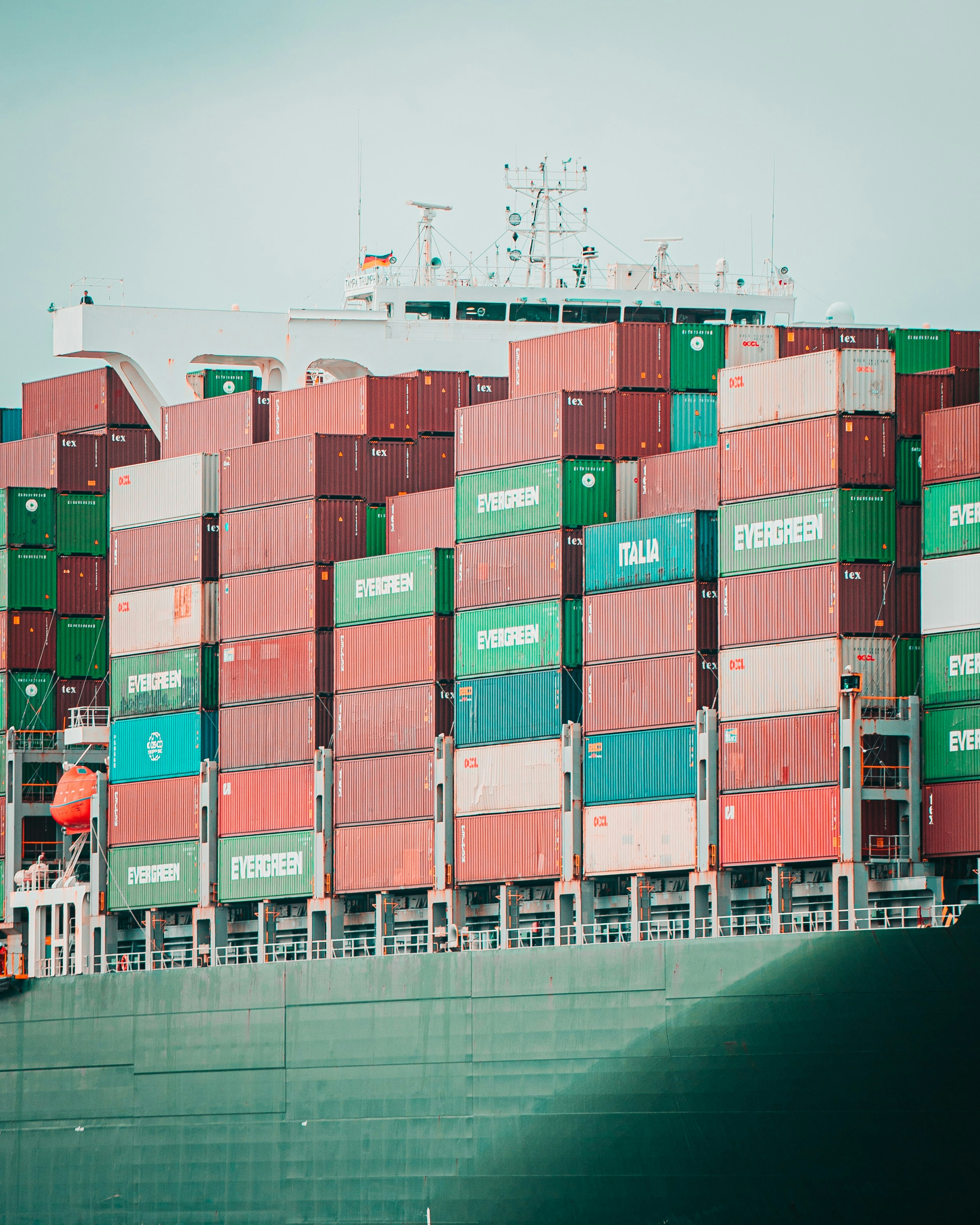
Subcategory
Members only
For more than three decades, globalization shaped how goods moved around the world. Companies optimized for efficiency, governments promoted open trade, and supply chains stretched across continents in pursuit of lower costs and higher margins. The logic was simple: integrate globally, specialize locally, and rely on frictionless flows.
That logic is now breaking down.
“Globalization didn’t end,” said a senior supply-chain strategist who advises multinational manufacturers. “But the assumptions behind it did.”
Today’s supply chains are being redesigned not around maximum efficiency, but around resilience, redundancy, and political risk. The era of hyper-globalized production is giving way to something messier, more regional, and more strategic. Understanding supply chains after globalization means understanding how power, policy, and uncertainty now shape the movement of goods.
The Globalization Model That Defined an Era
The globalization-era supply chain was built on optimization.
Lowest-cost production.
Just-in-time inventory.
Centralized manufacturing.
Cross-border specialization.
“Efficiency was the organizing principle,” said the strategist.
Firms assumed:
Stable geopolitics
Predictable trade rules
Open borders
Cheap transport
Risk was treated as marginal.
Redundancy was considered waste.
When Efficiency Became Fragility
Recent shocks exposed the vulnerabilities of this model.
Pandemic shutdowns halted production.
Ports congested.
Critical inputs vanished.
“Efficiency removed buffers,” said a logistics economist. “And buffers are what absorb shock.”
Highly optimized systems proved brittle.
Small disruptions cascaded globally.
The cost of fragility became visible.
Geopolitics Enters the Supply Chain
Supply chains are no longer neutral infrastructure.
They are geopolitical assets.
Export controls.
Sanctions.
Trade restrictions.
Security reviews.
“You can’t separate supply chains from strategy anymore,” said a geopolitical risk analyst.
Governments now view production capacity as a national interest.
Dependence becomes vulnerability.
From Global to Regional Networks
Rather than full de-globalization, companies are regionalizing.
Production shifts closer to end markets.
Supply networks fragment into regional hubs.
“This is not retreat—it’s reconfiguration,” said the supply-chain strategist.
Regionalization reduces exposure.
It shortens response times.
It trades scale for control.
Friend-Shoring and Political Alignment
Friend-shoring reflects political logic.
Firms source from aligned countries.
Trust replaces cost as a criterion.
“Alignment now matters as much as price,” said the geopolitical analyst.
This reshapes trade flows.
Efficiency gives way to reliability.
Neutrality becomes rare.
Inventory Comes Back
Just-in-time systems minimized inventory.
They maximized vulnerability.
Firms now hold more stock.
Warehousing expands.
Inventory becomes insurance.
“Inventory is no longer seen as inefficiency,” said the logistics economist. “It’s resilience.”
Costs rise.
Stability improves.
The Return of Industrial Policy
Governments intervene directly.
Subsidies support domestic production.
Strategic sectors are prioritized.
“Industrial policy is shaping supply chains again,” said a public policy expert.
Semiconductors.
Energy.
Pharmaceuticals.
Critical minerals.
Markets alone no longer decide location.
Complexity Replaces Uniformity
Global supply chains once aimed for uniformity.
Standard processes.
Centralized oversight.
Today, complexity grows.
Different regions operate under different rules.
“Uniform global models don’t survive fragmentation,” said the strategist.
Coordination becomes harder.
Management costs increase.
Technology as an Enabler—and Constraint
Digital tools improve visibility.
Tracking systems map flows.
Data analytics anticipate disruption.
But technology also introduces dependence.
Cyber risk grows.
Digital chokepoints emerge.
“Digital resilience is now supply-chain resilience,” said the logistics economist.
Infrastructure matters as much as factories.
Labor and the Cost Equation Shift
Cheap labor once drove offshoring.
Automation changes that calculation.
Labor costs matter less.
Skills matter more.
“Production location is being re-evaluated,” said a manufacturing consultant.
Workforce availability.
Training systems.
Political stability.
These factors gain weight.
Sustainability Pressures Reshape Design
Climate goals affect supply chains.
Carbon accounting exposes distance costs.
Environmental regulation tightens.
“Sustainability accelerates localization,” said the policy expert.
Shorter chains reduce emissions.
Compliance reshapes sourcing decisions.
Financial Markets Reprice Risk
Investors now evaluate supply-chain exposure.
Concentration is penalized.
Resilience is rewarded.
“Markets price operational fragility differently now,” said a portfolio manager.
Predictability beats maximum margin.
Risk premiums rise for overexposed firms.
Small Suppliers, Big Vulnerabilities
Complex chains depend on small suppliers.
These firms are fragile.
One failure can halt production.
“Supply chains are only as strong as their weakest link,” said the logistics economist.
Visibility into lower tiers is limited.
Risk hides deep.
National Security and Economic Security Converge
Governments treat supply chains as security infrastructure.
Energy.
Food.
Technology.
Healthcare.
“The line between economic policy and security policy has blurred,” said the geopolitical analyst.
Strategic stockpiles return.
Controls tighten.
Markets adjust.
The Cost of Redundancy
Resilient supply chains cost more.
Duplicate suppliers.
Backup routes.
Excess capacity.
“These costs are real,” said the strategist.
Prices rise.
Margins compress.
Trade-offs become explicit.
Consumers feel the shift.
Developing Economies and the New Map
Emerging economies face mixed outcomes.
Some benefit from diversification.
Others lose manufacturing share.
“Global fragmentation reshuffles winners and losers,” said a development economist.
Access to capital and alignment matters.
Neutrality becomes difficult.
Governance Challenges Multiply
Fragmented supply chains complicate governance.
Different rules.
Different standards.
Different risks.
“Compliance costs rise with fragmentation,” said the policy expert.
Oversight becomes regional.
Coordination weakens.
The End of the One-World Assumption
Globalization assumed convergence.
Shared rules.
Shared incentives.
That assumption no longer holds.
“We are moving toward a world of managed interdependence,” said the geopolitical analyst.
Interconnection remains.
Trust does not.
What Comes After Globalization
Supply chains after globalization are:
Regional
Redundant
Politicized
Costlier
More complex
They prioritize resilience over efficiency.
Control over optimization.
Optionality over scale.
Strategic Trade-Offs for Firms
Firms now balance:
Cost vs. resilience
Speed vs. security
Scale vs. adaptability
“There is no perfect model,” said the strategist.
Strategy replaces formula.
Judgment replaces optimization.
A More Fragile—but More Honest System
The new supply-chain world is less efficient.
But it is more realistic.
It acknowledges risk.
It prices uncertainty.
It reflects geopolitical reality.
“Globalization hid fragility behind efficiency,” said the logistics economist.
Post-globalization supply chains expose it.
Conclusion: From Flow to Structure
Supply chains after globalization are no longer invisible systems quietly moving goods across borders.
They are strategic structures—shaped by politics, policy, and risk.
Efficiency still matters.
But it no longer dominates.
Resilience, alignment, and adaptability now define success.
In this new era, supply chains are not just about where things are made.
They are about who can depend on whom—
and under what conditions.
And that question, more than cost or speed, will define the global economy in the decades ahead.
Subcategory
Members only
For more than three decades, globalization shaped how goods moved around the world. Companies optimized for efficiency, governments promoted open trade, and supply chains stretched across continents in pursuit of lower costs and higher margins. The logic was simple: integrate globally, specialize locally, and rely on frictionless flows.
That logic is now breaking down.
“Globalization didn’t end,” said a senior supply-chain strategist who advises multinational manufacturers. “But the assumptions behind it did.”
Today’s supply chains are being redesigned not around maximum efficiency, but around resilience, redundancy, and political risk. The era of hyper-globalized production is giving way to something messier, more regional, and more strategic. Understanding supply chains after globalization means understanding how power, policy, and uncertainty now shape the movement of goods.
The Globalization Model That Defined an Era
The globalization-era supply chain was built on optimization.
Lowest-cost production.
Just-in-time inventory.
Centralized manufacturing.
Cross-border specialization.
“Efficiency was the organizing principle,” said the strategist.
Firms assumed:
Stable geopolitics
Predictable trade rules
Open borders
Cheap transport
Risk was treated as marginal.
Redundancy was considered waste.
When Efficiency Became Fragility
Recent shocks exposed the vulnerabilities of this model.
Pandemic shutdowns halted production.
Ports congested.
Critical inputs vanished.
“Efficiency removed buffers,” said a logistics economist. “And buffers are what absorb shock.”
Highly optimized systems proved brittle.
Small disruptions cascaded globally.
The cost of fragility became visible.
Geopolitics Enters the Supply Chain
Supply chains are no longer neutral infrastructure.
They are geopolitical assets.
Export controls.
Sanctions.
Trade restrictions.
Security reviews.
“You can’t separate supply chains from strategy anymore,” said a geopolitical risk analyst.
Governments now view production capacity as a national interest.
Dependence becomes vulnerability.
From Global to Regional Networks
Rather than full de-globalization, companies are regionalizing.
Production shifts closer to end markets.
Supply networks fragment into regional hubs.
“This is not retreat—it’s reconfiguration,” said the supply-chain strategist.
Regionalization reduces exposure.
It shortens response times.
It trades scale for control.
Friend-Shoring and Political Alignment
Friend-shoring reflects political logic.
Firms source from aligned countries.
Trust replaces cost as a criterion.
“Alignment now matters as much as price,” said the geopolitical analyst.
This reshapes trade flows.
Efficiency gives way to reliability.
Neutrality becomes rare.
Inventory Comes Back
Just-in-time systems minimized inventory.
They maximized vulnerability.
Firms now hold more stock.
Warehousing expands.
Inventory becomes insurance.
“Inventory is no longer seen as inefficiency,” said the logistics economist. “It’s resilience.”
Costs rise.
Stability improves.
The Return of Industrial Policy
Governments intervene directly.
Subsidies support domestic production.
Strategic sectors are prioritized.
“Industrial policy is shaping supply chains again,” said a public policy expert.
Semiconductors.
Energy.
Pharmaceuticals.
Critical minerals.
Markets alone no longer decide location.
Complexity Replaces Uniformity
Global supply chains once aimed for uniformity.
Standard processes.
Centralized oversight.
Today, complexity grows.
Different regions operate under different rules.
“Uniform global models don’t survive fragmentation,” said the strategist.
Coordination becomes harder.
Management costs increase.
Technology as an Enabler—and Constraint
Digital tools improve visibility.
Tracking systems map flows.
Data analytics anticipate disruption.
But technology also introduces dependence.
Cyber risk grows.
Digital chokepoints emerge.
“Digital resilience is now supply-chain resilience,” said the logistics economist.
Infrastructure matters as much as factories.
Labor and the Cost Equation Shift
Cheap labor once drove offshoring.
Automation changes that calculation.
Labor costs matter less.
Skills matter more.
“Production location is being re-evaluated,” said a manufacturing consultant.
Workforce availability.
Training systems.
Political stability.
These factors gain weight.
Sustainability Pressures Reshape Design
Climate goals affect supply chains.
Carbon accounting exposes distance costs.
Environmental regulation tightens.
“Sustainability accelerates localization,” said the policy expert.
Shorter chains reduce emissions.
Compliance reshapes sourcing decisions.
Financial Markets Reprice Risk
Investors now evaluate supply-chain exposure.
Concentration is penalized.
Resilience is rewarded.
“Markets price operational fragility differently now,” said a portfolio manager.
Predictability beats maximum margin.
Risk premiums rise for overexposed firms.
Small Suppliers, Big Vulnerabilities
Complex chains depend on small suppliers.
These firms are fragile.
One failure can halt production.
“Supply chains are only as strong as their weakest link,” said the logistics economist.
Visibility into lower tiers is limited.
Risk hides deep.
National Security and Economic Security Converge
Governments treat supply chains as security infrastructure.
Energy.
Food.
Technology.
Healthcare.
“The line between economic policy and security policy has blurred,” said the geopolitical analyst.
Strategic stockpiles return.
Controls tighten.
Markets adjust.
The Cost of Redundancy
Resilient supply chains cost more.
Duplicate suppliers.
Backup routes.
Excess capacity.
“These costs are real,” said the strategist.
Prices rise.
Margins compress.
Trade-offs become explicit.
Consumers feel the shift.
Developing Economies and the New Map
Emerging economies face mixed outcomes.
Some benefit from diversification.
Others lose manufacturing share.
“Global fragmentation reshuffles winners and losers,” said a development economist.
Access to capital and alignment matters.
Neutrality becomes difficult.
Governance Challenges Multiply
Fragmented supply chains complicate governance.
Different rules.
Different standards.
Different risks.
“Compliance costs rise with fragmentation,” said the policy expert.
Oversight becomes regional.
Coordination weakens.
The End of the One-World Assumption
Globalization assumed convergence.
Shared rules.
Shared incentives.
That assumption no longer holds.
“We are moving toward a world of managed interdependence,” said the geopolitical analyst.
Interconnection remains.
Trust does not.
What Comes After Globalization
Supply chains after globalization are:
Regional
Redundant
Politicized
Costlier
More complex
They prioritize resilience over efficiency.
Control over optimization.
Optionality over scale.
Strategic Trade-Offs for Firms
Firms now balance:
Cost vs. resilience
Speed vs. security
Scale vs. adaptability
“There is no perfect model,” said the strategist.
Strategy replaces formula.
Judgment replaces optimization.
A More Fragile—but More Honest System
The new supply-chain world is less efficient.
But it is more realistic.
It acknowledges risk.
It prices uncertainty.
It reflects geopolitical reality.
“Globalization hid fragility behind efficiency,” said the logistics economist.
Post-globalization supply chains expose it.
Conclusion: From Flow to Structure
Supply chains after globalization are no longer invisible systems quietly moving goods across borders.
They are strategic structures—shaped by politics, policy, and risk.
Efficiency still matters.
But it no longer dominates.
Resilience, alignment, and adaptability now define success.
In this new era, supply chains are not just about where things are made.
They are about who can depend on whom—
and under what conditions.
And that question, more than cost or speed, will define the global economy in the decades ahead.
Subcategory
Members only
For much of the twentieth century, diplomacy was built around rhythm. Crises erupted, were managed, and receded. Periods of tension were followed by negotiation, stabilization, and—in some cases—lasting settlement. Diplomacy functioned as an episodic tool, activated when relations broke down and scaled back when order returned.
That rhythm no longer exists.
“We are no longer moving from crisis to normality,” said a former ambassador who served in multiple conflict zones. “Crisis is the normality.”
From protracted wars and climate emergencies to economic instability and technological disruption, the international system now operates under conditions of continuous stress. Diplomacy has not disappeared—but it has been fundamentally reshaped. Understanding diplomacy in an era of permanent crisis requires rethinking its purpose, tools, and limits.
From Episodic Crisis to Constant Instability
Traditional diplomacy assumed recovery.
Ceasefires held.
Treaties endured.
Institutions stabilized outcomes.
“Diplomatic systems were designed for shocks, not for chronic disruption,” said a scholar of international relations.
Today’s crises overlap and persist.
Wars stall rather than end.
Economic shocks cascade.
Environmental disasters recur.
Diplomacy no longer manages exceptions—it manages continuity under pressure.
The Compression of Diplomatic Time
Permanent crisis accelerates decision-making.
Deadlines shorten.
Windows close quickly.
“There is no strategic pause,” said the former ambassador.
Negotiations occur under media scrutiny and political pressure.
Reflection gives way to reaction.
Mistakes compound.
Time becomes a constraint rather than a resource.
Crisis Diplomacy Without Resolution
Many diplomatic efforts now aim not at resolution, but containment.
Conflict management replaces conflict settlement.
“Diplomacy has shifted from solving problems to preventing them from getting worse,” said the scholar.
Frozen conflicts persist.
Temporary agreements substitute for durable peace.
Stability becomes provisional.
The Erosion of Diplomatic Trust
Permanent crisis erodes trust between states.
Commitments feel reversible.
Agreements feel fragile.
“In a constant emergency, no one believes tomorrow will look like today,” said a senior negotiator.
Verification becomes harder.
Intentions are doubted.
Trust, once lost, is difficult to rebuild.
Multilateral Diplomacy Under Strain
Multilateral institutions struggle in permanent crisis.
Consensus is slow.
Interests diverge.
Power politics intrude.
“These institutions were designed for cooperation, not confrontation,” said the international relations scholar.
Crisis overwhelms procedure.
Ad hoc coalitions replace formal forums.
Multilateral diplomacy loses centrality.
Bilateralism and Transactional Engagement
As multilateralism weakens, bilateral diplomacy rises.
Deals replace norms.
Transactions replace commitments.
“Diplomacy has become more transactional,” said the former ambassador.
Short-term alignment outweighs long-term trust.
Flexibility increases.
Predictability declines.
Diplomacy as Crisis Communication
In a permanent crisis environment, diplomacy becomes performative.
Statements signal intent.
Summits project control.
“Diplomacy now operates in real time, under public scrutiny,” said a media analyst of foreign policy.
Messaging competes with substance.
Narrative management becomes central.
The Role of Domestic Politics
Domestic pressure constrains diplomacy.
Public opinion polarizes.
Political cycles shorten.
“Foreign policy is increasingly hostage to domestic politics,” said the scholar.
Diplomats negotiate with one eye on foreign counterparts—and one on home audiences.
Compromise becomes politically costly.
The Militarization of Diplomacy
Security concerns dominate diplomatic agendas.
Defense and deterrence shape engagement.
“Diplomacy increasingly follows military logic,” said a defense analyst.
Dialogue continues—but under threat.
Negotiation occurs alongside escalation.
Peace and pressure coexist uneasily.
Climate and the Expansion of Diplomatic Scope
Climate change introduces permanent crisis into diplomacy.
Disasters ignore borders.
Mitigation requires coordination.
“Climate diplomacy never ends,” said an environmental policy expert.
Urgency is constant.
Deadlines recur.
Failure compounds.
Diplomacy becomes perpetual negotiation.
Technology and the Speed of Escalation
Digital communication accelerates escalation.
Statements circulate instantly.
Missteps amplify.
“There is no time to quietly correct errors,” said the former ambassador.
Cyber operations blur peace and conflict.
Attribution is uncertain.
Diplomatic signaling becomes more fragile.
Diplomacy Without Clear End States
Permanent crisis obscures goals.
What does success look like?
Containment?
Stability?
Avoidance of collapse?
“When crises don’t end, diplomacy loses its destination,” said the scholar.
Process replaces outcome.
Engagement becomes indefinite.
The Burden on Diplomatic Institutions
Foreign ministries face overload.
Resources stretch thin.
Expertise disperses.
“Diplomacy is asked to do more with less,” said a retired senior diplomat.
Institutional fatigue sets in.
Learning slows.
Turnover rises.
Humanitarian Diplomacy and Moral Tension
Permanent crisis increases humanitarian need.
Access negotiations multiply.
Neutrality is challenged.
“Humanitarian diplomacy now operates in politicized spaces,” said an aid coordinator.
Moral imperatives clash with strategic interests.
Choices carry reputational cost.
Managing Expectations in an Unending Crisis
Diplomacy must now manage expectations.
Total peace is unlikely.
Breakthroughs are rare.
“Success may mean preventing catastrophe, not achieving harmony,” said the scholar.
This reframing is uncomfortable.
Public patience is limited.
The Risk of Diplomatic Burnout
Permanent crisis risks burnout—among institutions and individuals.
Constant urgency erodes capacity.
Reflection disappears.
“Diplomats are working without recovery time,” said the former ambassador.
Strategic thinking suffers.
Reactive policy dominates.
Adapting Diplomatic Practice
Diplomacy adapts by:
Prioritizing resilience over resolution
Investing in early warning
Strengthening crisis communication
Accepting incremental progress
“These adaptations are pragmatic,” said the scholar. “But they lower ambition.”
Normalization of crisis reshapes goals.
Power Asymmetry in Crisis Diplomacy
Permanent crisis benefits powerful states.
They absorb instability.
Weaker states bear consequences.
“Crisis diplomacy magnifies inequality,” said the former ambassador.
Leverage concentrates.
Vulnerability spreads.
The Moral Cost of Normalized Crisis
When crisis becomes normal, suffering risks invisibility.
Urgency dulls empathy.
“At some point, crisis loses its meaning,” said the humanitarian coordinator.
Moral attention shifts.
Selective concern emerges.
Can Diplomacy Restore Rhythm?
Some argue diplomacy must recreate rhythm.
Pause escalation.
Rebuild trust.
Strengthen institutions.
“But restoring rhythm requires political will,” said the scholar.
Crisis governance discourages patience.
Immediate pressures dominate.
What Effective Diplomacy Looks Like Now
Effective diplomacy in permanent crisis:
Accepts uncertainty
Builds resilience
Maintains dialogue under strain
Avoids irreversible escalation
“It’s less about solving everything,” said the former ambassador, “and more about keeping space open.”
Space for negotiation.
Space for restraint.
Conclusion: Diplomacy Without Illusions
Diplomacy in an era of permanent crisis cannot promise resolution, harmony, or lasting settlement.
It operates in a world where shocks overlap, trust is thin, and stability is provisional.
Its task is more modest—but no less vital:
to manage conflict without collapse,
to communicate when misunderstanding escalates,
and to preserve the possibility of cooperation when it feels least likely.
In this environment, diplomacy is not the art of ending crises.
It is the discipline of preventing them from becoming irreversible.
And in a world that no longer returns to normal, that discipline may be one of the last stabilizing forces left.
Subcategory
Members only
For much of the twentieth century, diplomacy was built around rhythm. Crises erupted, were managed, and receded. Periods of tension were followed by negotiation, stabilization, and—in some cases—lasting settlement. Diplomacy functioned as an episodic tool, activated when relations broke down and scaled back when order returned.
That rhythm no longer exists.
“We are no longer moving from crisis to normality,” said a former ambassador who served in multiple conflict zones. “Crisis is the normality.”
From protracted wars and climate emergencies to economic instability and technological disruption, the international system now operates under conditions of continuous stress. Diplomacy has not disappeared—but it has been fundamentally reshaped. Understanding diplomacy in an era of permanent crisis requires rethinking its purpose, tools, and limits.
From Episodic Crisis to Constant Instability
Traditional diplomacy assumed recovery.
Ceasefires held.
Treaties endured.
Institutions stabilized outcomes.
“Diplomatic systems were designed for shocks, not for chronic disruption,” said a scholar of international relations.
Today’s crises overlap and persist.
Wars stall rather than end.
Economic shocks cascade.
Environmental disasters recur.
Diplomacy no longer manages exceptions—it manages continuity under pressure.
The Compression of Diplomatic Time
Permanent crisis accelerates decision-making.
Deadlines shorten.
Windows close quickly.
“There is no strategic pause,” said the former ambassador.
Negotiations occur under media scrutiny and political pressure.
Reflection gives way to reaction.
Mistakes compound.
Time becomes a constraint rather than a resource.
Crisis Diplomacy Without Resolution
Many diplomatic efforts now aim not at resolution, but containment.
Conflict management replaces conflict settlement.
“Diplomacy has shifted from solving problems to preventing them from getting worse,” said the scholar.
Frozen conflicts persist.
Temporary agreements substitute for durable peace.
Stability becomes provisional.
The Erosion of Diplomatic Trust
Permanent crisis erodes trust between states.
Commitments feel reversible.
Agreements feel fragile.
“In a constant emergency, no one believes tomorrow will look like today,” said a senior negotiator.
Verification becomes harder.
Intentions are doubted.
Trust, once lost, is difficult to rebuild.
Multilateral Diplomacy Under Strain
Multilateral institutions struggle in permanent crisis.
Consensus is slow.
Interests diverge.
Power politics intrude.
“These institutions were designed for cooperation, not confrontation,” said the international relations scholar.
Crisis overwhelms procedure.
Ad hoc coalitions replace formal forums.
Multilateral diplomacy loses centrality.
Bilateralism and Transactional Engagement
As multilateralism weakens, bilateral diplomacy rises.
Deals replace norms.
Transactions replace commitments.
“Diplomacy has become more transactional,” said the former ambassador.
Short-term alignment outweighs long-term trust.
Flexibility increases.
Predictability declines.
Diplomacy as Crisis Communication
In a permanent crisis environment, diplomacy becomes performative.
Statements signal intent.
Summits project control.
“Diplomacy now operates in real time, under public scrutiny,” said a media analyst of foreign policy.
Messaging competes with substance.
Narrative management becomes central.
The Role of Domestic Politics
Domestic pressure constrains diplomacy.
Public opinion polarizes.
Political cycles shorten.
“Foreign policy is increasingly hostage to domestic politics,” said the scholar.
Diplomats negotiate with one eye on foreign counterparts—and one on home audiences.
Compromise becomes politically costly.
The Militarization of Diplomacy
Security concerns dominate diplomatic agendas.
Defense and deterrence shape engagement.
“Diplomacy increasingly follows military logic,” said a defense analyst.
Dialogue continues—but under threat.
Negotiation occurs alongside escalation.
Peace and pressure coexist uneasily.
Climate and the Expansion of Diplomatic Scope
Climate change introduces permanent crisis into diplomacy.
Disasters ignore borders.
Mitigation requires coordination.
“Climate diplomacy never ends,” said an environmental policy expert.
Urgency is constant.
Deadlines recur.
Failure compounds.
Diplomacy becomes perpetual negotiation.
Technology and the Speed of Escalation
Digital communication accelerates escalation.
Statements circulate instantly.
Missteps amplify.
“There is no time to quietly correct errors,” said the former ambassador.
Cyber operations blur peace and conflict.
Attribution is uncertain.
Diplomatic signaling becomes more fragile.
Diplomacy Without Clear End States
Permanent crisis obscures goals.
What does success look like?
Containment?
Stability?
Avoidance of collapse?
“When crises don’t end, diplomacy loses its destination,” said the scholar.
Process replaces outcome.
Engagement becomes indefinite.
The Burden on Diplomatic Institutions
Foreign ministries face overload.
Resources stretch thin.
Expertise disperses.
“Diplomacy is asked to do more with less,” said a retired senior diplomat.
Institutional fatigue sets in.
Learning slows.
Turnover rises.
Humanitarian Diplomacy and Moral Tension
Permanent crisis increases humanitarian need.
Access negotiations multiply.
Neutrality is challenged.
“Humanitarian diplomacy now operates in politicized spaces,” said an aid coordinator.
Moral imperatives clash with strategic interests.
Choices carry reputational cost.
Managing Expectations in an Unending Crisis
Diplomacy must now manage expectations.
Total peace is unlikely.
Breakthroughs are rare.
“Success may mean preventing catastrophe, not achieving harmony,” said the scholar.
This reframing is uncomfortable.
Public patience is limited.
The Risk of Diplomatic Burnout
Permanent crisis risks burnout—among institutions and individuals.
Constant urgency erodes capacity.
Reflection disappears.
“Diplomats are working without recovery time,” said the former ambassador.
Strategic thinking suffers.
Reactive policy dominates.
Adapting Diplomatic Practice
Diplomacy adapts by:
Prioritizing resilience over resolution
Investing in early warning
Strengthening crisis communication
Accepting incremental progress
“These adaptations are pragmatic,” said the scholar. “But they lower ambition.”
Normalization of crisis reshapes goals.
Power Asymmetry in Crisis Diplomacy
Permanent crisis benefits powerful states.
They absorb instability.
Weaker states bear consequences.
“Crisis diplomacy magnifies inequality,” said the former ambassador.
Leverage concentrates.
Vulnerability spreads.
The Moral Cost of Normalized Crisis
When crisis becomes normal, suffering risks invisibility.
Urgency dulls empathy.
“At some point, crisis loses its meaning,” said the humanitarian coordinator.
Moral attention shifts.
Selective concern emerges.
Can Diplomacy Restore Rhythm?
Some argue diplomacy must recreate rhythm.
Pause escalation.
Rebuild trust.
Strengthen institutions.
“But restoring rhythm requires political will,” said the scholar.
Crisis governance discourages patience.
Immediate pressures dominate.
What Effective Diplomacy Looks Like Now
Effective diplomacy in permanent crisis:
Accepts uncertainty
Builds resilience
Maintains dialogue under strain
Avoids irreversible escalation
“It’s less about solving everything,” said the former ambassador, “and more about keeping space open.”
Space for negotiation.
Space for restraint.
Conclusion: Diplomacy Without Illusions
Diplomacy in an era of permanent crisis cannot promise resolution, harmony, or lasting settlement.
It operates in a world where shocks overlap, trust is thin, and stability is provisional.
Its task is more modest—but no less vital:
to manage conflict without collapse,
to communicate when misunderstanding escalates,
and to preserve the possibility of cooperation when it feels least likely.
In this environment, diplomacy is not the art of ending crises.
It is the discipline of preventing them from becoming irreversible.
And in a world that no longer returns to normal, that discipline may be one of the last stabilizing forces left.
Subcategory
Members only
For much of the twentieth century, diplomacy was built around rhythm. Crises erupted, were managed, and receded. Periods of tension were followed by negotiation, stabilization, and—in some cases—lasting settlement. Diplomacy functioned as an episodic tool, activated when relations broke down and scaled back when order returned.
That rhythm no longer exists.
“We are no longer moving from crisis to normality,” said a former ambassador who served in multiple conflict zones. “Crisis is the normality.”
From protracted wars and climate emergencies to economic instability and technological disruption, the international system now operates under conditions of continuous stress. Diplomacy has not disappeared—but it has been fundamentally reshaped. Understanding diplomacy in an era of permanent crisis requires rethinking its purpose, tools, and limits.
From Episodic Crisis to Constant Instability
Traditional diplomacy assumed recovery.
Ceasefires held.
Treaties endured.
Institutions stabilized outcomes.
“Diplomatic systems were designed for shocks, not for chronic disruption,” said a scholar of international relations.
Today’s crises overlap and persist.
Wars stall rather than end.
Economic shocks cascade.
Environmental disasters recur.
Diplomacy no longer manages exceptions—it manages continuity under pressure.
The Compression of Diplomatic Time
Permanent crisis accelerates decision-making.
Deadlines shorten.
Windows close quickly.
“There is no strategic pause,” said the former ambassador.
Negotiations occur under media scrutiny and political pressure.
Reflection gives way to reaction.
Mistakes compound.
Time becomes a constraint rather than a resource.
Crisis Diplomacy Without Resolution
Many diplomatic efforts now aim not at resolution, but containment.
Conflict management replaces conflict settlement.
“Diplomacy has shifted from solving problems to preventing them from getting worse,” said the scholar.
Frozen conflicts persist.
Temporary agreements substitute for durable peace.
Stability becomes provisional.
The Erosion of Diplomatic Trust
Permanent crisis erodes trust between states.
Commitments feel reversible.
Agreements feel fragile.
“In a constant emergency, no one believes tomorrow will look like today,” said a senior negotiator.
Verification becomes harder.
Intentions are doubted.
Trust, once lost, is difficult to rebuild.
Multilateral Diplomacy Under Strain
Multilateral institutions struggle in permanent crisis.
Consensus is slow.
Interests diverge.
Power politics intrude.
“These institutions were designed for cooperation, not confrontation,” said the international relations scholar.
Crisis overwhelms procedure.
Ad hoc coalitions replace formal forums.
Multilateral diplomacy loses centrality.
Bilateralism and Transactional Engagement
As multilateralism weakens, bilateral diplomacy rises.
Deals replace norms.
Transactions replace commitments.
“Diplomacy has become more transactional,” said the former ambassador.
Short-term alignment outweighs long-term trust.
Flexibility increases.
Predictability declines.
Diplomacy as Crisis Communication
In a permanent crisis environment, diplomacy becomes performative.
Statements signal intent.
Summits project control.
“Diplomacy now operates in real time, under public scrutiny,” said a media analyst of foreign policy.
Messaging competes with substance.
Narrative management becomes central.
The Role of Domestic Politics
Domestic pressure constrains diplomacy.
Public opinion polarizes.
Political cycles shorten.
“Foreign policy is increasingly hostage to domestic politics,” said the scholar.
Diplomats negotiate with one eye on foreign counterparts—and one on home audiences.
Compromise becomes politically costly.
The Militarization of Diplomacy
Security concerns dominate diplomatic agendas.
Defense and deterrence shape engagement.
“Diplomacy increasingly follows military logic,” said a defense analyst.
Dialogue continues—but under threat.
Negotiation occurs alongside escalation.
Peace and pressure coexist uneasily.
Climate and the Expansion of Diplomatic Scope
Climate change introduces permanent crisis into diplomacy.
Disasters ignore borders.
Mitigation requires coordination.
“Climate diplomacy never ends,” said an environmental policy expert.
Urgency is constant.
Deadlines recur.
Failure compounds.
Diplomacy becomes perpetual negotiation.
Technology and the Speed of Escalation
Digital communication accelerates escalation.
Statements circulate instantly.
Missteps amplify.
“There is no time to quietly correct errors,” said the former ambassador.
Cyber operations blur peace and conflict.
Attribution is uncertain.
Diplomatic signaling becomes more fragile.
Diplomacy Without Clear End States
Permanent crisis obscures goals.
What does success look like?
Containment?
Stability?
Avoidance of collapse?
“When crises don’t end, diplomacy loses its destination,” said the scholar.
Process replaces outcome.
Engagement becomes indefinite.
The Burden on Diplomatic Institutions
Foreign ministries face overload.
Resources stretch thin.
Expertise disperses.
“Diplomacy is asked to do more with less,” said a retired senior diplomat.
Institutional fatigue sets in.
Learning slows.
Turnover rises.
Humanitarian Diplomacy and Moral Tension
Permanent crisis increases humanitarian need.
Access negotiations multiply.
Neutrality is challenged.
“Humanitarian diplomacy now operates in politicized spaces,” said an aid coordinator.
Moral imperatives clash with strategic interests.
Choices carry reputational cost.
Managing Expectations in an Unending Crisis
Diplomacy must now manage expectations.
Total peace is unlikely.
Breakthroughs are rare.
“Success may mean preventing catastrophe, not achieving harmony,” said the scholar.
This reframing is uncomfortable.
Public patience is limited.
The Risk of Diplomatic Burnout
Permanent crisis risks burnout—among institutions and individuals.
Constant urgency erodes capacity.
Reflection disappears.
“Diplomats are working without recovery time,” said the former ambassador.
Strategic thinking suffers.
Reactive policy dominates.
Adapting Diplomatic Practice
Diplomacy adapts by:
Prioritizing resilience over resolution
Investing in early warning
Strengthening crisis communication
Accepting incremental progress
“These adaptations are pragmatic,” said the scholar. “But they lower ambition.”
Normalization of crisis reshapes goals.
Power Asymmetry in Crisis Diplomacy
Permanent crisis benefits powerful states.
They absorb instability.
Weaker states bear consequences.
“Crisis diplomacy magnifies inequality,” said the former ambassador.
Leverage concentrates.
Vulnerability spreads.
The Moral Cost of Normalized Crisis
When crisis becomes normal, suffering risks invisibility.
Urgency dulls empathy.
“At some point, crisis loses its meaning,” said the humanitarian coordinator.
Moral attention shifts.
Selective concern emerges.
Can Diplomacy Restore Rhythm?
Some argue diplomacy must recreate rhythm.
Pause escalation.
Rebuild trust.
Strengthen institutions.
“But restoring rhythm requires political will,” said the scholar.
Crisis governance discourages patience.
Immediate pressures dominate.
What Effective Diplomacy Looks Like Now
Effective diplomacy in permanent crisis:
Accepts uncertainty
Builds resilience
Maintains dialogue under strain
Avoids irreversible escalation
“It’s less about solving everything,” said the former ambassador, “and more about keeping space open.”
Space for negotiation.
Space for restraint.
Conclusion: Diplomacy Without Illusions
Diplomacy in an era of permanent crisis cannot promise resolution, harmony, or lasting settlement.
It operates in a world where shocks overlap, trust is thin, and stability is provisional.
Its task is more modest—but no less vital:
to manage conflict without collapse,
to communicate when misunderstanding escalates,
and to preserve the possibility of cooperation when it feels least likely.
In this environment, diplomacy is not the art of ending crises.
It is the discipline of preventing them from becoming irreversible.
And in a world that no longer returns to normal, that discipline may be one of the last stabilizing forces left.
Subcategory
Members only
For much of the late twentieth century, the relationship between business and the state appeared settled. Markets would allocate resources, governments would set broad rules, and economic growth would follow from minimizing interference. This division—often described as a balance between free enterprise and light-touch regulation—defined an era of economic policy across much of the world.
That settlement is no longer intact.
“The idea that the state should simply step back and let markets work has lost credibility,” said a former finance minister who now advises international institutions. “Governments are back—not as referees alone, but as active economic actors.”
From industrial policy and supply-chain security to climate transition and digital regulation, the boundaries between public authority and private enterprise are being redrawn. Understanding the changing relationship between business and the state requires examining not just new policies, but the deeper shifts in power, risk, and responsibility that are reshaping modern capitalism.
From Separation to Interdependence
The post–Cold War economic model emphasized separation.
Governments regulated.
Businesses innovated.
Markets coordinated.
“Policy assumed markets were efficient and self-correcting,” said an economic historian.
The state intervened primarily to correct failures, enforce competition, and stabilize crises.
That framework depended on assumptions that no longer hold: stable geopolitics, predictable trade, and limited systemic risk.
Crisis as the Catalyst for Change
The relationship between business and state began shifting well before recent shocks—but crises accelerated it.
Financial collapse required state rescue.
Pandemics demanded coordination.
Energy transitions exposed market limits.
“Each crisis pulled the state deeper into the economy,” said the historian.
Temporary interventions became structural.
Emergency measures became precedents.
The Return of the Strategic State
Governments increasingly define strategic sectors.
Semiconductors.
Energy.
Healthcare.
Defense-related technologies.
“The state now sees itself as responsible for economic security,” said a senior policy advisor.
This shift reframes business not just as a market actor, but as a partner—or risk—within national strategy.
Neutrality disappears.
Alignment matters.
Industrial Policy Re-enters the Mainstream
Industrial policy, once politically taboo, is now openly embraced.
Subsidies.
Tax incentives.
Domestic capacity targets.
Public-private partnerships.
“Markets alone no longer determine where production happens,” said the policy advisor.
States shape outcomes deliberately.
Business adapts to policy signals.
Risk Transfer and the New Social Contract
One defining feature of the new relationship is risk redistribution.
States absorb systemic risk.
Businesses retain upside.
“When things go well, profits are private,” said a public finance expert. “When things fail, losses are socialized.”
This dynamic raises questions about fairness, accountability, and long-term incentives.
Public support increasingly comes with expectations.
Regulation as Economic Strategy
Regulation now serves strategic aims.
Data governance.
Environmental standards.
Labor protections.
“These are not just social policies,” said a regulatory scholar. “They shape competitive advantage.”
Regulatory power becomes a tool of economic positioning.
Compliance determines market access.
Business as a Political Actor
Businesses are no longer politically neutral participants.
They lobby on trade, climate, and technology.
They shape standards.
They influence public narratives.
“Firms now operate in political ecosystems,” said the regulatory scholar.
Silence is interpreted as position.
Engagement is unavoidable.
The Rise of Conditional Support
State support increasingly comes with conditions.
Local investment requirements.
Supply-chain commitments.
Employment guarantees.
“This is not unconditional bailout capitalism,” said the finance expert.
Support reflects public priorities.
Business autonomy narrows.
Fragmentation and National Alignment
Globalization once allowed firms to operate above politics.
That space has shrunk.
“Companies are being asked to choose sides,” said a geopolitical risk analyst.
Market access depends on alignment.
Neutral global operations become difficult.
Corporate strategy becomes geopolitical.
The State as Market Maker
Governments increasingly shape markets directly.
They create demand.
Set standards.
De-risk innovation.
“The state is acting as a market maker,” said the policy advisor.
This role blurs boundaries.
Public objectives guide private investment.
Accountability Gaps in Public-Private Power
As collaboration increases, accountability becomes complex.
Who is responsible when joint projects fail?
Which standards apply?
“Hybrid governance creates blind spots,” said the public finance expert.
Oversight struggles to keep pace with new arrangements.
Transparency becomes harder.
Corporate Dependence on State Capacity
Business increasingly relies on state capacity.
Infrastructure.
Education.
Research funding.
Security.
“The myth of self-sufficient markets is gone,” said the economic historian.
Private success depends on public investment.
Interdependence is explicit.
Climate Policy and the Rewriting of Roles
Climate transition intensifies state-business coordination.
Carbon pricing.
Green subsidies.
Regulatory mandates.
“Climate policy requires planning at scale,” said an environmental economist.
Markets alone cannot deliver systemic transformation.
The state sets direction.
Business executes.
Financial Markets and Policy Signals
Investors now track government policy closely.
Subsidies shift valuations.
Regulation affects capital flows.
“Policy risk has become market risk,” said a portfolio manager.
Business strategy integrates political analysis.
Economic forecasting becomes political forecasting.
Democratic Tensions and Legitimacy
Closer state-business ties raise legitimacy concerns.
Influence concentrates.
Access matters.
“Democracy struggles when economic power and political power align too closely,” said the regulatory scholar.
Public trust depends on transparency and restraint.
Without it, backlash grows.
The Illusion of a Return to the Past
Some argue this shift is temporary.
That markets will reassert dominance.
History suggests otherwise.
“Once states expand economic roles, they rarely fully retreat,” said the historian.
The relationship evolves—but does not reset.
Governing the New Relationship
Effective governance now requires:
Clear boundaries
Strong oversight
Transparent conditions
Competitive safeguards
Democratic accountability
“This is about designing partnership without capture,” said the finance expert.
Balance matters.
Business Strategy in a Politicized Economy
Businesses must adapt.
Political literacy becomes essential.
Risk management expands.
Long-term planning incorporates policy shifts.
“Strategy now includes government relations as a core function,” said the geopolitical analyst.
Ignoring the state is no longer viable.
The Cost of Misalignment
Misalignment carries consequences.
Lost subsidies.
Restricted access.
Reputational damage.
“In this environment, alignment is not optional,” said the analyst.
Choice defines opportunity.
A New Phase of Capitalism
The changing relationship between business and the state marks a new phase of capitalism.
Less laissez-faire.
More managed.
More politicized.
“This is not the end of markets,” said the economic historian. “It’s the end of market primacy.”
Public purpose re-enters economic design.
Conclusion: Power, Responsibility, and the Future
The relationship between business and the state is no longer defined by distance.
It is defined by interdependence.
Governments shape markets.
Businesses shape policy.
Each relies on the other.
The challenge is not whether this relationship exists—it does.
The challenge is whether it is governed transparently, accountably, and in service of the public interest.
Because when economic power and political authority converge without clear rules, the risk is not inefficiency.
It is the quiet erosion of democratic control over the economy itself.
And managing that risk will define governance in the decades ahead.

Subcategory
Members only
For much of the late twentieth century, the relationship between business and the state appeared settled. Markets would allocate resources, governments would set broad rules, and economic growth would follow from minimizing interference. This division—often described as a balance between free enterprise and light-touch regulation—defined an era of economic policy across much of the world.
That settlement is no longer intact.
“The idea that the state should simply step back and let markets work has lost credibility,” said a former finance minister who now advises international institutions. “Governments are back—not as referees alone, but as active economic actors.”
From industrial policy and supply-chain security to climate transition and digital regulation, the boundaries between public authority and private enterprise are being redrawn. Understanding the changing relationship between business and the state requires examining not just new policies, but the deeper shifts in power, risk, and responsibility that are reshaping modern capitalism.
From Separation to Interdependence
The post–Cold War economic model emphasized separation.
Governments regulated.
Businesses innovated.
Markets coordinated.
“Policy assumed markets were efficient and self-correcting,” said an economic historian.
The state intervened primarily to correct failures, enforce competition, and stabilize crises.
That framework depended on assumptions that no longer hold: stable geopolitics, predictable trade, and limited systemic risk.
Crisis as the Catalyst for Change
The relationship between business and state began shifting well before recent shocks—but crises accelerated it.
Financial collapse required state rescue.
Pandemics demanded coordination.
Energy transitions exposed market limits.
“Each crisis pulled the state deeper into the economy,” said the historian.
Temporary interventions became structural.
Emergency measures became precedents.
The Return of the Strategic State
Governments increasingly define strategic sectors.
Semiconductors.
Energy.
Healthcare.
Defense-related technologies.
“The state now sees itself as responsible for economic security,” said a senior policy advisor.
This shift reframes business not just as a market actor, but as a partner—or risk—within national strategy.
Neutrality disappears.
Alignment matters.
Industrial Policy Re-enters the Mainstream
Industrial policy, once politically taboo, is now openly embraced.
Subsidies.
Tax incentives.
Domestic capacity targets.
Public-private partnerships.
“Markets alone no longer determine where production happens,” said the policy advisor.
States shape outcomes deliberately.
Business adapts to policy signals.
Risk Transfer and the New Social Contract
One defining feature of the new relationship is risk redistribution.
States absorb systemic risk.
Businesses retain upside.
“When things go well, profits are private,” said a public finance expert. “When things fail, losses are socialized.”
This dynamic raises questions about fairness, accountability, and long-term incentives.
Public support increasingly comes with expectations.
Regulation as Economic Strategy
Regulation now serves strategic aims.
Data governance.
Environmental standards.
Labor protections.
“These are not just social policies,” said a regulatory scholar. “They shape competitive advantage.”
Regulatory power becomes a tool of economic positioning.
Compliance determines market access.
Business as a Political Actor
Businesses are no longer politically neutral participants.
They lobby on trade, climate, and technology.
They shape standards.
They influence public narratives.
“Firms now operate in political ecosystems,” said the regulatory scholar.
Silence is interpreted as position.
Engagement is unavoidable.
The Rise of Conditional Support
State support increasingly comes with conditions.
Local investment requirements.
Supply-chain commitments.
Employment guarantees.
“This is not unconditional bailout capitalism,” said the finance expert.
Support reflects public priorities.
Business autonomy narrows.
Fragmentation and National Alignment
Globalization once allowed firms to operate above politics.
That space has shrunk.
“Companies are being asked to choose sides,” said a geopolitical risk analyst.
Market access depends on alignment.
Neutral global operations become difficult.
Corporate strategy becomes geopolitical.
The State as Market Maker
Governments increasingly shape markets directly.
They create demand.
Set standards.
De-risk innovation.
“The state is acting as a market maker,” said the policy advisor.
This role blurs boundaries.
Public objectives guide private investment.
Accountability Gaps in Public-Private Power
As collaboration increases, accountability becomes complex.
Who is responsible when joint projects fail?
Which standards apply?
“Hybrid governance creates blind spots,” said the public finance expert.
Oversight struggles to keep pace with new arrangements.
Transparency becomes harder.
Corporate Dependence on State Capacity
Business increasingly relies on state capacity.
Infrastructure.
Education.
Research funding.
Security.
“The myth of self-sufficient markets is gone,” said the economic historian.
Private success depends on public investment.
Interdependence is explicit.
Climate Policy and the Rewriting of Roles
Climate transition intensifies state-business coordination.
Carbon pricing.
Green subsidies.
Regulatory mandates.
“Climate policy requires planning at scale,” said an environmental economist.
Markets alone cannot deliver systemic transformation.
The state sets direction.
Business executes.
Financial Markets and Policy Signals
Investors now track government policy closely.
Subsidies shift valuations.
Regulation affects capital flows.
“Policy risk has become market risk,” said a portfolio manager.
Business strategy integrates political analysis.
Economic forecasting becomes political forecasting.
Democratic Tensions and Legitimacy
Closer state-business ties raise legitimacy concerns.
Influence concentrates.
Access matters.
“Democracy struggles when economic power and political power align too closely,” said the regulatory scholar.
Public trust depends on transparency and restraint.
Without it, backlash grows.
The Illusion of a Return to the Past
Some argue this shift is temporary.
That markets will reassert dominance.
History suggests otherwise.
“Once states expand economic roles, they rarely fully retreat,” said the historian.
The relationship evolves—but does not reset.
Governing the New Relationship
Effective governance now requires:
Clear boundaries
Strong oversight
Transparent conditions
Competitive safeguards
Democratic accountability
“This is about designing partnership without capture,” said the finance expert.
Balance matters.
Business Strategy in a Politicized Economy
Businesses must adapt.
Political literacy becomes essential.
Risk management expands.
Long-term planning incorporates policy shifts.
“Strategy now includes government relations as a core function,” said the geopolitical analyst.
Ignoring the state is no longer viable.
The Cost of Misalignment
Misalignment carries consequences.
Lost subsidies.
Restricted access.
Reputational damage.
“In this environment, alignment is not optional,” said the analyst.
Choice defines opportunity.
A New Phase of Capitalism
The changing relationship between business and the state marks a new phase of capitalism.
Less laissez-faire.
More managed.
More politicized.
“This is not the end of markets,” said the economic historian. “It’s the end of market primacy.”
Public purpose re-enters economic design.
Conclusion: Power, Responsibility, and the Future
The relationship between business and the state is no longer defined by distance.
It is defined by interdependence.
Governments shape markets.
Businesses shape policy.
Each relies on the other.
The challenge is not whether this relationship exists—it does.
The challenge is whether it is governed transparently, accountably, and in service of the public interest.
Because when economic power and political authority converge without clear rules, the risk is not inefficiency.
It is the quiet erosion of democratic control over the economy itself.
And managing that risk will define governance in the decades ahead.
Subcategory
Members only
For much of the late twentieth century, the relationship between business and the state appeared settled. Markets would allocate resources, governments would set broad rules, and economic growth would follow from minimizing interference. This division—often described as a balance between free enterprise and light-touch regulation—defined an era of economic policy across much of the world.
That settlement is no longer intact.
“The idea that the state should simply step back and let markets work has lost credibility,” said a former finance minister who now advises international institutions. “Governments are back—not as referees alone, but as active economic actors.”
From industrial policy and supply-chain security to climate transition and digital regulation, the boundaries between public authority and private enterprise are being redrawn. Understanding the changing relationship between business and the state requires examining not just new policies, but the deeper shifts in power, risk, and responsibility that are reshaping modern capitalism.
From Separation to Interdependence
The post–Cold War economic model emphasized separation.
Governments regulated.
Businesses innovated.
Markets coordinated.
“Policy assumed markets were efficient and self-correcting,” said an economic historian.
The state intervened primarily to correct failures, enforce competition, and stabilize crises.
That framework depended on assumptions that no longer hold: stable geopolitics, predictable trade, and limited systemic risk.
Crisis as the Catalyst for Change
The relationship between business and state began shifting well before recent shocks—but crises accelerated it.
Financial collapse required state rescue.
Pandemics demanded coordination.
Energy transitions exposed market limits.
“Each crisis pulled the state deeper into the economy,” said the historian.
Temporary interventions became structural.
Emergency measures became precedents.
The Return of the Strategic State
Governments increasingly define strategic sectors.
Semiconductors.
Energy.
Healthcare.
Defense-related technologies.
“The state now sees itself as responsible for economic security,” said a senior policy advisor.
This shift reframes business not just as a market actor, but as a partner—or risk—within national strategy.
Neutrality disappears.
Alignment matters.
Industrial Policy Re-enters the Mainstream
Industrial policy, once politically taboo, is now openly embraced.
Subsidies.
Tax incentives.
Domestic capacity targets.
Public-private partnerships.
“Markets alone no longer determine where production happens,” said the policy advisor.
States shape outcomes deliberately.
Business adapts to policy signals.
Risk Transfer and the New Social Contract
One defining feature of the new relationship is risk redistribution.
States absorb systemic risk.
Businesses retain upside.
“When things go well, profits are private,” said a public finance expert. “When things fail, losses are socialized.”
This dynamic raises questions about fairness, accountability, and long-term incentives.
Public support increasingly comes with expectations.
Regulation as Economic Strategy
Regulation now serves strategic aims.
Data governance.
Environmental standards.
Labor protections.
“These are not just social policies,” said a regulatory scholar. “They shape competitive advantage.”
Regulatory power becomes a tool of economic positioning.
Compliance determines market access.
Business as a Political Actor
Businesses are no longer politically neutral participants.
They lobby on trade, climate, and technology.
They shape standards.
They influence public narratives.
“Firms now operate in political ecosystems,” said the regulatory scholar.
Silence is interpreted as position.
Engagement is unavoidable.
The Rise of Conditional Support
State support increasingly comes with conditions.
Local investment requirements.
Supply-chain commitments.
Employment guarantees.
“This is not unconditional bailout capitalism,” said the finance expert.
Support reflects public priorities.
Business autonomy narrows.
Fragmentation and National Alignment
Globalization once allowed firms to operate above politics.
That space has shrunk.
“Companies are being asked to choose sides,” said a geopolitical risk analyst.
Market access depends on alignment.
Neutral global operations become difficult.
Corporate strategy becomes geopolitical.
The State as Market Maker
Governments increasingly shape markets directly.
They create demand.
Set standards.
De-risk innovation.
“The state is acting as a market maker,” said the policy advisor.
This role blurs boundaries.
Public objectives guide private investment.
Accountability Gaps in Public-Private Power
As collaboration increases, accountability becomes complex.
Who is responsible when joint projects fail?
Which standards apply?
“Hybrid governance creates blind spots,” said the public finance expert.
Oversight struggles to keep pace with new arrangements.
Transparency becomes harder.
Corporate Dependence on State Capacity
Business increasingly relies on state capacity.
Infrastructure.
Education.
Research funding.
Security.
“The myth of self-sufficient markets is gone,” said the economic historian.
Private success depends on public investment.
Interdependence is explicit.
Climate Policy and the Rewriting of Roles
Climate transition intensifies state-business coordination.
Carbon pricing.
Green subsidies.
Regulatory mandates.
“Climate policy requires planning at scale,” said an environmental economist.
Markets alone cannot deliver systemic transformation.
The state sets direction.
Business executes.
Financial Markets and Policy Signals
Investors now track government policy closely.
Subsidies shift valuations.
Regulation affects capital flows.
“Policy risk has become market risk,” said a portfolio manager.
Business strategy integrates political analysis.
Economic forecasting becomes political forecasting.
Democratic Tensions and Legitimacy
Closer state-business ties raise legitimacy concerns.
Influence concentrates.
Access matters.
“Democracy struggles when economic power and political power align too closely,” said the regulatory scholar.
Public trust depends on transparency and restraint.
Without it, backlash grows.
The Illusion of a Return to the Past
Some argue this shift is temporary.
That markets will reassert dominance.
History suggests otherwise.
“Once states expand economic roles, they rarely fully retreat,” said the historian.
The relationship evolves—but does not reset.
Governing the New Relationship
Effective governance now requires:
Clear boundaries
Strong oversight
Transparent conditions
Competitive safeguards
Democratic accountability
“This is about designing partnership without capture,” said the finance expert.
Balance matters.
Business Strategy in a Politicized Economy
Businesses must adapt.
Political literacy becomes essential.
Risk management expands.
Long-term planning incorporates policy shifts.
“Strategy now includes government relations as a core function,” said the geopolitical analyst.
Ignoring the state is no longer viable.
The Cost of Misalignment
Misalignment carries consequences.
Lost subsidies.
Restricted access.
Reputational damage.
“In this environment, alignment is not optional,” said the analyst.
Choice defines opportunity.
A New Phase of Capitalism
The changing relationship between business and the state marks a new phase of capitalism.
Less laissez-faire.
More managed.
More politicized.
“This is not the end of markets,” said the economic historian. “It’s the end of market primacy.”
Public purpose re-enters economic design.
Conclusion: Power, Responsibility, and the Future
The relationship between business and the state is no longer defined by distance.
It is defined by interdependence.
Governments shape markets.
Businesses shape policy.
Each relies on the other.
The challenge is not whether this relationship exists—it does.
The challenge is whether it is governed transparently, accountably, and in service of the public interest.
Because when economic power and political authority converge without clear rules, the risk is not inefficiency.
It is the quiet erosion of democratic control over the economy itself.
And managing that risk will define governance in the decades ahead.
Subcategory
Members only
For decades after the Cold War, global alliances appeared relatively stable. Security blocs, economic partnerships, and diplomatic groupings were anchored in shared history, ideology, and long-standing treaties. While regional conflicts erupted periodically, they were often treated as localized disruptions—managed through mediation, peacekeeping, or containment.
That assumption no longer holds.
“Regional conflicts are no longer peripheral,” said a senior defense analyst who advises multilateral security organizations. “They are now central to how alliances are formed, tested, and reconfigured.”
From Eastern Europe and the Middle East to the Indo-Pacific and parts of Africa, localized wars and persistent regional instability are reshaping global alignments. Alliances are becoming more fluid, more transactional, and more conditional—reflecting a world in which conflict is no longer geographically isolated, but strategically interconnected.
The End of Predictable Alliance Behavior
Traditional alliances were built on predictability.
Mutual defense commitments.
Clear adversaries.
Stable threat perceptions.
“Alliance structures assumed relatively fixed roles,” said an international relations scholar.
Regional conflicts disrupt that stability.
Threats evolve quickly.
Priorities diverge.
Unity becomes harder to sustain.
Regional Conflicts as Stress Tests
Every major regional conflict now functions as a stress test for alliances.
Members must decide:
Whether to intervene
How far support should extend
What risks are acceptable
“Conflicts force allies to reveal their red lines,” said the defense analyst.
Disagreements emerge.
Solidarity is questioned.
Commitments are reinterpreted.
Diverging Threat Perceptions Within Alliances
Allies do not experience conflicts equally.
Geography matters.
History matters.
Domestic politics matters.
“What feels existential to one ally may feel distant to another,” said the scholar.
These asymmetries strain coordination.
Consensus becomes conditional.
Shared purpose weakens.
From Ideological Alignment to Strategic Interest
Alliances once emphasized shared values.
Democracy.
Rule of law.
Collective security.
Today, strategic interest increasingly dominates.
“Values still matter—but interests decide,” said a former diplomat involved in alliance negotiations.
Support is calibrated.
Engagement is selective.
Ideological cohesion gives way to pragmatic alignment.
The Rise of Flexible and Issue-Based Coalitions
Rigid alliance structures struggle to respond quickly.
As a result, flexible coalitions are emerging.
Ad hoc security partnerships.
Mission-specific groupings.
Time-limited cooperation.
“These coalitions reflect a world of constant crisis,” said the defense analyst.
Commitment is narrower.
Expectations are lower.
Flexibility increases.
Regional Conflicts and Alliance Expansion
Some conflicts trigger alliance expansion.
States seek protection.
Neutrality erodes.
“Conflict accelerates alignment decisions,” said the international relations scholar.
Security guarantees become attractive.
Membership becomes strategic insurance.
But expansion also brings risk.
Alliance obligations multiply.
The Burden-Sharing Debate Intensifies
Regional conflicts revive burden-sharing tensions.
Who pays?
Who deploys?
Who risks escalation?
“Allies measure commitment through contribution,” said the former diplomat.
Unequal participation breeds resentment.
Political pressure grows.
Unity becomes conditional.
Military Aid as Alliance Currency
Support increasingly takes the form of military aid.
Weapons transfers.
Training.
Intelligence sharing.
“Military assistance has become a currency of alliance politics,” said the defense analyst.
Aid signals commitment.
Limits signal hesitation.
Escalation is carefully calibrated.
Strategic Autonomy Within Alliances
Some states pursue strategic autonomy.
They remain within alliances—but hedge.
Diversify partnerships.
Limit dependence.
“Autonomy is about preserving choice,” said the scholar.
This creates layered loyalty.
Formal alignment coexists with independent strategy.
Regional Conflicts and the Fragmentation of Global Order
As conflicts multiply, alliances fragment.
Different regions prioritize different threats.
Coordination weakens.
Global consensus erodes.
“We’re seeing regionalization of security,” said the defense analyst.
Global alliances become patchworks.
Unity is situational.
The Role of Domestic Politics
Domestic politics increasingly shape alliance behavior.
Public opinion constrains intervention.
Electoral cycles shorten horizons.
“Alliances must now survive domestic scrutiny,” said the former diplomat.
Support is conditional on voter tolerance.
Commitments become fragile.
Economic and Energy Dimensions of Conflict
Regional conflicts reshape economic alliances.
Energy dependence shifts.
Trade routes are disrupted.
Sanctions divide partners.
“Economic interests complicate security unity,” said an energy policy expert.
Allies balance moral stance with economic exposure.
Trade-offs multiply.
Non-Aligned States Gain Leverage
States outside traditional alliances gain influence.
They engage selectively.
Extract concessions.
Avoid binding commitments.
“Non-alignment is becoming strategic,” said the international relations scholar.
Neutral states act as brokers.
Flexibility becomes power.
The Militarization of Alliance Diplomacy
Diplomacy increasingly revolves around defense.
Summits focus on security.
Military planning dominates agendas.
“Alliance diplomacy is now security-first,” said the defense analyst.
Civilian issues recede.
Defense institutions gain influence.
Escalation Management as a Core Alliance Function
Preventing escalation becomes a primary goal.
Avoiding direct confrontation.
Managing proxy dynamics.
Maintaining communication channels.
“Alliance unity is often about restraint, not action,” said the former diplomat.
Stability depends on coordination.
Missteps carry global risk.
The Risk of Alliance Fatigue
Prolonged conflicts exhaust political capital.
Resources strain.
Attention wanes.
“Alliances suffer from fatigue,” said the scholar.
Commitments feel endless.
Public support erodes.
Endurance becomes uncertain.
Technology and Intelligence Sharing
Conflicts accelerate intelligence integration.
Data sharing deepens.
Surveillance expands.
“Technology tightens alliances—but also raises trust issues,” said the defense analyst.
Information control becomes sensitive.
Trust is tested continuously.
Regional Conflicts Redefine Deterrence
Deterrence strategies adapt to regional realities.
Hybrid warfare.
Cyber operations.
Information campaigns.
“Deterrence is no longer purely military,” said the scholar.
Alliances respond across domains.
Boundaries blur.
The Moral Ambiguity of Alliance Choices
Regional conflicts pose moral dilemmas.
Support may prolong war.
Non-intervention may enable aggression.
“There are no clean choices,” said the former diplomat.
Alliances navigate ethical tension.
Legitimacy is contested.
Can Alliances Remain Durable?
Durability now depends on adaptability.
Clear communication.
Flexible commitments.
Shared risk assessment.
“Alliances survive by evolving,” said the defense analyst.
Rigidity invites fracture.
Learning becomes essential.
What the Future of Alliances Looks Like
Future alliances are likely to be:
More flexible
More regional
More interest-driven
Less ideologically uniform
“This is a world of managed alignment,” said the international relations scholar.
Permanent blocs give way to shifting configurations.
Conclusion: Conflict as the Architect of Alignment
Regional conflicts are no longer isolated events.
They are architects of global alignment.
They reshape priorities.
Redefine loyalty.
Expose limits.
In this environment, alliances are not dissolving—but transforming.
They are becoming more conditional, more pragmatic, and more closely tied to immediate strategic interests.
The challenge for global stability is not whether alliances will survive—but whether they can adapt without losing coherence, legitimacy, and the capacity to manage escalation.
Because in a world of persistent regional conflict, alliances are no longer just instruments of collective defense.
They are mechanisms for navigating uncertainty itself—and their evolution will shape the balance of power for years to come.

Subcategory
Members only
For decades after the Cold War, global alliances appeared relatively stable. Security blocs, economic partnerships, and diplomatic groupings were anchored in shared history, ideology, and long-standing treaties. While regional conflicts erupted periodically, they were often treated as localized disruptions—managed through mediation, peacekeeping, or containment.
That assumption no longer holds.
“Regional conflicts are no longer peripheral,” said a senior defense analyst who advises multilateral security organizations. “They are now central to how alliances are formed, tested, and reconfigured.”
From Eastern Europe and the Middle East to the Indo-Pacific and parts of Africa, localized wars and persistent regional instability are reshaping global alignments. Alliances are becoming more fluid, more transactional, and more conditional—reflecting a world in which conflict is no longer geographically isolated, but strategically interconnected.
The End of Predictable Alliance Behavior
Traditional alliances were built on predictability.
Mutual defense commitments.
Clear adversaries.
Stable threat perceptions.
“Alliance structures assumed relatively fixed roles,” said an international relations scholar.
Regional conflicts disrupt that stability.
Threats evolve quickly.
Priorities diverge.
Unity becomes harder to sustain.
Regional Conflicts as Stress Tests
Every major regional conflict now functions as a stress test for alliances.
Members must decide:
Whether to intervene
How far support should extend
What risks are acceptable
“Conflicts force allies to reveal their red lines,” said the defense analyst.
Disagreements emerge.
Solidarity is questioned.
Commitments are reinterpreted.
Diverging Threat Perceptions Within Alliances
Allies do not experience conflicts equally.
Geography matters.
History matters.
Domestic politics matters.
“What feels existential to one ally may feel distant to another,” said the scholar.
These asymmetries strain coordination.
Consensus becomes conditional.
Shared purpose weakens.
From Ideological Alignment to Strategic Interest
Alliances once emphasized shared values.
Democracy.
Rule of law.
Collective security.
Today, strategic interest increasingly dominates.
“Values still matter—but interests decide,” said a former diplomat involved in alliance negotiations.
Support is calibrated.
Engagement is selective.
Ideological cohesion gives way to pragmatic alignment.
The Rise of Flexible and Issue-Based Coalitions
Rigid alliance structures struggle to respond quickly.
As a result, flexible coalitions are emerging.
Ad hoc security partnerships.
Mission-specific groupings.
Time-limited cooperation.
“These coalitions reflect a world of constant crisis,” said the defense analyst.
Commitment is narrower.
Expectations are lower.
Flexibility increases.
Regional Conflicts and Alliance Expansion
Some conflicts trigger alliance expansion.
States seek protection.
Neutrality erodes.
“Conflict accelerates alignment decisions,” said the international relations scholar.
Security guarantees become attractive.
Membership becomes strategic insurance.
But expansion also brings risk.
Alliance obligations multiply.
The Burden-Sharing Debate Intensifies
Regional conflicts revive burden-sharing tensions.
Who pays?
Who deploys?
Who risks escalation?
“Allies measure commitment through contribution,” said the former diplomat.
Unequal participation breeds resentment.
Political pressure grows.
Unity becomes conditional.
Military Aid as Alliance Currency
Support increasingly takes the form of military aid.
Weapons transfers.
Training.
Intelligence sharing.
“Military assistance has become a currency of alliance politics,” said the defense analyst.
Aid signals commitment.
Limits signal hesitation.
Escalation is carefully calibrated.
Strategic Autonomy Within Alliances
Some states pursue strategic autonomy.
They remain within alliances—but hedge.
Diversify partnerships.
Limit dependence.
“Autonomy is about preserving choice,” said the scholar.
This creates layered loyalty.
Formal alignment coexists with independent strategy.
Regional Conflicts and the Fragmentation of Global Order
As conflicts multiply, alliances fragment.
Different regions prioritize different threats.
Coordination weakens.
Global consensus erodes.
“We’re seeing regionalization of security,” said the defense analyst.
Global alliances become patchworks.
Unity is situational.
The Role of Domestic Politics
Domestic politics increasingly shape alliance behavior.
Public opinion constrains intervention.
Electoral cycles shorten horizons.
“Alliances must now survive domestic scrutiny,” said the former diplomat.
Support is conditional on voter tolerance.
Commitments become fragile.
Economic and Energy Dimensions of Conflict
Regional conflicts reshape economic alliances.
Energy dependence shifts.
Trade routes are disrupted.
Sanctions divide partners.
“Economic interests complicate security unity,” said an energy policy expert.
Allies balance moral stance with economic exposure.
Trade-offs multiply.
Non-Aligned States Gain Leverage
States outside traditional alliances gain influence.
They engage selectively.
Extract concessions.
Avoid binding commitments.
“Non-alignment is becoming strategic,” said the international relations scholar.
Neutral states act as brokers.
Flexibility becomes power.
The Militarization of Alliance Diplomacy
Diplomacy increasingly revolves around defense.
Summits focus on security.
Military planning dominates agendas.
“Alliance diplomacy is now security-first,” said the defense analyst.
Civilian issues recede.
Defense institutions gain influence.
Escalation Management as a Core Alliance Function
Preventing escalation becomes a primary goal.
Avoiding direct confrontation.
Managing proxy dynamics.
Maintaining communication channels.
“Alliance unity is often about restraint, not action,” said the former diplomat.
Stability depends on coordination.
Missteps carry global risk.
The Risk of Alliance Fatigue
Prolonged conflicts exhaust political capital.
Resources strain.
Attention wanes.
“Alliances suffer from fatigue,” said the scholar.
Commitments feel endless.
Public support erodes.
Endurance becomes uncertain.
Technology and Intelligence Sharing
Conflicts accelerate intelligence integration.
Data sharing deepens.
Surveillance expands.
“Technology tightens alliances—but also raises trust issues,” said the defense analyst.
Information control becomes sensitive.
Trust is tested continuously.
Regional Conflicts Redefine Deterrence
Deterrence strategies adapt to regional realities.
Hybrid warfare.
Cyber operations.
Information campaigns.
“Deterrence is no longer purely military,” said the scholar.
Alliances respond across domains.
Boundaries blur.
The Moral Ambiguity of Alliance Choices
Regional conflicts pose moral dilemmas.
Support may prolong war.
Non-intervention may enable aggression.
“There are no clean choices,” said the former diplomat.
Alliances navigate ethical tension.
Legitimacy is contested.
Can Alliances Remain Durable?
Durability now depends on adaptability.
Clear communication.
Flexible commitments.
Shared risk assessment.
“Alliances survive by evolving,” said the defense analyst.
Rigidity invites fracture.
Learning becomes essential.
What the Future of Alliances Looks Like
Future alliances are likely to be:
More flexible
More regional
More interest-driven
Less ideologically uniform
“This is a world of managed alignment,” said the international relations scholar.
Permanent blocs give way to shifting configurations.
Conclusion: Conflict as the Architect of Alignment
Regional conflicts are no longer isolated events.
They are architects of global alignment.
They reshape priorities.
Redefine loyalty.
Expose limits.
In this environment, alliances are not dissolving—but transforming.
They are becoming more conditional, more pragmatic, and more closely tied to immediate strategic interests.
The challenge for global stability is not whether alliances will survive—but whether they can adapt without losing coherence, legitimacy, and the capacity to manage escalation.
Because in a world of persistent regional conflict, alliances are no longer just instruments of collective defense.
They are mechanisms for navigating uncertainty itself—and their evolution will shape the balance of power for years to come.
Subcategory
Members only
For decades after the Cold War, global alliances appeared relatively stable. Security blocs, economic partnerships, and diplomatic groupings were anchored in shared history, ideology, and long-standing treaties. While regional conflicts erupted periodically, they were often treated as localized disruptions—managed through mediation, peacekeeping, or containment.
That assumption no longer holds.
“Regional conflicts are no longer peripheral,” said a senior defense analyst who advises multilateral security organizations. “They are now central to how alliances are formed, tested, and reconfigured.”
From Eastern Europe and the Middle East to the Indo-Pacific and parts of Africa, localized wars and persistent regional instability are reshaping global alignments. Alliances are becoming more fluid, more transactional, and more conditional—reflecting a world in which conflict is no longer geographically isolated, but strategically interconnected.
The End of Predictable Alliance Behavior
Traditional alliances were built on predictability.
Mutual defense commitments.
Clear adversaries.
Stable threat perceptions.
“Alliance structures assumed relatively fixed roles,” said an international relations scholar.
Regional conflicts disrupt that stability.
Threats evolve quickly.
Priorities diverge.
Unity becomes harder to sustain.
Regional Conflicts as Stress Tests
Every major regional conflict now functions as a stress test for alliances.
Members must decide:
Whether to intervene
How far support should extend
What risks are acceptable
“Conflicts force allies to reveal their red lines,” said the defense analyst.
Disagreements emerge.
Solidarity is questioned.
Commitments are reinterpreted.
Diverging Threat Perceptions Within Alliances
Allies do not experience conflicts equally.
Geography matters.
History matters.
Domestic politics matters.
“What feels existential to one ally may feel distant to another,” said the scholar.
These asymmetries strain coordination.
Consensus becomes conditional.
Shared purpose weakens.
From Ideological Alignment to Strategic Interest
Alliances once emphasized shared values.
Democracy.
Rule of law.
Collective security.
Today, strategic interest increasingly dominates.
“Values still matter—but interests decide,” said a former diplomat involved in alliance negotiations.
Support is calibrated.
Engagement is selective.
Ideological cohesion gives way to pragmatic alignment.
The Rise of Flexible and Issue-Based Coalitions
Rigid alliance structures struggle to respond quickly.
As a result, flexible coalitions are emerging.
Ad hoc security partnerships.
Mission-specific groupings.
Time-limited cooperation.
“These coalitions reflect a world of constant crisis,” said the defense analyst.
Commitment is narrower.
Expectations are lower.
Flexibility increases.
Regional Conflicts and Alliance Expansion
Some conflicts trigger alliance expansion.
States seek protection.
Neutrality erodes.
“Conflict accelerates alignment decisions,” said the international relations scholar.
Security guarantees become attractive.
Membership becomes strategic insurance.
But expansion also brings risk.
Alliance obligations multiply.
The Burden-Sharing Debate Intensifies
Regional conflicts revive burden-sharing tensions.
Who pays?
Who deploys?
Who risks escalation?
“Allies measure commitment through contribution,” said the former diplomat.
Unequal participation breeds resentment.
Political pressure grows.
Unity becomes conditional.
Military Aid as Alliance Currency
Support increasingly takes the form of military aid.
Weapons transfers.
Training.
Intelligence sharing.
“Military assistance has become a currency of alliance politics,” said the defense analyst.
Aid signals commitment.
Limits signal hesitation.
Escalation is carefully calibrated.
Strategic Autonomy Within Alliances
Some states pursue strategic autonomy.
They remain within alliances—but hedge.
Diversify partnerships.
Limit dependence.
“Autonomy is about preserving choice,” said the scholar.
This creates layered loyalty.
Formal alignment coexists with independent strategy.
Regional Conflicts and the Fragmentation of Global Order
As conflicts multiply, alliances fragment.
Different regions prioritize different threats.
Coordination weakens.
Global consensus erodes.
“We’re seeing regionalization of security,” said the defense analyst.
Global alliances become patchworks.
Unity is situational.
The Role of Domestic Politics
Domestic politics increasingly shape alliance behavior.
Public opinion constrains intervention.
Electoral cycles shorten horizons.
“Alliances must now survive domestic scrutiny,” said the former diplomat.
Support is conditional on voter tolerance.
Commitments become fragile.
Economic and Energy Dimensions of Conflict
Regional conflicts reshape economic alliances.
Energy dependence shifts.
Trade routes are disrupted.
Sanctions divide partners.
“Economic interests complicate security unity,” said an energy policy expert.
Allies balance moral stance with economic exposure.
Trade-offs multiply.
Non-Aligned States Gain Leverage
States outside traditional alliances gain influence.
They engage selectively.
Extract concessions.
Avoid binding commitments.
“Non-alignment is becoming strategic,” said the international relations scholar.
Neutral states act as brokers.
Flexibility becomes power.
The Militarization of Alliance Diplomacy
Diplomacy increasingly revolves around defense.
Summits focus on security.
Military planning dominates agendas.
“Alliance diplomacy is now security-first,” said the defense analyst.
Civilian issues recede.
Defense institutions gain influence.
Escalation Management as a Core Alliance Function
Preventing escalation becomes a primary goal.
Avoiding direct confrontation.
Managing proxy dynamics.
Maintaining communication channels.
“Alliance unity is often about restraint, not action,” said the former diplomat.
Stability depends on coordination.
Missteps carry global risk.
The Risk of Alliance Fatigue
Prolonged conflicts exhaust political capital.
Resources strain.
Attention wanes.
“Alliances suffer from fatigue,” said the scholar.
Commitments feel endless.
Public support erodes.
Endurance becomes uncertain.
Technology and Intelligence Sharing
Conflicts accelerate intelligence integration.
Data sharing deepens.
Surveillance expands.
“Technology tightens alliances—but also raises trust issues,” said the defense analyst.
Information control becomes sensitive.
Trust is tested continuously.
Regional Conflicts Redefine Deterrence
Deterrence strategies adapt to regional realities.
Hybrid warfare.
Cyber operations.
Information campaigns.
“Deterrence is no longer purely military,” said the scholar.
Alliances respond across domains.
Boundaries blur.
The Moral Ambiguity of Alliance Choices
Regional conflicts pose moral dilemmas.
Support may prolong war.
Non-intervention may enable aggression.
“There are no clean choices,” said the former diplomat.
Alliances navigate ethical tension.
Legitimacy is contested.
Can Alliances Remain Durable?
Durability now depends on adaptability.
Clear communication.
Flexible commitments.
Shared risk assessment.
“Alliances survive by evolving,” said the defense analyst.
Rigidity invites fracture.
Learning becomes essential.
What the Future of Alliances Looks Like
Future alliances are likely to be:
More flexible
More regional
More interest-driven
Less ideologically uniform
“This is a world of managed alignment,” said the international relations scholar.
Permanent blocs give way to shifting configurations.
Conclusion: Conflict as the Architect of Alignment
Regional conflicts are no longer isolated events.
They are architects of global alignment.
They reshape priorities.
Redefine loyalty.
Expose limits.
In this environment, alliances are not dissolving—but transforming.
They are becoming more conditional, more pragmatic, and more closely tied to immediate strategic interests.
The challenge for global stability is not whether alliances will survive—but whether they can adapt without losing coherence, legitimacy, and the capacity to manage escalation.
Because in a world of persistent regional conflict, alliances are no longer just instruments of collective defense.
They are mechanisms for navigating uncertainty itself—and their evolution will shape the balance of power for years to come.
Latest Articles
Subcategory
For much of the postwar era, coalition governments were treated as political compromises—necessary but undesirable arrangements formed when voters failed to deliver a clear mandate. They were assumed to be fragile, indecisive, and structurally weaker than single-party administrations.
That assumption is increasingly outdated.
Across parliamentary democracies, coalition governments are no longer transitional solutions. They are becoming the default framework through which power is exercised. And in the process, they are reshaping how authority, accountability, and leadership function in modern politics.
“Coalitions used to be seen as a sign of electoral failure,” said one senior parliamentary analyst in Berlin. “Today, they are better understood as a reflection of social and political plurality.”
From Electoral Winners to Negotiated Power
The classic theory of democratic governance relied on clear winners. Elections were expected to produce governing parties capable of translating campaign promises directly into policy. Coalition arrangements, by contrast, were often framed as temporary compromises that diluted political intent.
But as party systems fragment and voter alignments shift, decisive majorities have become the exception rather than the rule.
“In many countries, no single party can credibly claim to represent a majority of society,” said a political scientist who studies comparative governance. “Coalitions are not blocking democracy—they are how democracy now expresses itself.”
This shift has forced a redefinition of political power. Instead of being exercised through dominance, authority increasingly flows through negotiation, procedural control, and institutional coordination. Policy outcomes are shaped less by ideology alone and more by the architecture of coalition agreements, committee systems, and administrative continuity.
Executive Power Without Centralization
At first glance, coalition governments appear to weaken executive leadership. Prime ministers must consult partners, reconcile competing priorities, and accept constraints that majority leaders rarely face.
Yet this does not mean executives are powerless.
“What changes is not the existence of power, but its form,” said a former civil servant involved in coalition negotiations. “Decisions move from the podium to the process.”
In coalition systems, executive authority often relies more heavily on ministries, regulatory agencies, and legal frameworks. Individual ministers gain leverage within their policy domains, while prime ministers act less as commanders and more as coordinators.
This redistribution of authority can slow decision-making—but it can also stabilize it. Policies developed through coalition consensus tend to be more durable, precisely because they reflect broader political agreement.
“Once a policy survives coalition bargaining, it’s harder to undo,” the former official noted. “Too many actors have a stake in it.”
Parliament Reclaims Its Role
One of the most significant consequences of post-coalition governance is the renewed importance of legislatures.
Under majority governments, parliaments often functioned as confirmation bodies. In coalition systems, they become sites of genuine power. Committees matter. Procedural rules matter. Informal negotiations matter even more.
“In coalition politics, nothing is automatic,” said a senior legislator from a multiparty parliament. “Every vote has to be built.”
This dynamic empowers actors who were previously peripheral: committee chairs, policy specialists, and cross-party negotiators. Minority parties, often dismissed as marginal, become central to legislative outcomes.
Power, in this sense, is no longer vertical. It is horizontal, dispersed, and contingent.
The Rise of the Quiet Broker
As authority becomes more diffused, influence increasingly belongs to those who operate outside the spotlight.
Coalition governance rewards political actors who can manage relationships rather than dominate debates. These “quiet brokers” may not lead parties or headline campaigns, but they shape outcomes by maintaining trust across ideological lines.
“One of the biggest mistakes observers make is focusing only on party leaders,” said a longtime coalition negotiator. “The real work happens two levels below that.”
These actors translate political disagreements into workable compromises, often before conflicts become public. Their influence lies in process fluency: knowing when to intervene, when to delay, and how to frame concessions as shared gains.
It is a form of power that is subtle, procedural, and highly effective.
Accountability in a Shared-Responsibility System
Coalition governance complicates traditional notions of accountability.
When policies are negotiated across multiple parties, responsibility becomes collective. Voters may struggle to assign credit for success or blame for failure. Parties can emphasize their role in popular decisions while distancing themselves from unpopular outcomes.
Critics argue this erodes democratic clarity. Others see it as a more honest reflection of political reality.
“Accountability doesn’t disappear,” said a governance researcher. “It just moves—from personalities to institutions.”
In such systems, transparency mechanisms become essential. Legislative oversight, independent watchdogs, and clear documentation of coalition agreements play a larger role in maintaining democratic legitimacy.
Stability Through Complexity
Despite their reputation for fragility, coalition systems often prove remarkably resilient.
The constant negotiation that defines coalition governance acts as a stabilizing force. Extreme policy swings become less likely. Unilateral action becomes harder. Political shocks are absorbed through institutional processes rather than magnified by executive overreach.
“Coalitions are not slow because they are weak,” one analyst observed. “They are slow because they are complex.”
When coalitions fail, it is often not due to ideological differences alone, but to breakdowns in trust, communication, or external pressure. The system itself, however, tends to endure.
Power After the Era of Majorities
Post-coalition governance represents a shift in political logic.
Power is no longer measured by control alone, but by the ability to manage disagreement. Leadership is less about decisiveness in isolation and more about sustaining cooperation over time.
“This is not a temporary phase,” said one comparative politics scholar. “It’s a structural transformation.”
Coalition governments are not an aberration from democratic norms. They are the new normal. And in adapting to them, political systems are redefining what authority looks like—less centralized, less theatrical, and more deeply embedded in institutions.
Power, in the post-coalition era, is not louder.
It is quieter, negotiated, and shared.
Subcategory
Scientific discovery is often portrayed as a moment of revelation: a breakthrough experiment, a striking data point, a result that reshapes understanding overnight. In reality, discovery is rarely an ending. More often, it is the beginning of a longer, more uncertain process—one that determines whether new knowledge becomes useful, influential, or quietly forgotten.
“What people call a discovery is usually just the point at which uncertainty becomes visible,” said a senior research administrator at a European research institute. “What follows is the real work.”
That work unfolds far from the spotlight, across funding committees, peer review panels, regulatory systems, and institutional negotiations. It is here—after the discovery—that scientific progress is most fragile.
From Result to Recognition
The first stage after discovery is validation.
Before findings can shape policy, technology, or medicine, they must be tested, reproduced, and scrutinized. Peer review serves as the initial gatekeeper, but it is only one step in a longer process of acceptance.
“A published paper is not the same as an accepted truth,” said a journal editor familiar with high-impact research submissions. “It’s an invitation for the community to test your claim.”
Replication studies, follow-up experiments, and independent verification are essential—but they are often underfunded and undervalued. Research systems that reward novelty over confirmation can leave important findings insufficiently tested, slowing their integration into broader scientific understanding.
The Funding Gap
Once a discovery is validated, the question of funding becomes unavoidable.
Early-stage research is typically supported by public grants or academic institutions. But translating discovery into application—whether a new technology, treatment, or tool—often requires resources beyond the scope of basic research funding.
“This is where many promising ideas stall,” said a science policy advisor who studies research commercialization. “There’s a gap between discovery and deployment that few institutions are well equipped to bridge.”
Governments, private foundations, and industry partners play different roles at this stage, each with distinct priorities. Public funders may focus on societal benefit, while private investors prioritize scalability and return. Aligning these interests can be difficult, particularly for discoveries that promise long-term impact rather than immediate application.
Institutional Pathways and Friction
The journey from discovery to impact is shaped as much by institutions as by ideas.
Universities, research labs, and public agencies must decide how to support new findings: whether to patent them, license them, publish them openly, or pursue partnerships. Each choice carries trade-offs.
“Institutions are risk managers,” said a university technology transfer officer. “They’re balancing openness, reputation, and financial sustainability.”
These decisions influence who controls new knowledge, who benefits from it, and how quickly it spreads. In some cases, institutional caution can delay adoption. In others, aggressive commercialization can limit access or distort research priorities.
Regulation: Protection and Constraint
For discoveries that affect public health, safety, or the environment, regulation becomes central.
Regulatory frameworks are designed to protect the public—but they also shape the pace of innovation. Clinical trials, safety assessments, and compliance requirements can take years, even decades.
“Regulation is not the enemy of science,” said a former regulator involved in research oversight. “But it forces science to confront real-world consequences.”
The challenge lies in balancing caution with responsiveness. Too little oversight risks harm; too much can prevent beneficial discoveries from reaching society in time. The COVID-19 pandemic illustrated both the possibilities and tensions of accelerated scientific approval processes.
Credit, Ownership, and Conflict
As discoveries move toward application, questions of credit and ownership often intensify.
Who owns a discovery made with public funding? How should credit be distributed among collaborators? What happens when academic values collide with commercial interests?
“These are not peripheral issues,” said a sociologist of science. “They shape who participates in research and who trusts its outcomes.”
Disputes over authorship, patents, and intellectual property can slow progress and strain collaborations. Transparent policies and clear expectations are essential, yet many institutions struggle to keep pace with the complexity of modern research networks.
When Discovery Fails to Travel
Not all discoveries make the journey beyond the laboratory.
Some findings remain too specialized, too costly, or too disconnected from immediate needs to gain traction. Others are overtaken by competing technologies or shifts in political priorities.
“There’s a silent archive of discoveries that were technically sound but socially unadopted,” said a historian of science. “Their failure tells us as much as success does.”
Understanding why discoveries stall can inform better research design and funding strategies. It also challenges the assumption that progress is linear or inevitable.
The Role of Communication
Communication plays a decisive role in what happens after discovery.
Scientists must translate complex findings for policymakers, funders, and the public—often across disciplinary and cultural boundaries. Poor communication can undermine trust or lead to misapplication, while effective explanation can accelerate acceptance.
“Discovery doesn’t speak for itself,” said a science communication specialist. “Someone has to carry it into the world.”
Media coverage, institutional messaging, and public engagement shape how discoveries are perceived and used. In an era of misinformation, clarity and restraint are as important as enthusiasm.
A Process, Not a Moment
The mythology of discovery emphasizes moments of insight. The reality emphasizes systems.
Discovery initiates a process involving verification, funding, institutional negotiation, regulation, communication, and, often, compromise. Each step introduces friction—but also accountability.
“The question isn’t whether discovery changes the world,” said the research administrator. “It’s whether the systems around it are capable of change.”
Scientific progress depends not only on what is discovered, but on what follows: the structures that carry knowledge forward, the decisions that shape its use, and the values that guide its integration into society.
In the end, discovery is not an endpoint.
It is an opening—one that must be carefully, collectively navigated.
Subcategory
Sports have long been framed as a realm apart—a space governed by rules, records, and results, separate from the ethical tensions of politics, business, and society. Fair play, respect, and integrity are often treated as inherent values, embedded in the very idea of competition.
But ethics in sport do not begin at the whistle or end at the scoreboard.
They begin earlier, deeper, and often far from the field of play—shaped by institutions, incentives, and decisions that determine who gets to compete, under what conditions, and at what cost.
“Ethics in sports aren’t defined by what happens during a match,” said a former international sports administrator. “They’re defined by everything that happens before it.”
The Myth of the Neutral Arena
The idea that sport exists in a moral vacuum is persistent—and misleading.
Rules create the appearance of neutrality, but they are written, enforced, and interpreted by people operating within social and economic systems. Decisions about eligibility, funding, safety standards, and enforcement shape outcomes long before athletes take the field.
“Competition looks fair only if you ignore how uneven the starting lines are,” said a sports sociologist who studies inequality in athletics.
From access to training facilities to the distribution of resources across leagues and regions, ethical questions arise well before questions of performance. Who is supported, who is excluded, and who bears the risk are ethical choices, even when framed as logistical ones.
Performance, Pressure, and the Limits of Responsibility
Athletes are often positioned as the moral center of sport. They are expected to embody discipline, resilience, and integrity—while operating under intense pressure to perform.
This pressure is rarely self-generated.
“When careers are short and contracts are fragile, ethical decision-making becomes complicated,” said a former professional athlete. “The system rewards results, not restraint.”
Doping scandals, rule-bending, and risky training practices are frequently framed as individual failures. But they occur within environments that normalize extreme expectations and minimize long-term consequences.
Ethics, in this context, cannot be reduced to personal character alone. They must account for structural incentives that make certain choices more likely than others.
Institutions and the Delegation of Ethics
Governing bodies play a central role in defining ethical boundaries—but their authority is often constrained by competing interests.
Leagues and federations are tasked with enforcing rules while also protecting commercial value, audience engagement, and brand reputation. This dual mandate creates tension.
“Sports organizations want credibility without disruption,” said a governance expert who advises international federations. “Ethical enforcement is often strongest when it’s least costly.”
Sanctions may be applied unevenly. Investigations may stall. Reforms may follow public outrage rather than proactive oversight. In such cases, ethics become reactive—triggered by crisis rather than embedded in governance.
Safety, Risk, and Informed Consent
Few ethical issues in sport are as persistent as those surrounding athlete safety.
Contact sports, endurance competitions, and high-speed events expose participants to known risks. The ethical question is not whether risk exists, but how it is managed—and who is asked to bear it.
“Informed consent assumes equal power,” said a medical ethicist specializing in sports injuries. “In many cases, athletes don’t have that power.”
Young athletes, particularly those from disadvantaged backgrounds, may feel compelled to accept dangerous conditions in exchange for opportunity. When long-term health consequences emerge years later, accountability becomes diffuse.
Ethics begin, here, with transparency: clear communication of risks, independent medical oversight, and protections that prioritize health over spectacle.
Fairness Beyond the Rulebook
Fairness is often defined narrowly—as adherence to written rules. But ethical fairness extends further.
Technological advantages, unequal funding, and access to specialized training can tilt competition long before rules are broken. In some sports, success increasingly depends on resources rather than talent alone.
“When innovation moves faster than regulation, fairness becomes a moving target,” said a sports economist.
Ethical governance requires constant reassessment of what fairness means in evolving competitive landscapes. Static rules are rarely sufficient for dynamic systems.
The Role of Culture and Silence
Ethics are also shaped by what is tolerated—or ignored.
Cultures of silence around abuse, harassment, or exploitation have surfaced repeatedly across sports. In many cases, harmful behavior persisted not because rules were absent, but because enforcement threatened reputations and careers.
“Silence is not neutral,” said an advocate for athlete welfare. “It’s a choice that protects institutions over individuals.”
Where reporting mechanisms are weak or trust is absent, ethical failure becomes systemic rather than exceptional.
Fans, Media, and Shared Responsibility
Ethical responsibility does not rest solely with athletes and institutions.
Fans reward success, often regardless of cost. Media amplifies narratives that prioritize victory and spectacle over well-being and accountability. Commercial partners invest where attention flows.
“Ethics in sports are shaped by demand,” said a media analyst. “What audiences celebrate, organizations will defend.”
This shared ecosystem complicates moral judgment. Ethical reform requires not only rule changes, but shifts in expectation—about what success looks like and what trade-offs are acceptable.
Where Ethics Actually Begin
Ethics in sport do not begin with punishment. They begin with design.
They begin with how systems are built, incentives are aligned, and responsibilities are distributed. They begin with governance structures that value transparency over expediency and long-term welfare over short-term gain.
“The most ethical systems are the ones that make ethical behavior the easiest option,” said the governance expert.
This requires more than codes of conduct. It requires institutions willing to accept limits, fans willing to tolerate imperfection, and a culture that understands sport not as moral theater, but as a human system—capable of excellence, and error.
Ethics in sport do not start at the finish line.
They start long before the race is run.
Subcategory
For decades, personal finance advice has revolved around a narrow definition of success: higher returns, greater efficiency, earlier retirement. Money, in this framing, is something to optimize, accumulate, and measure against abstract benchmarks.
But for many people, that model no longer fits.
Rising living costs, unstable work patterns, longer life spans, and shifting priorities have forced a rethinking of what financial security actually means. Increasingly, the question is not how to make life serve finance—but how to make finance serve life.
“People don’t experience money as a spreadsheet,” said a financial counselor who works with middle-income households. “They experience it as stress, relief, freedom, or constraint.”
Beyond Optimization
Traditional financial advice often assumes stable careers, predictable incomes, and linear life paths. Save aggressively early. Invest consistently. Retire comfortably.
Those assumptions are breaking down.
“The old models were built for a different economy,” said a labor economist studying household finance. “Today, income volatility is the norm, not the exception.”
Freelance work, career changes, caregiving gaps, and geographic mobility complicate long-term planning. In this environment, financial success becomes less about maximizing returns and more about maintaining flexibility.
Optimization, once the goal, can become a liability when it leaves little room for uncertainty.
Redefining Financial Security
If wealth is no longer the sole measure of financial health, what replaces it?
For many households, security now means resilience: the ability to absorb shocks without long-term damage. Emergency savings matter not because they generate returns, but because they buy time and choice.
“Security is knowing you can say no,” said a personal finance educator. “No to a bad job, no to unsafe conditions, no to decisions made out of panic.”
This reframing shifts attention away from distant milestones and toward present stability—housing security, manageable debt, and access to healthcare.
The Emotional Dimension of Money
Money is often discussed as a rational tool. In practice, it is deeply emotional.
Spending and saving decisions are shaped by upbringing, cultural expectations, and past experiences. Financial behavior reflects identity as much as arithmetic.
“You can’t separate money from memory,” said a behavioral finance researcher. “People react to financial choices based on what money meant in their household growing up.”
Ignoring this emotional layer can lead to advice that feels technically sound but practically unworkable. Sustainable financial habits depend not on discipline alone, but on alignment with values and lived reality.
Work, Time, and Trade-Offs
Finance does not operate in isolation from work. The way people earn money shapes how they use it—and how they experience time.
Long hours, precarious contracts, and constant availability blur the boundary between earning and living. Financial strategies that demand perpetual sacrifice can erode well-being, even if they improve long-term projections.
“There’s a cost to every financial decision,” said a workplace researcher. “And sometimes that cost is time you don’t get back.”
Making finance work for life requires acknowledging trade-offs explicitly: income versus autonomy, savings versus rest, growth versus stability. There is no universal right answer—only context-specific choices.
Debt as a Structural Reality
Debt is often framed as a personal failure. In reality, it is frequently a structural necessity.
Housing, education, healthcare, and transportation costs have outpaced wages in many economies. For millions, debt is not optional—it is the price of participation.
“Moralizing debt misses the point,” said a policy analyst focused on household finance. “The question is not whether people borrow, but under what conditions.”
Ethical financial planning recognizes debt as a tool that can be harmful or helpful depending on terms, transparency, and alternatives. Managing debt responsibly often matters more than eliminating it entirely.
Simplicity Over Sophistication
In an era of financial apps, complex investment products, and algorithmic advice, sophistication is often mistaken for effectiveness.
Yet for most households, simpler systems outperform complex ones over time—not because they yield higher returns, but because they are easier to maintain.
“The best financial plan is the one you can stick with,” said a certified financial planner. “Complexity increases abandonment.”
Automated savings, clear budgets, and conservative assumptions reduce cognitive load and decision fatigue. Finance that fits into daily life is more durable than finance that demands constant attention.
Planning for Change, Not Perfection
Life rarely unfolds according to plan. Health changes, family responsibilities emerge, opportunities appear unexpectedly.
Financial systems built around rigidity struggle in such environments. Those designed for adaptation perform better.
“Flexibility is an asset,” said the financial counselor. “It’s just not one that shows up on a balance sheet.”
This means prioritizing liquidity, avoiding overcommitment, and revisiting plans regularly. Long-term goals still matter—but they must coexist with the reality of change.
A More Human Measure of Success
Making finance work for life requires a shift in perspective.
Success is not defined solely by net worth, early retirement, or outperforming benchmarks. It is defined by whether money supports the life a person wants to live—without constant anxiety or sacrifice of well-being.
“Money should be a stabilizer, not a source of permanent pressure,” said the educator.
This does not mean abandoning ambition or responsibility. It means grounding financial decisions in context, values, and realism.
Finance, at its best, is not a finish line.
It is a support system—quiet, adaptable, and in service of life itself.


" height="25.00139023844741px" id="jBymG44fK" transform="translate(7.499 7.499)" width="25.001390238447406px"/></svg>)