|

|

|

The Future of Serialized Stories

The Future of Serialized Stories

person holding remote pointing at TV

Photo source:

An article by

Oliver Grant covers film, television, and media criticism, writing reviews, essays, and cultural analysis. His work examines narrative form, authorship, and industry context, situating screen culture within broader social and cultural frameworks.

Serialization is older than the novel, older than cinema, and arguably older than print itself. Stories have long unfolded in parts—told around fires, in episodes, across weeks or seasons—shaped as much by anticipation as by narrative resolution.

What has changed is not the appetite for serialized stories, but the systems that deliver them.

Today, serialization spans streaming platforms, podcasts, newsletters, web fiction, and social media. It is driven by algorithms, metrics, and global audiences—yet it still relies on one of storytelling’s oldest tools: the promise that something more is coming.

“Serialization is fundamentally about trust,” said a media historian who studies narrative forms. “You ask audiences to return, and in return you give them continuity.”

Get unlimited access to exclusive content

Monthly

$4.00

pay every month

Yearly

$24.00

pay once a year

By subscribing, I agree to the Privacy Policy, Cookie Policy and Membership Terms

✓ Unlimited access to all current and archived articles

✓ Read premium and in-depth stories without restrictions

✓ Ad-free reading across the entire site

✓ Priority access to selected features and long reads

✓ Help sustain high-quality, independent reporting

You can cancel anytime. Charges will apply after your subscription period ends, and automatic renewal will be initiated.

Other Articles by

Oliver Grant

Media rarely presents itself as an authority. It claims instead to inform, to document, to reflect. Yet over time, the institutions that shape public narratives—newsrooms, broadcasters, platforms, and cultural critics—have accumulated a quieter form of power: the ability to define what matters, how it should be understood, and which voices are granted legitimacy.

This is not authority in the traditional sense of command or coercion. It is cultural authority—exercised through selection, framing, repetition, and omission.

“Media doesn’t just tell us what happened,” said a scholar of communication and culture. “It tells us what counts as happening.”

From Messenger to Meaning-Maker

Historically, media positioned itself as an intermediary between events and audiences. Journalistic norms emphasized objectivity, verification, and distance from power.

But even at its most restrained, media has never been neutral.

Decisions about what to cover, where to place a story, and which voices to quote are acts of interpretation. Over time, these decisions accumulate, shaping shared understandings of politics, culture, and identity.

“Authority doesn’t come from declaring truth,” said a former newspaper editor. “It comes from being consistently present when people try to make sense of the world.”

As media outlets became embedded in daily life—through newspapers, broadcast schedules, and now digital feeds—their role expanded from reporting events to organizing meaning.

Agenda, Frame, Repeat

Cultural authority operates less through persuasion than through structure.

Agenda-setting determines which issues enter public conversation. Framing shapes how those issues are interpreted. Repetition stabilizes certain narratives until they feel natural.

“These mechanisms are subtle,” said a media theorist. “They don’t force agreement. They establish boundaries.”

What falls outside those boundaries—stories left uncovered, perspectives excluded, contexts unexplored—often disappears from collective awareness. Authority emerges not from overt control, but from sustained influence over attention.

Platforms and the Diffusion of Authority

The rise of digital platforms has complicated traditional models of media authority.

On the surface, authority appears fragmented. Anyone can publish. Audiences can bypass traditional gatekeepers. Influence seems decentralized.

Yet power has not vanished—it has shifted.

“Platforms didn’t eliminate authority,” said a researcher who studies digital media ecosystems. “They reorganized it.”

Algorithms prioritize certain content over others, shaping visibility at scale. Metrics reward engagement, often favoring emotional intensity over nuance. Authority becomes data-driven, distributed across systems that are opaque to users but highly influential.

In this environment, cultural authority is exercised not only by editors and critics, but by code.

Expertise and Its Discontents

Media has long functioned as a mediator of expertise—deciding which experts are credible, relevant, or newsworthy.

That role has become increasingly contested.

Public skepticism toward institutions has eroded trust in traditional authorities, including journalists, academics, and cultural critics. At the same time, misinformation thrives in spaces where expertise is dismissed entirely.

“We’re in a paradox,” said a science communication specialist. “Expertise is more necessary than ever, and more fragile than ever.”

Media’s authority now depends not only on accuracy, but on transparency: explaining how knowledge is produced, why certain sources are chosen, and where uncertainty remains.

Cultural Legitimacy and Representation

Media authority is also cultural.

Which stories are elevated, which aesthetics are celebrated, and which voices are normalized shape broader definitions of legitimacy. In arts and culture coverage, this influence is particularly visible.

“When media validates a form, it changes its status,” said a curator at a contemporary art institution. “It moves from marginal to mainstream.”

This power carries responsibility. Historically, media institutions have privileged certain cultural traditions while marginalizing others. Correcting those imbalances requires more than inclusion—it requires rethinking whose perspectives define cultural value.

Criticism as Authority

Cultural criticism occupies a distinct position within media authority.

Critics do more than evaluate individual works. They contextualize movements, articulate standards, and shape taste. Over time, criticism becomes a reference point—a framework through which culture is interpreted.

“Criticism doesn’t just respond to culture,” said a longtime arts critic. “It participates in making it.”

As platforms diversify and attention fragments, the authority of critics has weakened in visibility but not in function. Thoughtful criticism continues to influence creators, institutions, and audiences—even when its reach is less obvious.

Trust, Accountability, and Decline

Media authority depends on trust. When trust erodes, authority becomes contested.

Economic pressure, political polarization, and platform incentives have strained traditional media institutions. Mistakes are amplified. Corrections are scrutinized. Motives are questioned.

“Authority without accountability collapses,” said a media ethicist. “But accountability without trust doesn’t function either.”

Rebuilding authority requires acknowledging error, clarifying standards, and resisting the temptation to chase attention at the expense of credibility. Cultural authority cannot be asserted—it must be earned repeatedly.

Authority Without Absolutism

Recognizing media as a cultural authority does not require treating it as infallible.

Authority, in this sense, is provisional. It emerges from consistent practice, ethical standards, and a willingness to adapt. It exists alongside critique, not above it.

“The healthiest media systems are those that accept scrutiny,” said the communication scholar. “Authority should invite challenge, not suppress it.”

This view reframes authority not as dominance, but as stewardship: a responsibility to curate, contextualize, and communicate with care.

The Quiet Power of Interpretation

Media’s greatest influence lies not in telling people what to think, but in shaping the frameworks through which thinking occurs.

By selecting stories, naming trends, and contextualizing events, media constructs shared reference points. These reference points guide conversation long after headlines fade.

Cultural authority, then, is not loud.
It is cumulative.

It operates through habit, trust, and presence—shaping understanding not through force, but through familiarity.

To recognize media as a cultural authority is not to surrender judgment.
It is to understand how meaning is made—and why responsibility matters in its making.
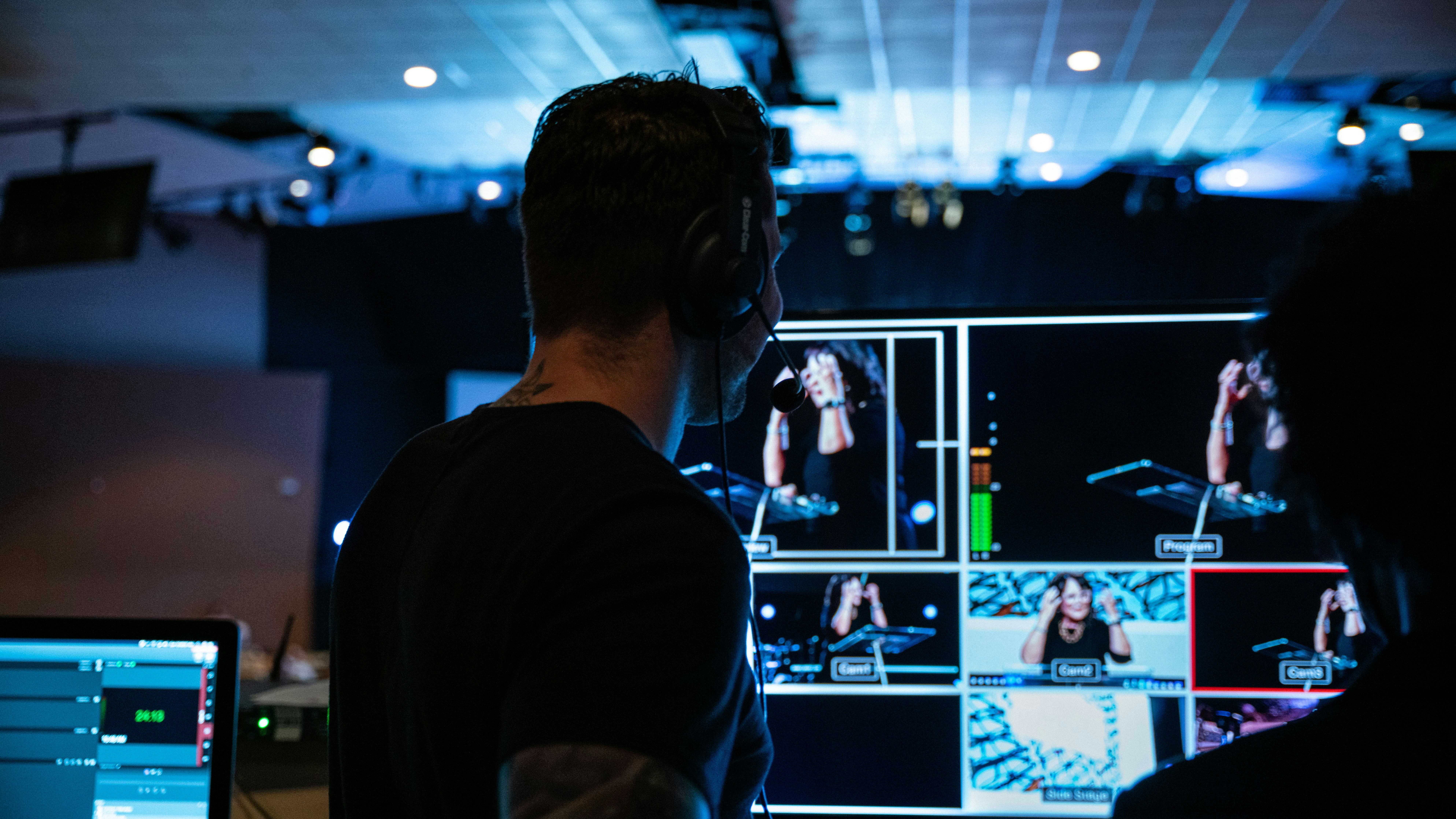
man in black crew neck t-shirt standing in front of people

Members only

For much of modern economic history, value was tied to scarcity: land, labor, capital, raw materials. In the digital age, a different scarcity has emerged—one that underpins entire industries but remains difficult to regulate or measure.

Attention.

In a world of infinite content, constant connectivity, and accelerating information flows, human attention has become a finite resource. Platforms compete for it. Media organizations depend on it. Advertisers monetize it. And individuals experience its depletion daily.

“Attention isn’t just a psychological concept anymore,” said a media economist who studies digital markets. “It’s a core economic input.”

The result is an attention economy—one that shapes how information is produced, distributed, and consumed, often with consequences that extend far beyond screens.

From Information Scarcity to Attention Scarcity

The internet was initially framed as a solution to information scarcity. Knowledge would be abundant, accessible, and democratized.

That promise was fulfilled—perhaps too well.

Today, the challenge is not access to information, but filtration. Content overwhelms cognitive capacity. Time becomes the constraint.

“When information is abundant, attention becomes the bottleneck,” said a behavioral economist. “Everything else reorganizes around that.”

This shift has transformed markets. Success is no longer determined solely by quality or accuracy, but by visibility, engagement, and retention.

Attention as a Commodity

In traditional markets, goods are sold to consumers. In the attention economy, attention itself is the product.

Platforms offer free services in exchange for user attention, which is then sold—indirectly—to advertisers. The longer users stay, the more data is generated, and the more valuable the platform becomes.

“You’re not paying with money,” said a former technology executive. “You’re paying with focus.”

This model incentivizes design choices that maximize engagement: infinite scroll, autoplay, notifications, personalization. Each feature is optimized not for user well-being, but for time spent.

Attention becomes measurable, tradable, and extractable.

Metrics That Shape Meaning

Quantification plays a central role in the economics of attention.

Clicks, views, likes, shares, watch time—these metrics act as proxies for value. They influence editorial decisions, algorithmic rankings, and advertising rates.

“What gets measured gets produced,” said a digital editor at a large media outlet. “Metrics don’t just reflect demand. They create it.”

Stories that generate immediate reaction are rewarded. Nuance, context, and complexity—qualities that require sustained attention—often struggle to compete.

This does not eliminate serious journalism or long-form work. But it forces them to justify themselves within systems optimized for speed and scale.

The Cost of Fragmentation

Attention is not only scarce—it is fragmented.

Users switch rapidly between platforms, tasks, and streams of information. Cognitive load increases. Focus becomes intermittent.

“Fragmented attention reduces depth,” said a cognitive scientist researching media consumption. “It changes how information is processed and remembered.”

From an economic perspective, fragmentation lowers the average value of individual interactions. This encourages platforms to increase volume, further intensifying competition for moments of focus.

The result is a feedback loop: more content chasing less sustained attention.

Labor in the Attention Economy

Attention is not only consumed—it is produced.

Content creators, journalists, influencers, and moderators all perform labor within attention-driven systems. Their work is evaluated through engagement metrics, often tied directly to income and visibility.

“Creative labor is increasingly contingent,” said a labor economist studying digital work. “Income depends on algorithmic exposure.”

This volatility favors those who can consistently generate attention—often at the cost of creative risk or personal boundaries. Burnout becomes a structural feature, not an individual failure.

Attention, in this sense, is both resource and risk.

Advertising, Power, and Influence

Advertising has always sought attention. What has changed is precision.

Targeted advertising allows messages to be delivered to specific audiences at specific moments. This efficiency increases economic value—but also raises concerns about manipulation and asymmetry of power.

“When attention is targeted, persuasion becomes invisible,” said a policy researcher focused on digital regulation.

Political messaging, consumer behavior, and cultural trends can be influenced subtly, without clear boundaries between information and persuasion. The economics of attention thus intersect with democratic accountability.

Inequality of Attention

Not all attention is valued equally.

Certain audiences—wealthier, more connected, more commercially desirable—command higher economic value. Others are underserved or ignored.

“There’s an attention gap that mirrors economic inequality,” said a sociologist of media. “Visibility follows purchasing power.”

This affects which stories are told, which communities are represented, and which concerns receive sustained coverage. Attention allocation becomes a form of structural bias.

Resistance and Rebalancing

In response to attention saturation, counter-movements have emerged.

Subscription models, slow journalism, long-form podcasts, and deliberate design choices attempt to shift incentives away from pure engagement metrics.

“Paying for content changes the relationship,” said a media strategist. “It rewards trust over clicks.”

Readers and users increasingly seek environments that respect attention rather than exploit it. These models remain fragile—but they suggest alternative economic arrangements are possible.

Regulation and the Limits of Markets

Governments have begun to grapple with the implications of attention-based markets.

Debates around platform regulation, data protection, and algorithmic transparency reflect growing recognition that attention economies shape public life.

“Markets don’t account for cognitive externalities,” said the policy researcher. “That’s where regulation enters.”

The challenge lies in addressing harm without stifling innovation. Attention, unlike traditional commodities, is deeply personal—tied to autonomy, identity, and mental health.

What Attention Is Worth

Ultimately, the economics of attention raise a fundamental question: what is attention for?

Is it a resource to be extracted, optimized, and sold? Or a human capacity to be protected, cultivated, and respected?

Markets provide one answer. Culture provides another.

“Attention is where meaning forms,” said the cognitive scientist. “How we spend it shapes who we become.”

The future of the attention economy will not be decided by technology alone, but by collective choices—about design, regulation, media models, and personal boundaries.

Attention is finite.
Its value is not just economic.

It is existential.

man sitting on bench reading newspaper

Members only

The idea of the auteur—the creator whose personal vision shapes a work from beginning to end—has long occupied a privileged place in cultural discourse. Originating in film criticism, the concept elevated directors from skilled technicians to authors, recognizing style, theme, and worldview as signatures that persist across projects.

In modern media, however, authorship has become more complex.

Large-scale collaboration, platform economics, and algorithmic distribution challenge the notion of singular creative control. Yet the language of auteurism has not disappeared. If anything, it has adapted—reshaped to fit an era of streaming platforms, transmedia storytelling, and brand-driven creativity.

“Auteur vision hasn’t vanished,” said a media studies scholar. “It’s been recontextualized.”

From Singular Author to Systemic Creation

Classic auteur theory emerged in a period when film production, while collaborative, still allowed certain individuals to exert clear stylistic control. Recurrent visual motifs, narrative concerns, and thematic obsessions marked an identifiable voice.

Modern media operates differently.

Television series span multiple seasons and writers’ rooms. Games involve teams of hundreds. Digital platforms distribute work through opaque systems that influence form as much as content.

“Authorship today is often collective by necessity,” said a television showrunner. “The question isn’t who controls everything, but who sets the direction.”

Auteur vision, in this context, becomes less about sole authorship and more about leadership—guiding a creative ecosystem rather than dictating every detail.

The Showrunner as Contemporary Auteur

Nowhere is this shift more visible than in television.

The rise of the showrunner as a central creative figure reflects an adaptation of auteur logic. While episodes are written and directed by many, the showrunner establishes tone, thematic coherence, and narrative arc.

“A strong showrunner creates a grammar,” said a senior television writer. “Others speak within it.”

This model balances collaboration with continuity. It acknowledges that complex narratives require multiple voices, while still recognizing the value of a guiding vision.

Auteurism survives by becoming managerial as well as artistic.

Streaming Platforms and Creative Identity

Streaming platforms have further complicated authorship.

On one hand, they provide creators with resources, global reach, and freedom from traditional scheduling constraints. On the other, they operate within data-driven systems that influence what gets made—and how.

“Platforms talk about creator freedom,” said a media analyst. “But freedom exists within parameters.”

Algorithms reward certain pacing, genres, and emotional beats. Completion rates and engagement metrics shape renewal decisions. Auteur vision must navigate these invisible constraints, adapting style without dissolving identity.

The result is a negotiated authorship—vision filtered through platform logic.

Auteur Branding and Market Value

In contemporary media, auteurism is not only an aesthetic concept—it is a brand.

Creators are marketed as identities. Their names signal quality, genre, or sensibility. This branding can protect creative autonomy by attracting audiences and investment.

“Vision has economic value now,” said a producer working in independent film and television. “It’s something you can sell.”

Yet branding also creates pressure. Audiences expect consistency. Deviation can be perceived as failure rather than experimentation. The auteur becomes both creator and product.

Vision, once a critical category, becomes a commercial asset.

Collaboration Without Erasure

One of the central tensions in modern auteur discourse is how to acknowledge collaboration without erasing individual contribution.

Films, series, and games are made by teams whose creative labor often remains invisible. Excessive focus on a single figure can obscure this reality.

“Auteur language can simplify complex processes,” said a cultural historian. “It risks turning collective work into a singular myth.”

At the same time, abandoning authorship entirely flattens difference. Without recognizing vision, works risk being understood as interchangeable outputs of systems rather than intentional expressions.

Modern auteurism must hold both truths: collaboration is real, and vision matters.

Games, Interactive Media, and Distributed Authorship

Interactive media challenge auteur concepts even further.

Games involve branching narratives, player agency, and emergent outcomes. Authorship is shared not only among developers, but with players themselves.

“In games, vision is about setting conditions,” said a narrative designer. “Not controlling outcomes.”

Here, auteur vision manifests as world-building, rule-setting, and tone rather than linear storytelling. The creator’s influence lies in designing possibility spaces rather than fixed narratives.

Auteurism shifts from authorship of text to authorship of systems.

The Politics of Vision

Auteur discourse also carries political weight.

Whose vision is recognized, funded, and celebrated reflects broader power structures within media industries. Historically, auteur status has been disproportionately granted to creators with institutional access and cultural capital.

“Vision isn’t discovered in a vacuum,” said a media equity researcher. “It’s selected.”

As industries confront questions of representation and inclusion, auteur frameworks are being re-examined. Expanding whose visions are recognized requires rethinking gatekeeping, not just celebrating difference.

Audience Participation and Interpretation

Modern audiences play a more active role in shaping meaning.

Online discourse, fan communities, and social media commentary interpret, critique, and sometimes contest authorial intent. Meaning becomes negotiated rather than delivered.

“The auteur no longer has the final word,” said the media studies scholar. “They have the opening move.”

This does not diminish vision. It situates it within dialogue—one where interpretation is shared, contested, and constantly evolving.

Vision Without Absolutism

The future of auteur vision lies not in reclaiming total control, but in redefining influence.

Vision today operates through alignment rather than command. It guides teams, negotiates with platforms, and invites audiences into interpretive space.

“The strongest visions are flexible,” said the showrunner. “They survive collaboration.”

Auteurism endures because it names something audiences still recognize: coherence, intention, and perspective in a landscape often shaped by scale and speed.

An Evolving Concept

Auteur vision in modern media is neither obsolete nor absolute.

It is a concept in transition—reshaped by collaboration, technology, and market forces. It no longer promises singular authority, but it continues to signal responsibility: someone stands behind the work, accountable for its direction and meaning.

Vision matters not because it excludes others,
but because it organizes contribution.

In a media environment defined by systems, the presence of vision—articulated, negotiated, and sustained—remains one of the clearest markers of authorship.
a woman in a black shirt is talking on a cell phone

Members only

Culture & Arts

Interviews

In an age defined by speed, commentary, and constant response, listening has become an undervalued act. Conversation often moves faster than understanding, and visibility is frequently mistaken for insight. To listen—to pause, absorb, and withhold immediate judgment—can feel almost countercultural.

Yet across creative fields, from art and design to journalism and performance, listening is increasingly recognized not as a passive skill, but as an active discipline. It shapes how stories are told, how power is distributed, and how meaning is created.

“Listening is not the absence of speaking,” said a curator who works closely with interdisciplinary artists. “It’s a form of participation.”

Listening as a Creative Practice

In interviews, listening is often treated as a means to an end—a way to extract quotes or confirm narratives already in mind. But for many practitioners, listening itself is the work.

Artists and designers describe listening as a method for uncovering perspectives that resist easy categorization. It requires openness to uncertainty and a willingness to let conversations move in unexpected directions.

“The most interesting ideas rarely arrive fully formed,” said a documentary filmmaker. “They surface when you give people the space to think out loud.”

This kind of listening prioritizes process over outcome. It values silence as much as speech and treats hesitation not as a flaw, but as a signal that something meaningful is emerging.

Power, Voice, and Who Gets Heard

Listening is inseparable from questions of power.

In cultural institutions, whose voices are amplified—and whose are overlooked—shapes collective understanding. Listening, in this context, is not neutral. It can reinforce hierarchies or challenge them, depending on how it is practiced.

“Being invited to speak is not the same as being listened to,” said a writer whose work explores representation in media. “Listening implies responsibility.”

True listening requires attention to context: who is speaking, under what conditions, and with what risks. It demands recognition of structural barriers that limit who feels able to speak freely—and who is accustomed to being heard without challenge.

The Discipline of Silence

Silence is often uncomfortable. In interviews and public conversations, it can feel like failure or loss of control.

But many experienced interviewers see silence as essential.

“If you don’t rush to fill the gap, people often say what they were holding back,” said a cultural journalist. “Silence gives permission.”

This discipline runs counter to the rhythms of modern media, which reward immediacy and reaction. Listening well means resisting the urge to respond instantly, to clarify prematurely, or to steer conversation toward familiar conclusions.

It requires patience—and trust in the process.

Listening Across Difference

Listening becomes more complex when conversations cross cultural, social, or experiential boundaries.

Misunderstanding is not always a failure of intent. Often, it reflects differences in reference points, language, or expectation. Effective listening acknowledges these gaps rather than attempting to erase them.

“You don’t listen to confirm sameness,” said a sociologist studying intercultural dialogue. “You listen to understand difference without trying to resolve it too quickly.”

In creative interviews, this means allowing contradictions to stand, resisting simplification, and accepting that not all perspectives will align neatly.

The Ethics of Listening

Listening carries ethical weight.

When stories involve vulnerability—personal histories, trauma, or marginalization—the listener assumes responsibility. How information is received, framed, and shared matters.

“Listening creates an obligation,” said an oral historian. “Once someone trusts you with their experience, how you handle it becomes part of the story.”

Ethical listening requires transparency, consent, and care in representation. It also demands restraint: knowing when not to publish, when to anonymize, and when to step back.

Listening in a Noisy Culture

The value of listening is sharpened by its scarcity.

Digital platforms encourage broadcasting rather than dialogue. Algorithms reward certainty and outrage over nuance. In this environment, listening becomes a form of resistance.

“To listen deeply today is to slow down,” said the curator. “And slowing down is increasingly radical.”

Cultural spaces—galleries, interviews, long-form journalism—offer rare opportunities for sustained attention. They create conditions where listening can unfold without immediate pressure to conclude or convert.

What Listening Makes Possible

Listening does not guarantee agreement. It does not eliminate conflict or misunderstanding.

What it offers instead is the possibility of complexity.

By listening carefully, interviewers and artists can surface tensions without flattening them, present voices without appropriating them, and create work that reflects lived experience rather than imposed narratives.

“The goal isn’t harmony,” said the filmmaker. “It’s honesty.”

Listening, in this sense, becomes a method of inquiry—one that values presence over performance and curiosity over certainty.

An Act Worth Protecting

As public discourse grows louder, the value of listening becomes clearer.

It is not a soft skill or a courtesy. It is a practice that shapes how culture is documented, how stories are preserved, and how understanding is built over time.

Listening does not demand agreement.
It demands attention.

And in a culture defined by noise, attention may be the most meaningful offering of all.

Interviews

In an age defined by speed, commentary, and constant response, listening has become an undervalued act. Conversation often moves faster than understanding, and visibility is frequently mistaken for insight. To listen—to pause, absorb, and withhold immediate judgment—can feel almost countercultural.

Yet across creative fields, from art and design to journalism and performance, listening is increasingly recognized not as a passive skill, but as an active discipline. It shapes how stories are told, how power is distributed, and how meaning is created.

“Listening is not the absence of speaking,” said a curator who works closely with interdisciplinary artists. “It’s a form of participation.”

Listening as a Creative Practice

In interviews, listening is often treated as a means to an end—a way to extract quotes or confirm narratives already in mind. But for many practitioners, listening itself is the work.

Artists and designers describe listening as a method for uncovering perspectives that resist easy categorization. It requires openness to uncertainty and a willingness to let conversations move in unexpected directions.

“The most interesting ideas rarely arrive fully formed,” said a documentary filmmaker. “They surface when you give people the space to think out loud.”

This kind of listening prioritizes process over outcome. It values silence as much as speech and treats hesitation not as a flaw, but as a signal that something meaningful is emerging.

Power, Voice, and Who Gets Heard

Listening is inseparable from questions of power.

In cultural institutions, whose voices are amplified—and whose are overlooked—shapes collective understanding. Listening, in this context, is not neutral. It can reinforce hierarchies or challenge them, depending on how it is practiced.

“Being invited to speak is not the same as being listened to,” said a writer whose work explores representation in media. “Listening implies responsibility.”

True listening requires attention to context: who is speaking, under what conditions, and with what risks. It demands recognition of structural barriers that limit who feels able to speak freely—and who is accustomed to being heard without challenge.

The Discipline of Silence

Silence is often uncomfortable. In interviews and public conversations, it can feel like failure or loss of control.

But many experienced interviewers see silence as essential.

“If you don’t rush to fill the gap, people often say what they were holding back,” said a cultural journalist. “Silence gives permission.”

This discipline runs counter to the rhythms of modern media, which reward immediacy and reaction. Listening well means resisting the urge to respond instantly, to clarify prematurely, or to steer conversation toward familiar conclusions.

It requires patience—and trust in the process.

Listening Across Difference

Listening becomes more complex when conversations cross cultural, social, or experiential boundaries.

Misunderstanding is not always a failure of intent. Often, it reflects differences in reference points, language, or expectation. Effective listening acknowledges these gaps rather than attempting to erase them.

“You don’t listen to confirm sameness,” said a sociologist studying intercultural dialogue. “You listen to understand difference without trying to resolve it too quickly.”

In creative interviews, this means allowing contradictions to stand, resisting simplification, and accepting that not all perspectives will align neatly.

The Ethics of Listening

Listening carries ethical weight.

When stories involve vulnerability—personal histories, trauma, or marginalization—the listener assumes responsibility. How information is received, framed, and shared matters.

“Listening creates an obligation,” said an oral historian. “Once someone trusts you with their experience, how you handle it becomes part of the story.”

Ethical listening requires transparency, consent, and care in representation. It also demands restraint: knowing when not to publish, when to anonymize, and when to step back.

Listening in a Noisy Culture

The value of listening is sharpened by its scarcity.

Digital platforms encourage broadcasting rather than dialogue. Algorithms reward certainty and outrage over nuance. In this environment, listening becomes a form of resistance.

“To listen deeply today is to slow down,” said the curator. “And slowing down is increasingly radical.”

Cultural spaces—galleries, interviews, long-form journalism—offer rare opportunities for sustained attention. They create conditions where listening can unfold without immediate pressure to conclude or convert.

What Listening Makes Possible

Listening does not guarantee agreement. It does not eliminate conflict or misunderstanding.

What it offers instead is the possibility of complexity.

By listening carefully, interviewers and artists can surface tensions without flattening them, present voices without appropriating them, and create work that reflects lived experience rather than imposed narratives.

“The goal isn’t harmony,” said the filmmaker. “It’s honesty.”

Listening, in this sense, becomes a method of inquiry—one that values presence over performance and curiosity over certainty.

An Act Worth Protecting

As public discourse grows louder, the value of listening becomes clearer.

It is not a soft skill or a courtesy. It is a practice that shapes how culture is documented, how stories are preserved, and how understanding is built over time.

Listening does not demand agreement.
It demands attention.

And in a culture defined by noise, attention may be the most meaningful offering of all.

a man and a woman sitting at a table

Media Criticism

Members only

Media rarely presents itself as an authority. It claims instead to inform, to document, to reflect. Yet over time, the institutions that shape public narratives—newsrooms, broadcasters, platforms, and cultural critics—have accumulated a quieter form of power: the ability to define what matters, how it should be understood, and which voices are granted legitimacy.

This is not authority in the traditional sense of command or coercion. It is cultural authority—exercised through selection, framing, repetition, and omission.

“Media doesn’t just tell us what happened,” said a scholar of communication and culture. “It tells us what counts as happening.”

From Messenger to Meaning-Maker

Historically, media positioned itself as an intermediary between events and audiences. Journalistic norms emphasized objectivity, verification, and distance from power.

But even at its most restrained, media has never been neutral.

Decisions about what to cover, where to place a story, and which voices to quote are acts of interpretation. Over time, these decisions accumulate, shaping shared understandings of politics, culture, and identity.

“Authority doesn’t come from declaring truth,” said a former newspaper editor. “It comes from being consistently present when people try to make sense of the world.”

As media outlets became embedded in daily life—through newspapers, broadcast schedules, and now digital feeds—their role expanded from reporting events to organizing meaning.

Agenda, Frame, Repeat

Cultural authority operates less through persuasion than through structure.

Agenda-setting determines which issues enter public conversation. Framing shapes how those issues are interpreted. Repetition stabilizes certain narratives until they feel natural.

“These mechanisms are subtle,” said a media theorist. “They don’t force agreement. They establish boundaries.”

What falls outside those boundaries—stories left uncovered, perspectives excluded, contexts unexplored—often disappears from collective awareness. Authority emerges not from overt control, but from sustained influence over attention.

Platforms and the Diffusion of Authority

The rise of digital platforms has complicated traditional models of media authority.

On the surface, authority appears fragmented. Anyone can publish. Audiences can bypass traditional gatekeepers. Influence seems decentralized.

Yet power has not vanished—it has shifted.

“Platforms didn’t eliminate authority,” said a researcher who studies digital media ecosystems. “They reorganized it.”

Algorithms prioritize certain content over others, shaping visibility at scale. Metrics reward engagement, often favoring emotional intensity over nuance. Authority becomes data-driven, distributed across systems that are opaque to users but highly influential.

In this environment, cultural authority is exercised not only by editors and critics, but by code.

Expertise and Its Discontents

Media has long functioned as a mediator of expertise—deciding which experts are credible, relevant, or newsworthy.

That role has become increasingly contested.

Public skepticism toward institutions has eroded trust in traditional authorities, including journalists, academics, and cultural critics. At the same time, misinformation thrives in spaces where expertise is dismissed entirely.

“We’re in a paradox,” said a science communication specialist. “Expertise is more necessary than ever, and more fragile than ever.”

Media’s authority now depends not only on accuracy, but on transparency: explaining how knowledge is produced, why certain sources are chosen, and where uncertainty remains.

Cultural Legitimacy and Representation

Media authority is also cultural.

Which stories are elevated, which aesthetics are celebrated, and which voices are normalized shape broader definitions of legitimacy. In arts and culture coverage, this influence is particularly visible.

“When media validates a form, it changes its status,” said a curator at a contemporary art institution. “It moves from marginal to mainstream.”

This power carries responsibility. Historically, media institutions have privileged certain cultural traditions while marginalizing others. Correcting those imbalances requires more than inclusion—it requires rethinking whose perspectives define cultural value.

Criticism as Authority

Cultural criticism occupies a distinct position within media authority.

Critics do more than evaluate individual works. They contextualize movements, articulate standards, and shape taste. Over time, criticism becomes a reference point—a framework through which culture is interpreted.

“Criticism doesn’t just respond to culture,” said a longtime arts critic. “It participates in making it.”

As platforms diversify and attention fragments, the authority of critics has weakened in visibility but not in function. Thoughtful criticism continues to influence creators, institutions, and audiences—even when its reach is less obvious.

Trust, Accountability, and Decline

Media authority depends on trust. When trust erodes, authority becomes contested.

Economic pressure, political polarization, and platform incentives have strained traditional media institutions. Mistakes are amplified. Corrections are scrutinized. Motives are questioned.

“Authority without accountability collapses,” said a media ethicist. “But accountability without trust doesn’t function either.”

Rebuilding authority requires acknowledging error, clarifying standards, and resisting the temptation to chase attention at the expense of credibility. Cultural authority cannot be asserted—it must be earned repeatedly.

Authority Without Absolutism

Recognizing media as a cultural authority does not require treating it as infallible.

Authority, in this sense, is provisional. It emerges from consistent practice, ethical standards, and a willingness to adapt. It exists alongside critique, not above it.

“The healthiest media systems are those that accept scrutiny,” said the communication scholar. “Authority should invite challenge, not suppress it.”

This view reframes authority not as dominance, but as stewardship: a responsibility to curate, contextualize, and communicate with care.

The Quiet Power of Interpretation

Media’s greatest influence lies not in telling people what to think, but in shaping the frameworks through which thinking occurs.

By selecting stories, naming trends, and contextualizing events, media constructs shared reference points. These reference points guide conversation long after headlines fade.

Cultural authority, then, is not loud.
It is cumulative.

It operates through habit, trust, and presence—shaping understanding not through force, but through familiarity.

To recognize media as a cultural authority is not to surrender judgment.
It is to understand how meaning is made—and why responsibility matters in its making.

Media Criticism

Members only

Media rarely presents itself as an authority. It claims instead to inform, to document, to reflect. Yet over time, the institutions that shape public narratives—newsrooms, broadcasters, platforms, and cultural critics—have accumulated a quieter form of power: the ability to define what matters, how it should be understood, and which voices are granted legitimacy.

This is not authority in the traditional sense of command or coercion. It is cultural authority—exercised through selection, framing, repetition, and omission.

“Media doesn’t just tell us what happened,” said a scholar of communication and culture. “It tells us what counts as happening.”

From Messenger to Meaning-Maker

Historically, media positioned itself as an intermediary between events and audiences. Journalistic norms emphasized objectivity, verification, and distance from power.

But even at its most restrained, media has never been neutral.

Decisions about what to cover, where to place a story, and which voices to quote are acts of interpretation. Over time, these decisions accumulate, shaping shared understandings of politics, culture, and identity.

“Authority doesn’t come from declaring truth,” said a former newspaper editor. “It comes from being consistently present when people try to make sense of the world.”

As media outlets became embedded in daily life—through newspapers, broadcast schedules, and now digital feeds—their role expanded from reporting events to organizing meaning.

Agenda, Frame, Repeat

Cultural authority operates less through persuasion than through structure.

Agenda-setting determines which issues enter public conversation. Framing shapes how those issues are interpreted. Repetition stabilizes certain narratives until they feel natural.

“These mechanisms are subtle,” said a media theorist. “They don’t force agreement. They establish boundaries.”

What falls outside those boundaries—stories left uncovered, perspectives excluded, contexts unexplored—often disappears from collective awareness. Authority emerges not from overt control, but from sustained influence over attention.

Platforms and the Diffusion of Authority

The rise of digital platforms has complicated traditional models of media authority.

On the surface, authority appears fragmented. Anyone can publish. Audiences can bypass traditional gatekeepers. Influence seems decentralized.

Yet power has not vanished—it has shifted.

“Platforms didn’t eliminate authority,” said a researcher who studies digital media ecosystems. “They reorganized it.”

Algorithms prioritize certain content over others, shaping visibility at scale. Metrics reward engagement, often favoring emotional intensity over nuance. Authority becomes data-driven, distributed across systems that are opaque to users but highly influential.

In this environment, cultural authority is exercised not only by editors and critics, but by code.

Expertise and Its Discontents

Media has long functioned as a mediator of expertise—deciding which experts are credible, relevant, or newsworthy.

That role has become increasingly contested.

Public skepticism toward institutions has eroded trust in traditional authorities, including journalists, academics, and cultural critics. At the same time, misinformation thrives in spaces where expertise is dismissed entirely.

“We’re in a paradox,” said a science communication specialist. “Expertise is more necessary than ever, and more fragile than ever.”

Media’s authority now depends not only on accuracy, but on transparency: explaining how knowledge is produced, why certain sources are chosen, and where uncertainty remains.

Cultural Legitimacy and Representation

Media authority is also cultural.

Which stories are elevated, which aesthetics are celebrated, and which voices are normalized shape broader definitions of legitimacy. In arts and culture coverage, this influence is particularly visible.

“When media validates a form, it changes its status,” said a curator at a contemporary art institution. “It moves from marginal to mainstream.”

This power carries responsibility. Historically, media institutions have privileged certain cultural traditions while marginalizing others. Correcting those imbalances requires more than inclusion—it requires rethinking whose perspectives define cultural value.

Criticism as Authority

Cultural criticism occupies a distinct position within media authority.

Critics do more than evaluate individual works. They contextualize movements, articulate standards, and shape taste. Over time, criticism becomes a reference point—a framework through which culture is interpreted.

“Criticism doesn’t just respond to culture,” said a longtime arts critic. “It participates in making it.”

As platforms diversify and attention fragments, the authority of critics has weakened in visibility but not in function. Thoughtful criticism continues to influence creators, institutions, and audiences—even when its reach is less obvious.

Trust, Accountability, and Decline

Media authority depends on trust. When trust erodes, authority becomes contested.

Economic pressure, political polarization, and platform incentives have strained traditional media institutions. Mistakes are amplified. Corrections are scrutinized. Motives are questioned.

“Authority without accountability collapses,” said a media ethicist. “But accountability without trust doesn’t function either.”

Rebuilding authority requires acknowledging error, clarifying standards, and resisting the temptation to chase attention at the expense of credibility. Cultural authority cannot be asserted—it must be earned repeatedly.

Authority Without Absolutism

Recognizing media as a cultural authority does not require treating it as infallible.

Authority, in this sense, is provisional. It emerges from consistent practice, ethical standards, and a willingness to adapt. It exists alongside critique, not above it.

“The healthiest media systems are those that accept scrutiny,” said the communication scholar. “Authority should invite challenge, not suppress it.”

This view reframes authority not as dominance, but as stewardship: a responsibility to curate, contextualize, and communicate with care.

The Quiet Power of Interpretation

Media’s greatest influence lies not in telling people what to think, but in shaping the frameworks through which thinking occurs.

By selecting stories, naming trends, and contextualizing events, media constructs shared reference points. These reference points guide conversation long after headlines fade.

Cultural authority, then, is not loud.
It is cumulative.

It operates through habit, trust, and presence—shaping understanding not through force, but through familiarity.

To recognize media as a cultural authority is not to surrender judgment.
It is to understand how meaning is made—and why responsibility matters in its making.

man in black crew neck t-shirt standing in front of people

Art & Design

Members only

Art has always existed in tension with commerce. From patronage systems and royal commissions to galleries, auctions, and brand collaborations, artistic expression has rarely been separate from economic reality. Yet the nature of that relationship—and the balance of power within it—has changed dramatically.

Today, artists navigate a cultural landscape shaped not only by institutions and markets, but by visibility metrics, social platforms, and global branding. The question is no longer whether art and commerce intersect, but how that intersection shapes what art becomes.

“Art doesn’t lose meaning when money enters the room,” said a curator at a contemporary art museum. “It changes meaning. And that change deserves scrutiny.”

Patronage, Markets, and the Myth of Purity

The idea of a “pure” artistic practice, untouched by economic considerations, is largely a modern construction.

Historically, artists worked within systems of patronage. Religious institutions, monarchs, and wealthy families funded creative work—often dictating subject matter, scale, and form. Artistic autonomy, as it is understood today, emerged gradually alongside modern markets.

“The romantic image of the isolated artist is misleading,” said an art historian specializing in early modern Europe. “Artists have always negotiated power.”

What has shifted is not the presence of money, but the mechanisms through which it operates. Markets now function at unprecedented speed and scale, shaping reputations, prices, and careers in real time.

The Gallery System as Mediator

Galleries occupy a central position in the contemporary art ecosystem, mediating between artists, collectors, institutions, and the public.

At their best, galleries provide artists with financial stability, professional advocacy, and critical visibility. At their worst, they function as gatekeepers, privileging marketability over experimentation.

“A gallery relationship is a partnership,” said a gallery director based in Paris. “But it’s also a negotiation of expectations.”

Commercial pressures can influence not only what is shown, but how frequently artists are expected to produce, which styles are encouraged, and how work is contextualized. This can subtly shape artistic output, even when explicit constraints are absent.

Visibility as Currency

In the digital era, visibility has become a form of currency.

Social media platforms allow artists to reach global audiences without institutional mediation. At the same time, they introduce new incentives: consistency, recognizability, and algorithmic favor.

“Artists are now expected to perform their practice,” said a cultural critic who studies digital aesthetics. “Not just in the studio, but online.”

This performance economy rewards work that translates well into images, captions, and feeds. Subtlety, process-based practices, or work that resists easy documentation may struggle for attention—even if critically significant.

Commerce, in this context, is no longer limited to sales. It includes attention, engagement, and personal branding.

Institutions, Funding, and Constraint

Museums and public institutions play a crucial role in legitimizing artistic work. Exhibitions, acquisitions, and grants confer cultural authority that often precedes market recognition.

Yet institutions themselves operate within financial constraints.

Corporate sponsorships, donor relationships, and audience metrics increasingly influence programming decisions. While overt censorship is rare, subtler forms of influence persist.

“Institutional independence is negotiated, not guaranteed,” said a museum administrator. “Every exhibition exists within a web of obligations.”

This reality complicates the assumption that institutional validation is inherently separate from commercial interest. Cultural legitimacy and economic sustainability are often intertwined.

Artists and the Cost of Sustainability

For artists, the intersection of commerce and expression is deeply personal.

Making art requires time, materials, and emotional investment. Financial precarity can limit experimentation, while commercial success can bring its own pressures—expectations to repeat what sells, to maintain a recognizable style, to remain visible.

“Success can be as constraining as obscurity,” said a mid-career artist whose work spans installation and sculpture. “Once there’s demand, there’s pressure not to change.”

Ethical tension arises not from selling work, but from the conditions under which work is produced and valued. Sustainability, for many artists, involves compromise—between income and autonomy, visibility and privacy, experimentation and expectation.

The Role of the Collector

Collectors are often framed as consumers, but their influence extends beyond purchase.

Through acquisition, exhibition loans, and patronage, collectors shape artistic trajectories and institutional narratives. Their tastes and values can amplify certain practices while sidelining others.

“Collecting is a form of authorship,” said an advisor to private collections. “It tells a story about what matters.”

Responsible collecting, critics argue, involves engagement beyond speculation—supporting artists over time, funding research-driven work, and resisting purely investment-driven approaches.

Expression Without Illusion

The tension between commerce and expression is sometimes framed as a binary: authenticity versus selling out. This framing oversimplifies a complex reality.

Expression does not disappear when art enters the market. But neither does commerce remain neutral. Each influences the other, shaping not only outcomes but possibilities.

“The danger isn’t money,” said the curator. “It’s pretending money isn’t there.”

Acknowledging economic context allows for more honest conversations about power, access, and responsibility within the art world.

Toward a More Transparent Balance

As art systems grow more complex, calls for transparency have intensified.

Artists, institutions, and intermediaries are increasingly expected to disclose funding sources, contractual norms, and decision-making processes. Transparency does not eliminate tension, but it can clarify it.

“When the rules are visible, artists can choose how to engage,” said the cultural critic.

This shift reflects a broader cultural demand: not for purity, but for accountability.

Art’s Enduring Question

Art’s relationship with commerce is not a problem to be solved. It is a condition to be navigated.

Expression gains meaning through context, and context is shaped by systems of exchange. The challenge lies in preserving space for experimentation, dissent, and ambiguity within structures that reward predictability and scale.

Art endures not because it escapes commerce,
but because it continues to ask questions within it.

Between market and meaning, constraint and possibility, art negotiates its place—not by rejecting reality, but by interpreting it.

Art & Design

Members only

Art has always existed in tension with commerce. From patronage systems and royal commissions to galleries, auctions, and brand collaborations, artistic expression has rarely been separate from economic reality. Yet the nature of that relationship—and the balance of power within it—has changed dramatically.

Today, artists navigate a cultural landscape shaped not only by institutions and markets, but by visibility metrics, social platforms, and global branding. The question is no longer whether art and commerce intersect, but how that intersection shapes what art becomes.

“Art doesn’t lose meaning when money enters the room,” said a curator at a contemporary art museum. “It changes meaning. And that change deserves scrutiny.”

Patronage, Markets, and the Myth of Purity

The idea of a “pure” artistic practice, untouched by economic considerations, is largely a modern construction.

Historically, artists worked within systems of patronage. Religious institutions, monarchs, and wealthy families funded creative work—often dictating subject matter, scale, and form. Artistic autonomy, as it is understood today, emerged gradually alongside modern markets.

“The romantic image of the isolated artist is misleading,” said an art historian specializing in early modern Europe. “Artists have always negotiated power.”

What has shifted is not the presence of money, but the mechanisms through which it operates. Markets now function at unprecedented speed and scale, shaping reputations, prices, and careers in real time.

The Gallery System as Mediator

Galleries occupy a central position in the contemporary art ecosystem, mediating between artists, collectors, institutions, and the public.

At their best, galleries provide artists with financial stability, professional advocacy, and critical visibility. At their worst, they function as gatekeepers, privileging marketability over experimentation.

“A gallery relationship is a partnership,” said a gallery director based in Paris. “But it’s also a negotiation of expectations.”

Commercial pressures can influence not only what is shown, but how frequently artists are expected to produce, which styles are encouraged, and how work is contextualized. This can subtly shape artistic output, even when explicit constraints are absent.

Visibility as Currency

In the digital era, visibility has become a form of currency.

Social media platforms allow artists to reach global audiences without institutional mediation. At the same time, they introduce new incentives: consistency, recognizability, and algorithmic favor.

“Artists are now expected to perform their practice,” said a cultural critic who studies digital aesthetics. “Not just in the studio, but online.”

This performance economy rewards work that translates well into images, captions, and feeds. Subtlety, process-based practices, or work that resists easy documentation may struggle for attention—even if critically significant.

Commerce, in this context, is no longer limited to sales. It includes attention, engagement, and personal branding.

Institutions, Funding, and Constraint

Museums and public institutions play a crucial role in legitimizing artistic work. Exhibitions, acquisitions, and grants confer cultural authority that often precedes market recognition.

Yet institutions themselves operate within financial constraints.

Corporate sponsorships, donor relationships, and audience metrics increasingly influence programming decisions. While overt censorship is rare, subtler forms of influence persist.

“Institutional independence is negotiated, not guaranteed,” said a museum administrator. “Every exhibition exists within a web of obligations.”

This reality complicates the assumption that institutional validation is inherently separate from commercial interest. Cultural legitimacy and economic sustainability are often intertwined.

Artists and the Cost of Sustainability

For artists, the intersection of commerce and expression is deeply personal.

Making art requires time, materials, and emotional investment. Financial precarity can limit experimentation, while commercial success can bring its own pressures—expectations to repeat what sells, to maintain a recognizable style, to remain visible.

“Success can be as constraining as obscurity,” said a mid-career artist whose work spans installation and sculpture. “Once there’s demand, there’s pressure not to change.”

Ethical tension arises not from selling work, but from the conditions under which work is produced and valued. Sustainability, for many artists, involves compromise—between income and autonomy, visibility and privacy, experimentation and expectation.

The Role of the Collector

Collectors are often framed as consumers, but their influence extends beyond purchase.

Through acquisition, exhibition loans, and patronage, collectors shape artistic trajectories and institutional narratives. Their tastes and values can amplify certain practices while sidelining others.

“Collecting is a form of authorship,” said an advisor to private collections. “It tells a story about what matters.”

Responsible collecting, critics argue, involves engagement beyond speculation—supporting artists over time, funding research-driven work, and resisting purely investment-driven approaches.

Expression Without Illusion

The tension between commerce and expression is sometimes framed as a binary: authenticity versus selling out. This framing oversimplifies a complex reality.

Expression does not disappear when art enters the market. But neither does commerce remain neutral. Each influences the other, shaping not only outcomes but possibilities.

“The danger isn’t money,” said the curator. “It’s pretending money isn’t there.”

Acknowledging economic context allows for more honest conversations about power, access, and responsibility within the art world.

Toward a More Transparent Balance

As art systems grow more complex, calls for transparency have intensified.

Artists, institutions, and intermediaries are increasingly expected to disclose funding sources, contractual norms, and decision-making processes. Transparency does not eliminate tension, but it can clarify it.

“When the rules are visible, artists can choose how to engage,” said the cultural critic.

This shift reflects a broader cultural demand: not for purity, but for accountability.

Art’s Enduring Question

Art’s relationship with commerce is not a problem to be solved. It is a condition to be navigated.

Expression gains meaning through context, and context is shaped by systems of exchange. The challenge lies in preserving space for experimentation, dissent, and ambiguity within structures that reward predictability and scale.

Art endures not because it escapes commerce,
but because it continues to ask questions within it.

Between market and meaning, constraint and possibility, art negotiates its place—not by rejecting reality, but by interpreting it.

closeup photo of torn papers

Books

Members only

Predictions about the death of reading have surfaced with every major technological shift—from radio and television to the internet and smartphones. Each time, reading has adapted rather than disappeared. What is changing today is not whether people read, but how, where, and why they do so.

The future of reading is less about format and more about attention.

“Reading has never been a single activity,” said a publishing researcher who studies audience behavior. “It’s a collection of practices shaped by culture, technology, and time.”

As digital platforms, audio formats, and algorithmic recommendation systems reshape literary life, reading is becoming more fragmented, more social, and, paradoxically, more intentional.

From Linear Immersion to Fragmented Attention

For much of the twentieth century, reading was imagined as a linear, immersive act: a reader, a book, sustained focus. That model still exists—but it no longer defines the norm.

Today’s readers move between long-form texts, short articles, excerpts, summaries, and annotations. Screens encourage skimming as much as depth. Notifications interrupt continuity.

“We read in layers now,” said a cognitive psychologist specializing in attention. “Depth hasn’t vanished, but it competes with constant context-switching.”

This shift has prompted concern about diminished concentration. Yet some researchers argue that new reading habits reflect adaptation rather than decline—strategies for navigating information-dense environments.

The Persistence of Long-Form Reading

Despite anxieties about shrinking attention spans, long-form reading has not disappeared.

Print book sales remain resilient in many markets. Long essays, investigative journalism, and narrative nonfiction continue to attract committed audiences. What has changed is the reader’s relationship to time.

“People don’t read less,” said a literary editor. “They read more selectively.”

Readers increasingly reserve sustained reading for moments of deliberate choice—commutes, evenings, weekends—while using shorter formats to stay informed during the day. Long-form reading becomes less habitual, but more intentional.

Digital Platforms and the Reorganization of Discovery

One of the most significant changes in reading culture is how readers discover texts.

Bookstores, libraries, and critics once served as primary gateways. Today, discovery is increasingly shaped by algorithms, social media, and peer recommendation.

“Discovery has moved from institutions to networks,” said a publishing analyst. “Visibility now depends as much on circulation as on curation.”

Platforms reward shareability, emotional resonance, and immediacy. This can elevate diverse voices, but it can also narrow exposure by reinforcing existing preferences.

The challenge for readers is not scarcity, but excess: learning how to navigate abundance without surrendering agency.

Audiobooks and the Expansion of Reading

The rise of audiobooks has expanded the definition of reading itself.

Listening allows texts to enter moments previously inaccessible to print—commutes, household tasks, physical activity. For some, it restores a connection to literature in busy lives.

“Audiobooks don’t replace reading,” said a literacy researcher. “They extend it.”

Critics have questioned whether listening constitutes the same cognitive engagement as reading. Studies suggest differences, but not deficiencies. Comprehension, retention, and emotional response vary by format, not necessarily by quality.

The future of reading may be multi-modal rather than singular.

Reading as a Social Practice

Reading is often imagined as solitary. Increasingly, it is social.

Online book clubs, annotation platforms, and reader communities turn texts into shared experiences. Marginal notes become public dialogue. Interpretation becomes collaborative.

“Readers want conversation, not just content,” said a digital humanities scholar.

This social dimension reshapes authority. Critics and editors remain influential, but they now operate alongside communities that collectively shape interpretation and value.

Reading becomes not just consumption, but participation.

Education, Literacy, and Inequality

The future of reading is inseparable from questions of access.

Educational systems struggle to adapt curricula to changing reading habits. Digital tools promise personalization but risk widening gaps where access and support are uneven.

“Literacy isn’t just about decoding text,” said an education policy expert. “It’s about navigating information critically.”

Deep reading skills—analysis, inference, synthesis—remain essential. The challenge lies in teaching them across formats while resisting the false binary between digital and print.

Publishing and the Economics of Attention

Economic pressures shape what is published, promoted, and preserved.

Publishing increasingly competes with other forms of entertainment for attention. This has encouraged experimentation with format, pricing, and distribution—but also heightened risk aversion.

“There’s a tension between scale and depth,” said an independent publisher. “The market rewards what travels fast.”

At the same time, niche publishing and independent presses thrive by serving dedicated audiences. Sustainability, rather than mass reach, becomes the measure of success.

What Reading Might Become

The future of reading will not be uniform.

Some readers will seek immersion and slowness. Others will rely on summaries and audio. Many will combine formats fluidly. What matters is not conformity, but capacity—the ability to choose how and when to engage deeply.

“Reading survives because it adapts,” said the literary editor. “It meets people where they are.”

The essential function of reading—making sense of experience through language—remains unchanged. What evolves are the pathways.

Attention as a Cultural Choice

In the end, the future of reading is a question of values.

Technologies shape behavior, but they do not determine it entirely. Institutions, educators, publishers, and readers all participate in defining what reading means and why it matters.

Reading requires attention.
Attention requires intention.

The future of reading will belong not to the fastest format or the loudest platform, but to those practices that preserve space for thought, reflection, and connection—however they are delivered.

Books

Members only

Predictions about the death of reading have surfaced with every major technological shift—from radio and television to the internet and smartphones. Each time, reading has adapted rather than disappeared. What is changing today is not whether people read, but how, where, and why they do so.

The future of reading is less about format and more about attention.

“Reading has never been a single activity,” said a publishing researcher who studies audience behavior. “It’s a collection of practices shaped by culture, technology, and time.”

As digital platforms, audio formats, and algorithmic recommendation systems reshape literary life, reading is becoming more fragmented, more social, and, paradoxically, more intentional.

From Linear Immersion to Fragmented Attention

For much of the twentieth century, reading was imagined as a linear, immersive act: a reader, a book, sustained focus. That model still exists—but it no longer defines the norm.

Today’s readers move between long-form texts, short articles, excerpts, summaries, and annotations. Screens encourage skimming as much as depth. Notifications interrupt continuity.

“We read in layers now,” said a cognitive psychologist specializing in attention. “Depth hasn’t vanished, but it competes with constant context-switching.”

This shift has prompted concern about diminished concentration. Yet some researchers argue that new reading habits reflect adaptation rather than decline—strategies for navigating information-dense environments.

The Persistence of Long-Form Reading

Despite anxieties about shrinking attention spans, long-form reading has not disappeared.

Print book sales remain resilient in many markets. Long essays, investigative journalism, and narrative nonfiction continue to attract committed audiences. What has changed is the reader’s relationship to time.

“People don’t read less,” said a literary editor. “They read more selectively.”

Readers increasingly reserve sustained reading for moments of deliberate choice—commutes, evenings, weekends—while using shorter formats to stay informed during the day. Long-form reading becomes less habitual, but more intentional.

Digital Platforms and the Reorganization of Discovery

One of the most significant changes in reading culture is how readers discover texts.

Bookstores, libraries, and critics once served as primary gateways. Today, discovery is increasingly shaped by algorithms, social media, and peer recommendation.

“Discovery has moved from institutions to networks,” said a publishing analyst. “Visibility now depends as much on circulation as on curation.”

Platforms reward shareability, emotional resonance, and immediacy. This can elevate diverse voices, but it can also narrow exposure by reinforcing existing preferences.

The challenge for readers is not scarcity, but excess: learning how to navigate abundance without surrendering agency.

Audiobooks and the Expansion of Reading

The rise of audiobooks has expanded the definition of reading itself.

Listening allows texts to enter moments previously inaccessible to print—commutes, household tasks, physical activity. For some, it restores a connection to literature in busy lives.

“Audiobooks don’t replace reading,” said a literacy researcher. “They extend it.”

Critics have questioned whether listening constitutes the same cognitive engagement as reading. Studies suggest differences, but not deficiencies. Comprehension, retention, and emotional response vary by format, not necessarily by quality.

The future of reading may be multi-modal rather than singular.

Reading as a Social Practice

Reading is often imagined as solitary. Increasingly, it is social.

Online book clubs, annotation platforms, and reader communities turn texts into shared experiences. Marginal notes become public dialogue. Interpretation becomes collaborative.

“Readers want conversation, not just content,” said a digital humanities scholar.

This social dimension reshapes authority. Critics and editors remain influential, but they now operate alongside communities that collectively shape interpretation and value.

Reading becomes not just consumption, but participation.

Education, Literacy, and Inequality

The future of reading is inseparable from questions of access.

Educational systems struggle to adapt curricula to changing reading habits. Digital tools promise personalization but risk widening gaps where access and support are uneven.

“Literacy isn’t just about decoding text,” said an education policy expert. “It’s about navigating information critically.”

Deep reading skills—analysis, inference, synthesis—remain essential. The challenge lies in teaching them across formats while resisting the false binary between digital and print.

Publishing and the Economics of Attention

Economic pressures shape what is published, promoted, and preserved.

Publishing increasingly competes with other forms of entertainment for attention. This has encouraged experimentation with format, pricing, and distribution—but also heightened risk aversion.

“There’s a tension between scale and depth,” said an independent publisher. “The market rewards what travels fast.”

At the same time, niche publishing and independent presses thrive by serving dedicated audiences. Sustainability, rather than mass reach, becomes the measure of success.

What Reading Might Become

The future of reading will not be uniform.

Some readers will seek immersion and slowness. Others will rely on summaries and audio. Many will combine formats fluidly. What matters is not conformity, but capacity—the ability to choose how and when to engage deeply.

“Reading survives because it adapts,” said the literary editor. “It meets people where they are.”

The essential function of reading—making sense of experience through language—remains unchanged. What evolves are the pathways.

Attention as a Cultural Choice

In the end, the future of reading is a question of values.

Technologies shape behavior, but they do not determine it entirely. Institutions, educators, publishers, and readers all participate in defining what reading means and why it matters.

Reading requires attention.
Attention requires intention.

The future of reading will belong not to the fastest format or the loudest platform, but to those practices that preserve space for thought, reflection, and connection—however they are delivered.

a woman writing on a book

Create a free website with Framer, the website builder loved by startups, designers and agencies.